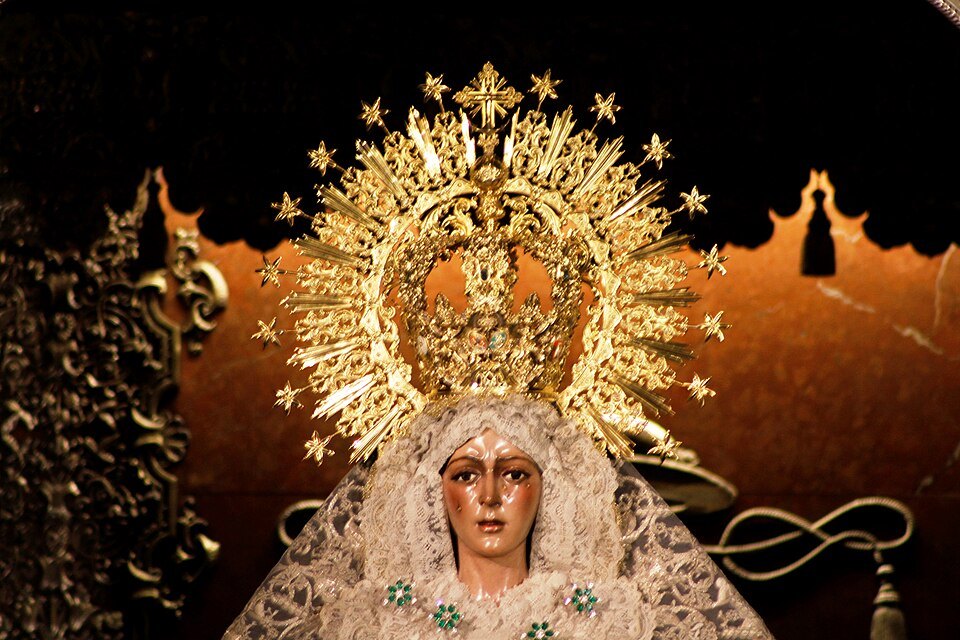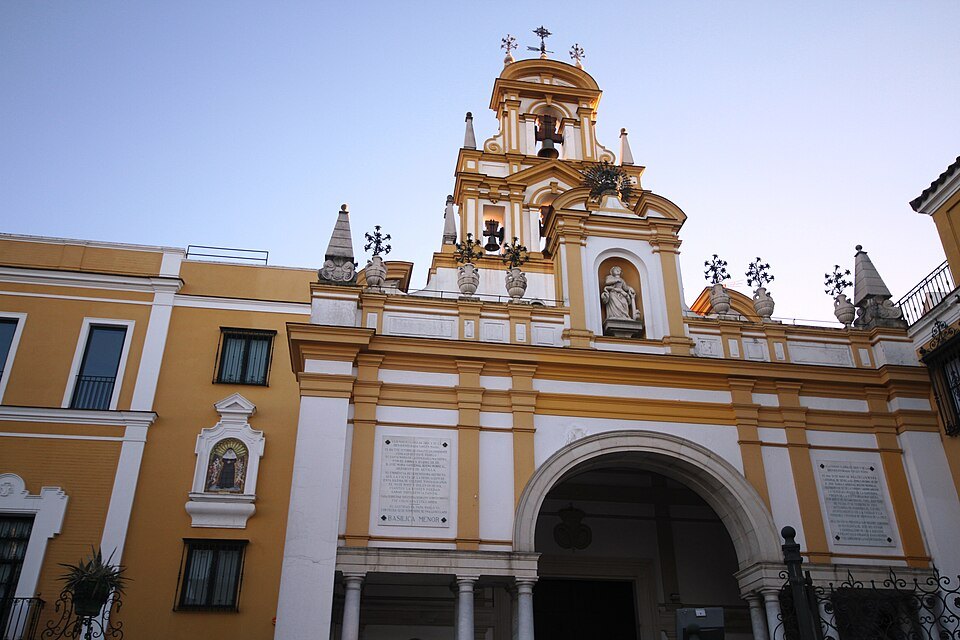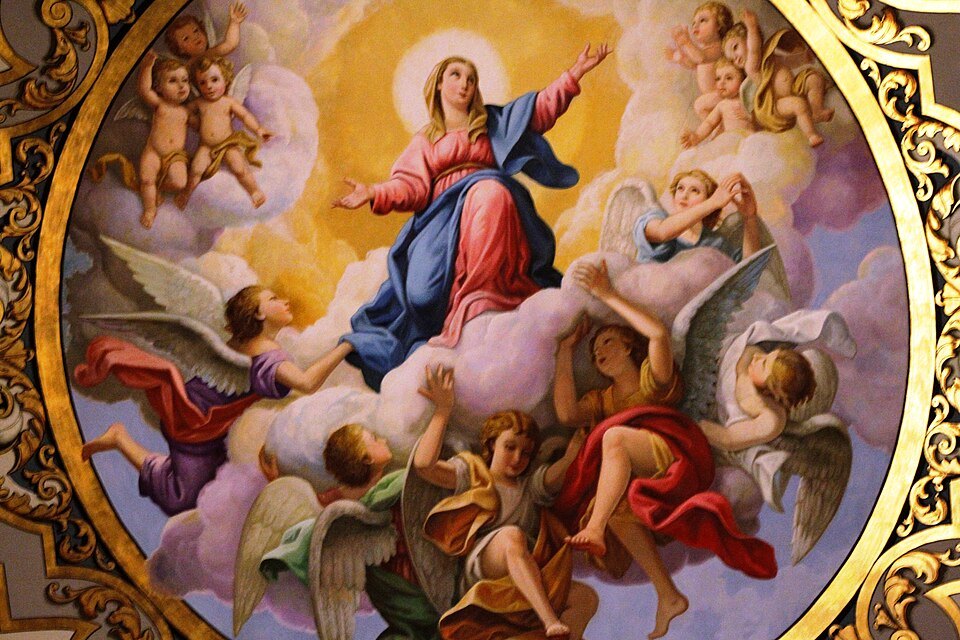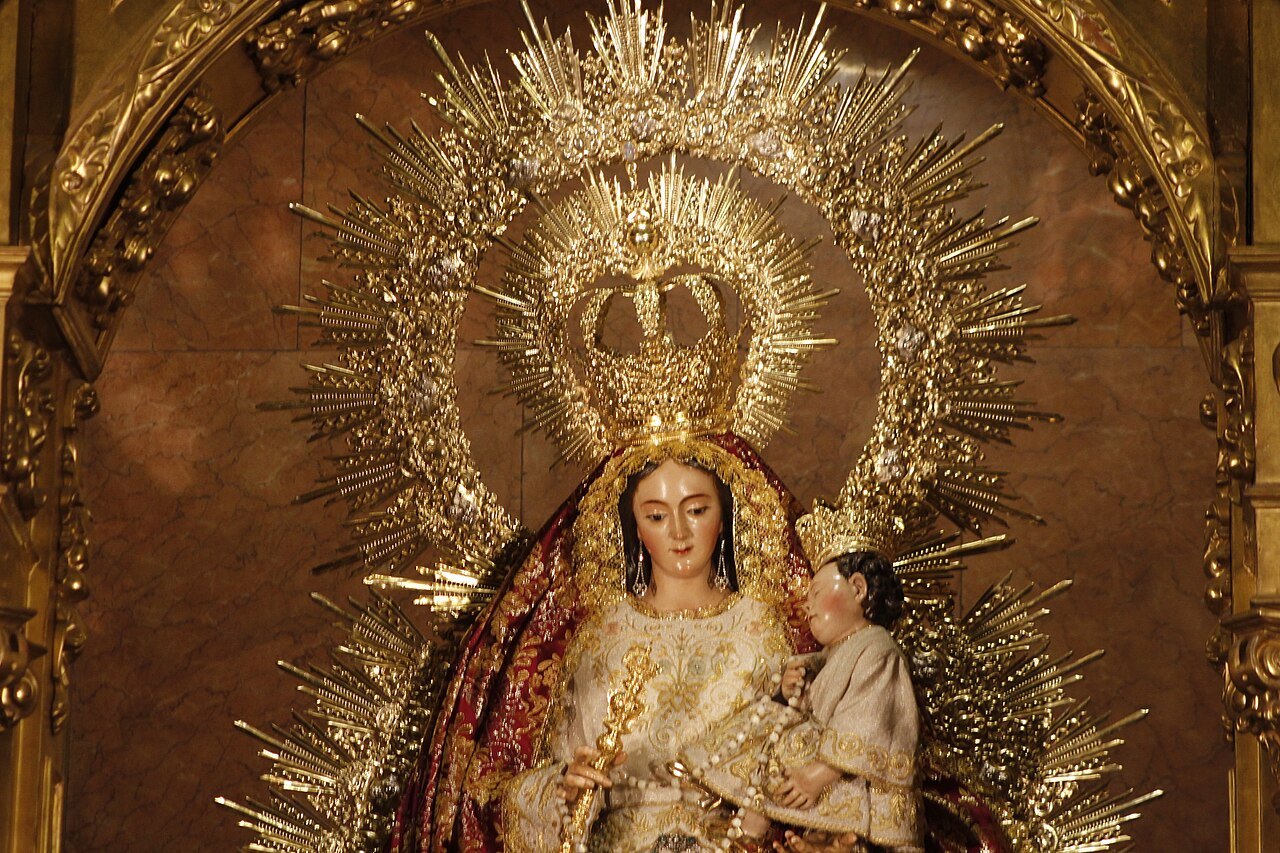
The basilica holds La Macarena, a 17th-century sculpted image of the Virgin that is the focus of one of Seville's most important Holy Week brotherhoods.
⚠️ This is a living devotional site, not a museum exhibit, and it is treated as such by the people around you. Behave accordingly.
⭐ The attached museum holds the processional floats and the embroidered robes, which is where the scale of Semana Santa becomes comprehensible if you are not here in Holy Week.
Beside it stands a surviving stretch of the Almohad city wall, one of the few left standing.
Come for the wall as well as the basilica. They are the same stop and most visitors see only one of them.
The image
The Virgin of Hope, the Esperanza Macarena, is a dressed wooden image of the seventeenth century, probably made around 1680, when the brotherhood was renewing its treasures. Its sculptor is unknown; it has been attributed to the workshop of Pedro Roldán, and above all to his daughter Luisa Roldán, La Roldana. Five green crystal brooches shaped like lilies, the mariquillas, pierce her breast in place of the usual seven daggers of the Sorrowful Virgin; they were a gift from the Seville bullfighter Joselito el Gallo, a leading member of the brotherhood. When he was killed in the ring at Talavera de la Reina on May 16, 1920, the image was dressed in black for the first and only time.
Her look owes much to the embroiderer Juan Manuel Rodríguez Ojeda, a brother of the brotherhood, whose green and gold mantles of 1899–1900 and 1930 changed the style of all Seville's Holy Week; the 1930 mantle was paid for by a subscription promoted by Alfonso XIII, a member since 1904. The image was crowned in a great ceremony on March 27, 1913, canonically crowned in 1964, given the city's Gold Medal in 1971, and in 2024 Pope Francis granted her the Golden Rose. Her feast day is December 18. In 1925 she was the first Sorrowful Virgin in Seville to be offered for a public besamanos, the hand-kissing ritual, and copies of the image are venerated across Spain, Europe, the Americas and Asia, the oldest in the Collegiate Church of San Isidro in Madrid.
Saved twice
When churches in Seville were sacked after the proclamation of the Second Republic, a cleaning woman took the image home and put it in her own bed, pretending it was her sick sister; that night she moved it to the San Fernando cemetery and hid it in Joselito's tomb, where it stayed for two months. On the night of July 18, 1936, the brotherhood's old home, the parish church of San Gil, was set on fire, but the images had already been moved and survived.
A new basilica
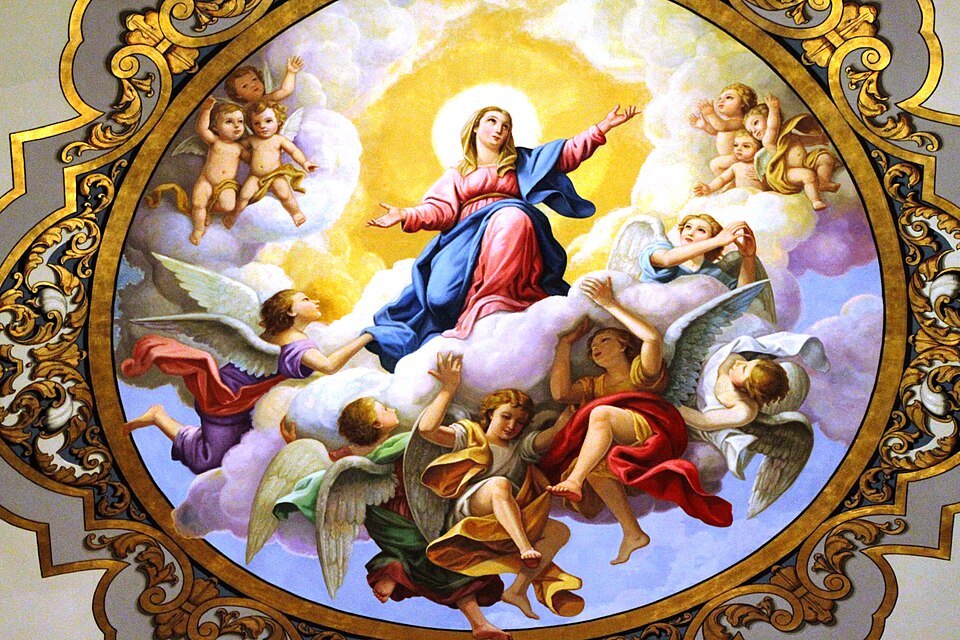
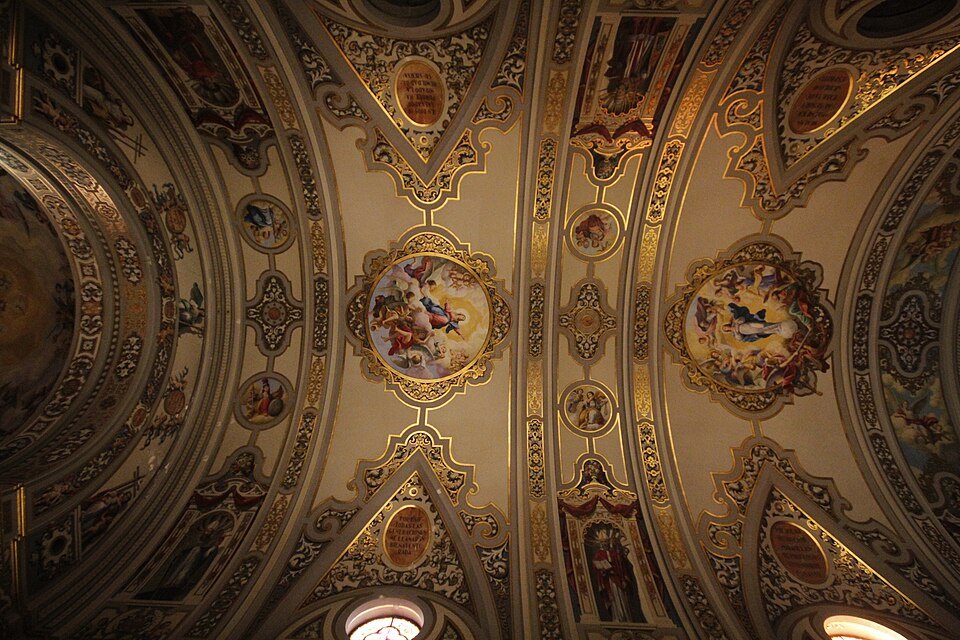
The brotherhood needed a new church. The archbishop laid the first stone on April 13, 1941, and the building, designed by the Seville architect Aurelio Gómez Millán with a single nave and side chapels, was blessed on March 18, 1949. In 1966 Pope Paul VI made it a minor basilica, the first church in Seville to hold that rank. The neo-Baroque high altar of 1949, 12 meters tall, frames the Virgin's chamber behind a silver arch made to look like the front of a processional float. In the first chapel on the left is Nuestro Padre Jesús de la Sentencia, Christ condemned, carved by Felipe de Morales in 1654, and on the right the Virgin of the Rosary, carried through the neighborhood on the last Sunday of October. The Altar of Hispanidad of 1959 thanks the faithful of Latin America for their donations, with paintings of the patron Virgins of their countries around a Virgin of Guadalupe painted in 1703.
The remains of General Gonzalo Queipo de Llano and General Francisco Bohórquez, leaders of the 1936 military uprising, lay in the basilica until November 3, 2022, when they were exhumed and removed under the Democratic Memory Law.
Holy Week and the Macarena Arch
On the early morning of Good Friday, the Madrugada, the brotherhood leaves the basilica with both images on its penitential procession to the cathedral. The museum, reopened in October 2009 across three floors and 800 square meters, shows the floats, mantles and treasures of four centuries.
Opposite stands the Arco de la Macarena, from the Arabic Bab al-Makrin, the northernmost and largest gate of the city walls and one of only three that survive. It dates from the twelfth-century Almoravid rebuilding of the walls; kings entering Seville swore to respect the city's privileges here, and its present look comes from reforms of 1723 and 1795. A tile altarpiece of the Esperanza crowns it, blessed on May 27, 1923. From the gate a stretch of Almohad wall with seven towers runs east to the Puerta de Córdoba.
Sources
- Basílica de la Macarena — Wikipedia (es)
- Esperanza Macarena de Sevilla — Wikipedia (es)
- Puerta de la Macarena — Wikipedia (es)
- Murallas de Sevilla — Wikipedia (es)
Basílica de la Macarena, photographed