What stood here first
Seville was the capital of an Almohad province, and in the late 12th century it got a congregational mosque to match — a large prayer hall, a courtyard for ablutions, and a minaret at the corner.
The city fell to Castile in 1248. The mosque was used as a cathedral more or less as it stood for around a century and a half, which is what happened in most conquered cities and is easy to forget: the replacement was not immediate, it was a decision taken by a later generation.
Then they decided to replace it
In the early 15th century the chapter resolved to build a new cathedral on the site. The remark usually attached to that decision — that they would build something so great that those who saw it would think them mad — is repeated everywhere. ⚠️ It comes from later tradition rather than from a contemporary record, so treat it as the story it is.
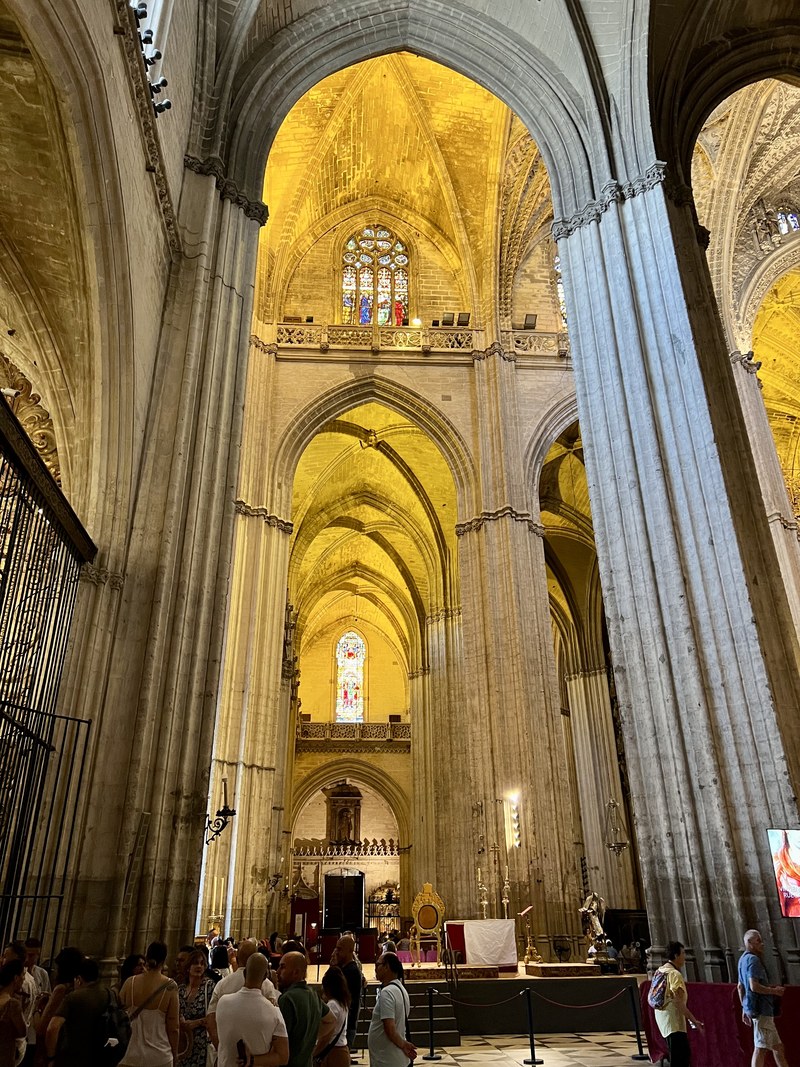
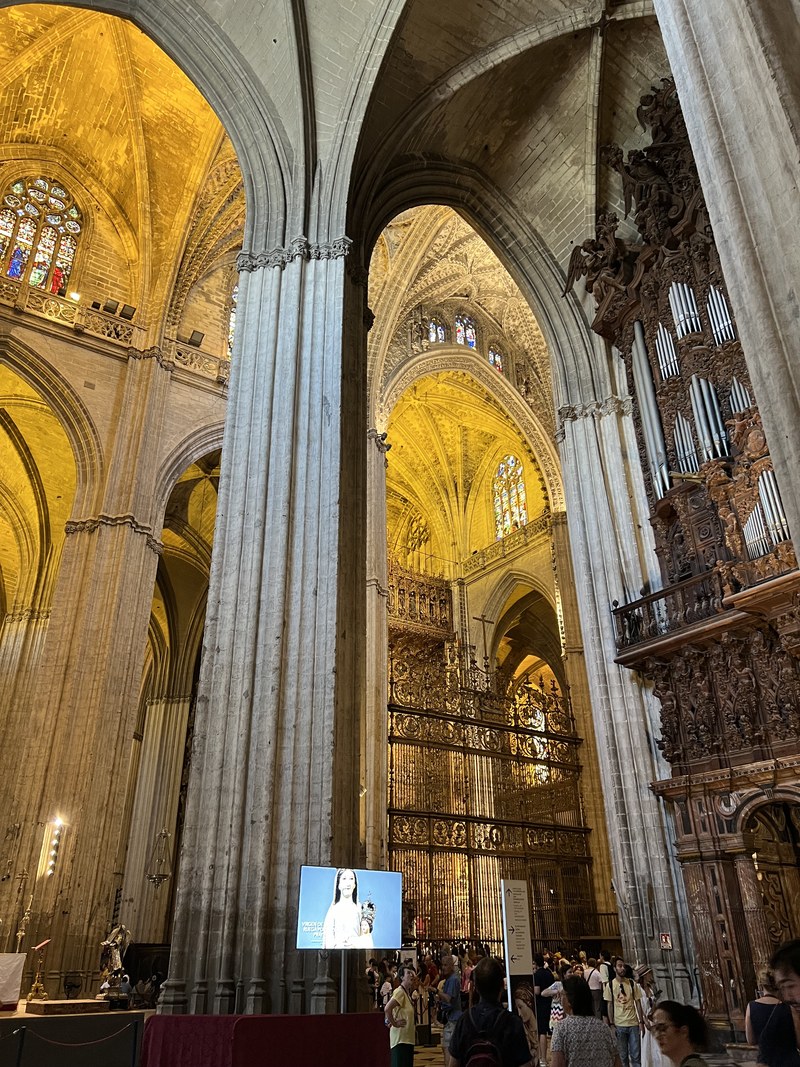
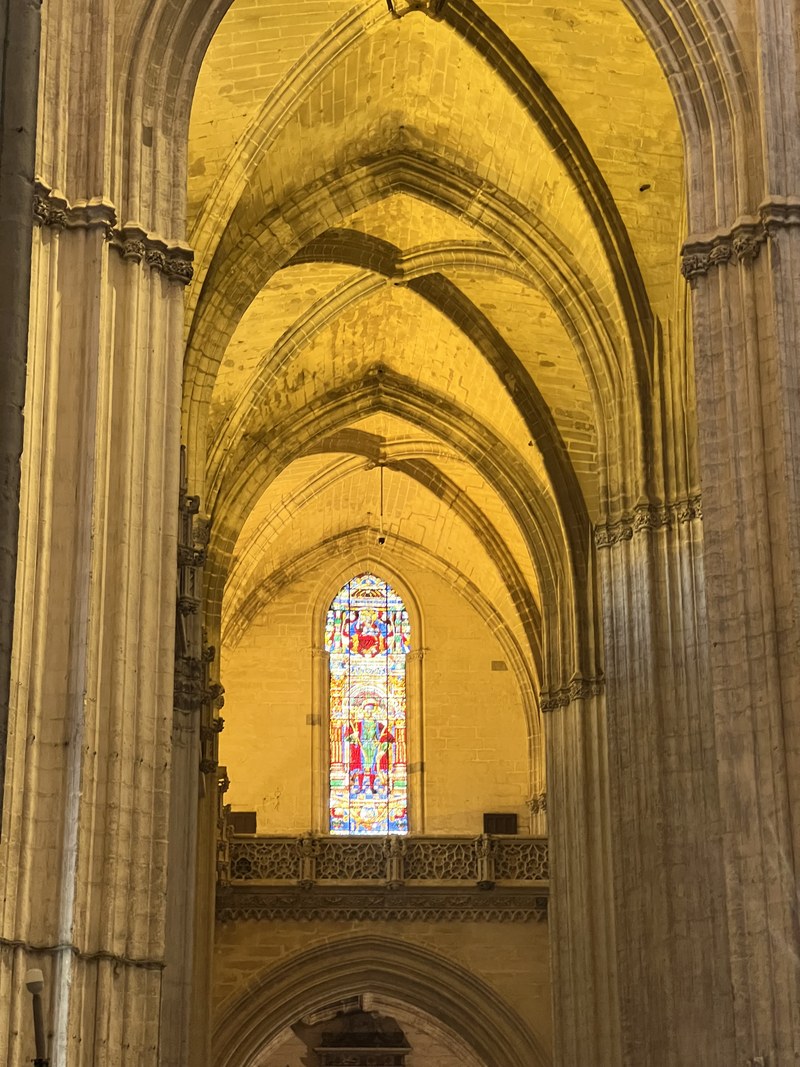
What went up is a Gothic church of extraordinary volume, five aisles wide, on the mosque's rectangular footprint. ⚠️ You will read that it is the largest Gothic cathedral in the world. That depends on whether you measure area, volume or footprint, and the answer changes with the measure. It is unarguably among the very largest.
⭐ The proportions are unusual because the plan is not: the building had to fit a mosque's rectangle rather than a cathedral's cross, which is why the interior reads as a vast hall rather than a long nave.
What survived from the mosque
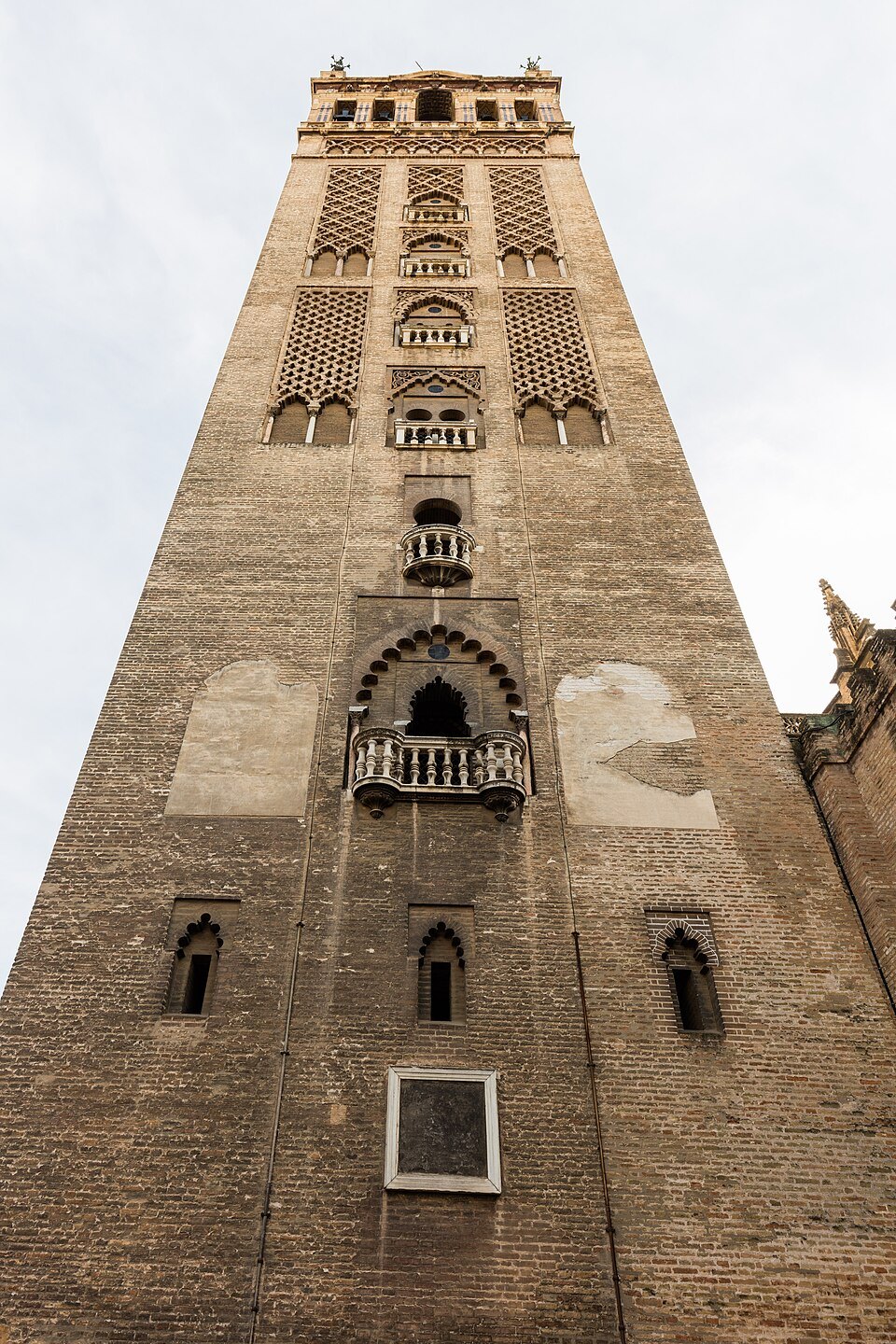
The minaret. The lower two thirds of the Giralda are Almohad. A Renaissance bell stage was added on top in the 16th century, and the whole thing was kept rather than demolished — the same instinct that kept Córdoba's minaret inside a bell tower.
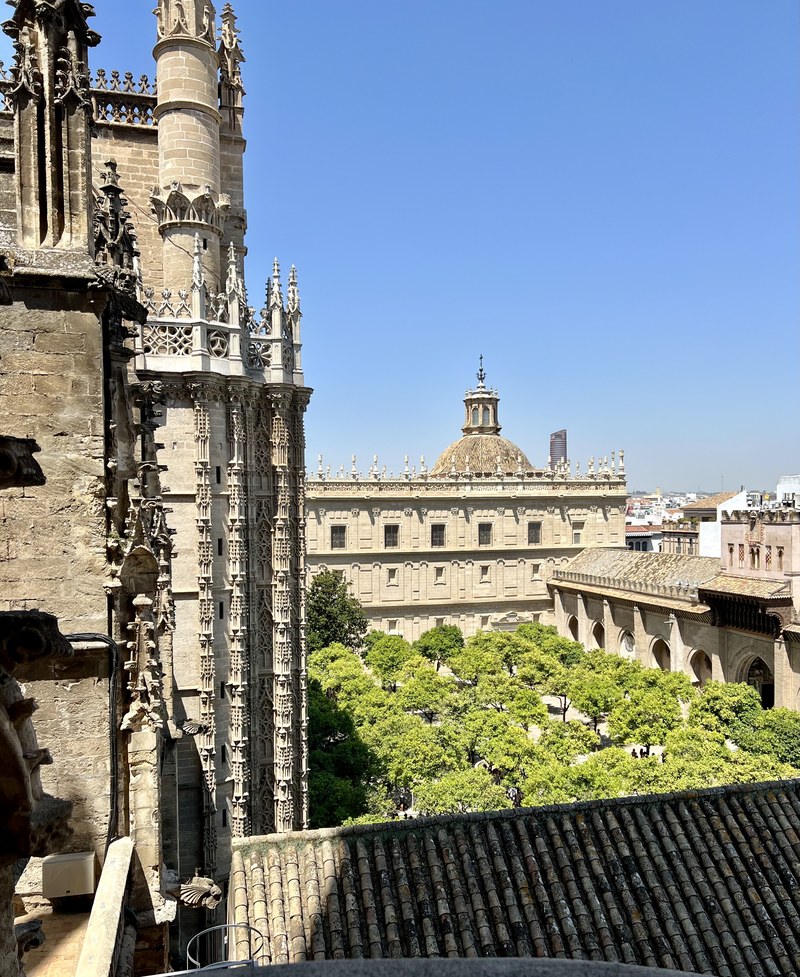
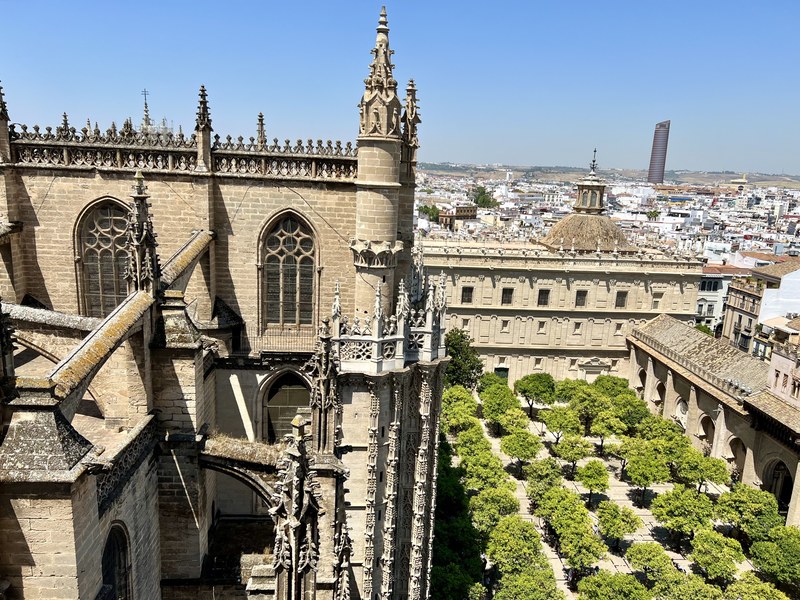
The courtyard. The Patio de los Naranjos is the mosque's ablutions court, still on its grid, still planted with orange trees, still irrigated by its channels. The fountain at its center is a reused Visigothic basin — older than the mosque that used it and older than the cathedral that surrounds it now.
The climb by ramp
⭐ The Giralda is climbed by ramps — thirty-five of them, wide enough, the story goes, for a rider on horseback — with only a short flight of steps at the very top. It is far easier than a tower of its height has any right to be, and it is the reason people who avoid bell towers should make an exception here.
The reward is the only view that shows you how the cathedral is put together: the roof, the flying buttresses, the orange courtyard laid out below, and the Alcázar's gardens beyond.
Columbus
The monument inside carries a coffin on the shoulders of four figures representing the kingdoms of Castile, León, Aragón and Navarre.
⚠️ Whether the remains inside are entirely Columbus's has been disputed for a long time. He was buried in Valladolid, moved to Seville, then to the Americas, then — after Spain lost Cuba — returned. DNA testing has supported the Seville claim without closing the argument, partly because remains are also claimed in Santo Domingo. This site says the dispute exists rather than settling it.
Seeing it properly
⭐ One ticket covers the cathedral and the Giralda. People pay twice surprisingly often.
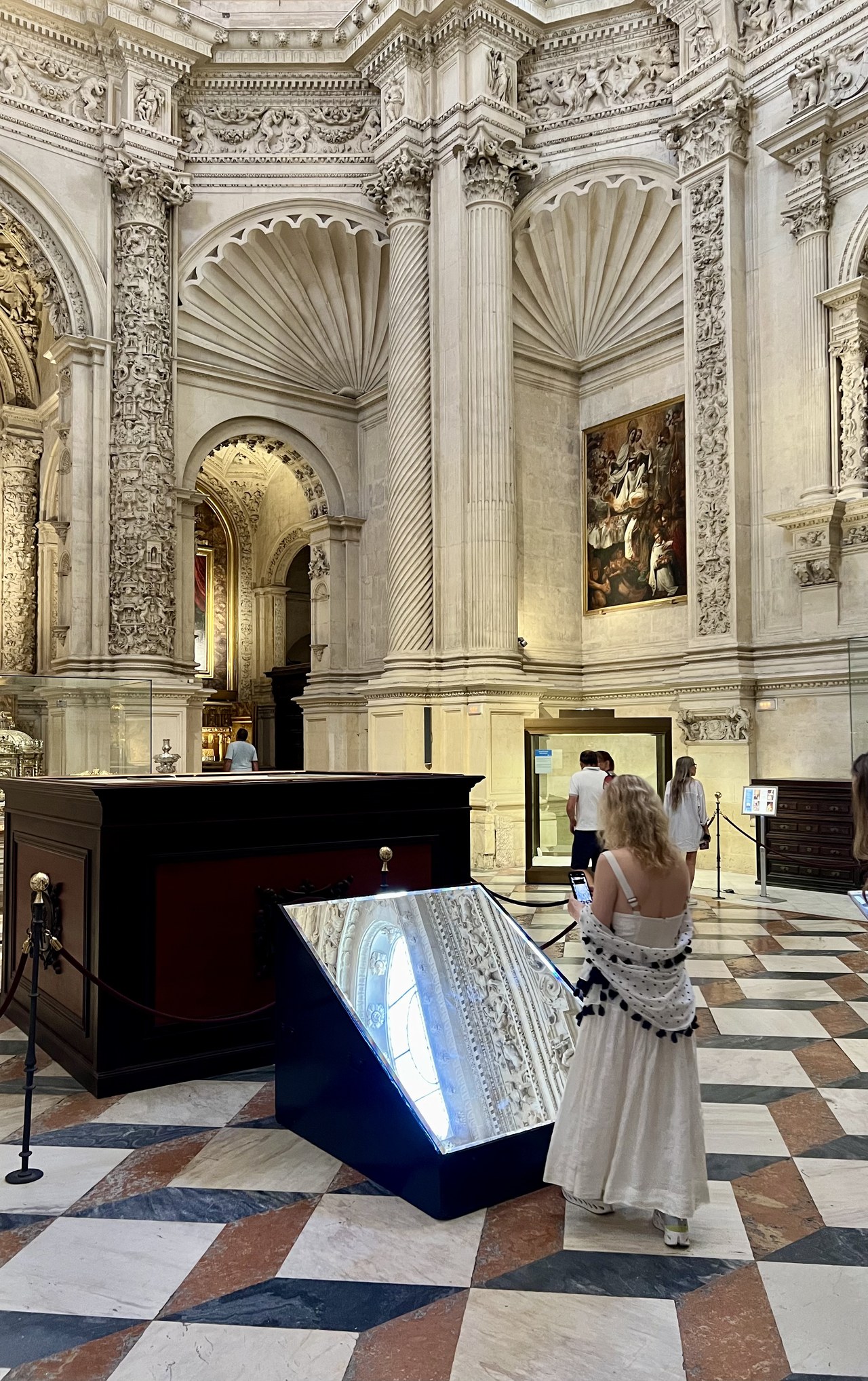
Go into the nave and look up before reading a single chapel label — the scale is the argument, and it stops registering once you start working through the side altars.
⚠️ It is a working cathedral and parts close for services without notice.