The monopoly
Seville sits on the Guadalquivir, navigable from the sea. In 1503 the crown established the Casa de Contratación here and gave the city a monopoly on trade with the Americas: ships sailed from here and, more importantly, had to return here.
⭐ That is the single fact that explains the city's 16th-century wealth, its architecture and its size. A river port a long way inland became the clearing house for a hemisphere, because the crown said so and because the river was defensible in a way an ocean port is not.
What is left of it
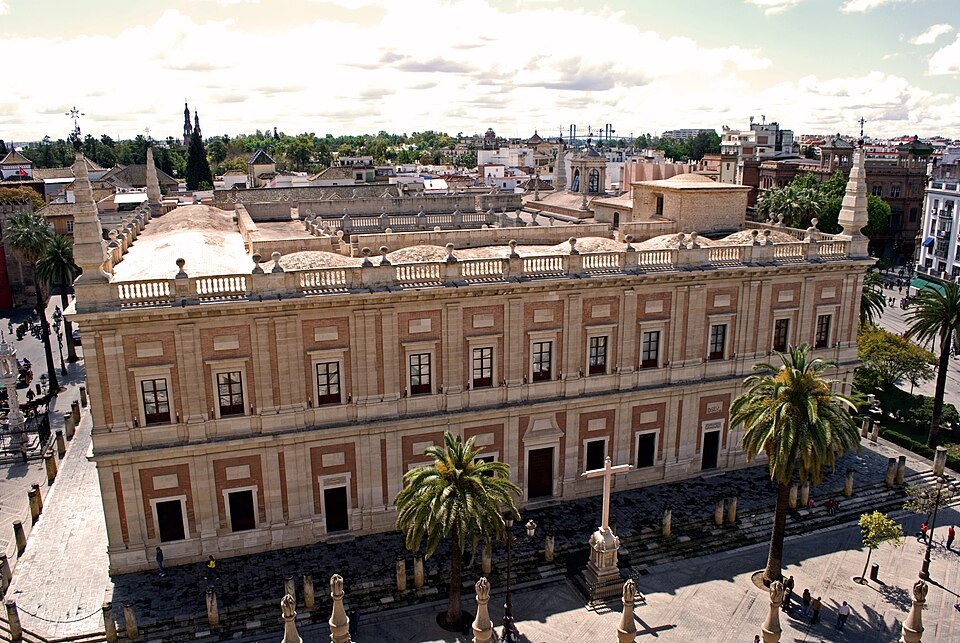
The Archivo de Indias holds the paperwork — and the building itself was the merchants' exchange, put up so that traders would stop conducting business inside the cathedral.
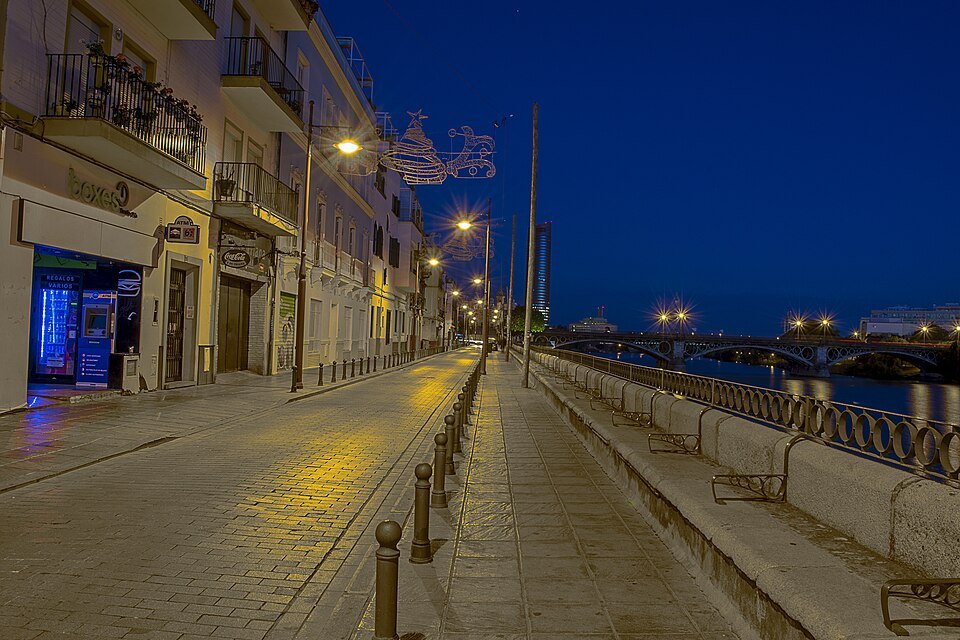
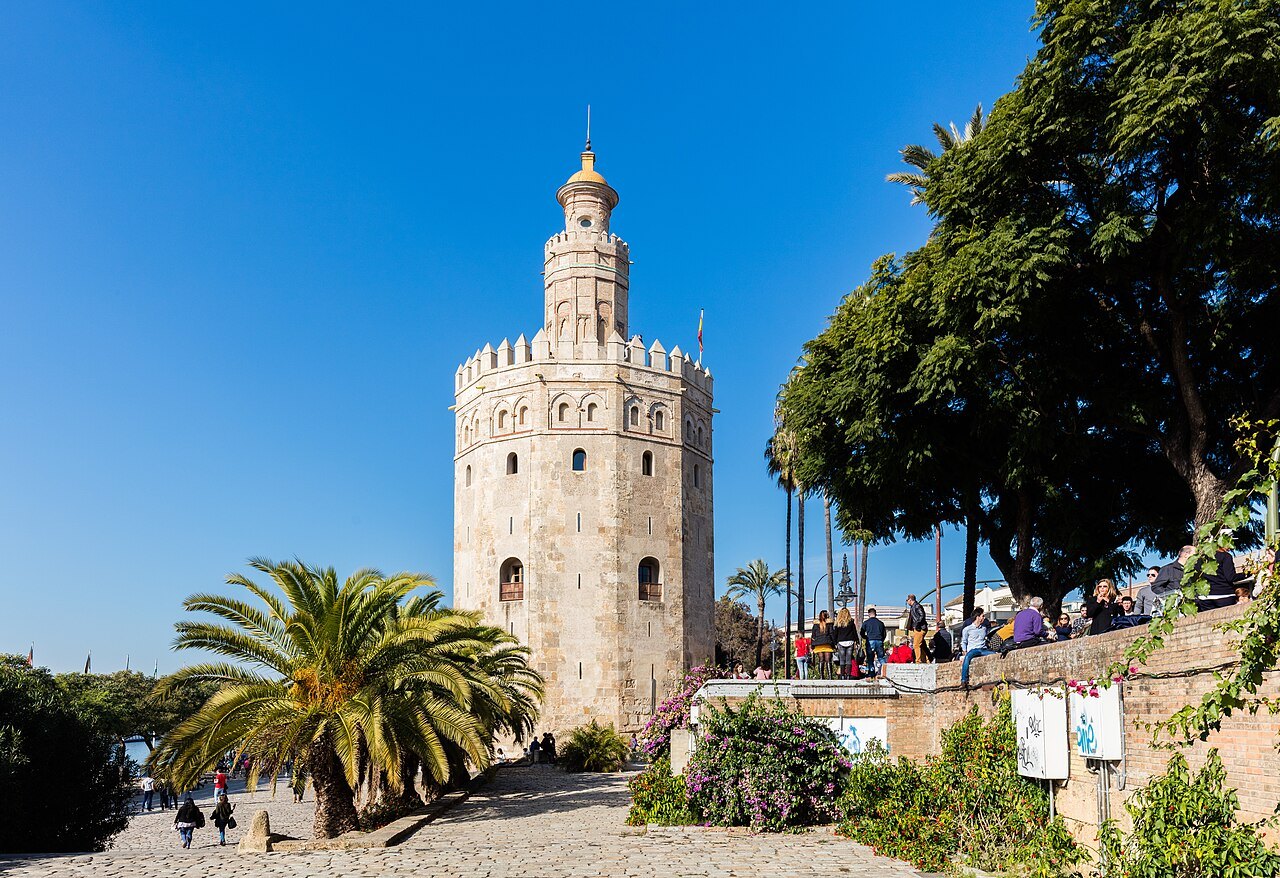
The Torre del Oro guarded the river approach. Triana on the far bank supplied the sailors, and its potteries supplied the tiles.
And how it ended
The river silted and ships got bigger. The monopoly moved downstream to Cádiz in the 18th century and Seville's position went with it.
⚠️ The river you see today is not the working one: the main channel was cut off and re-engineered in the 20th century, so the water in front of Triana is a controlled arm rather than the live Guadalquivir.