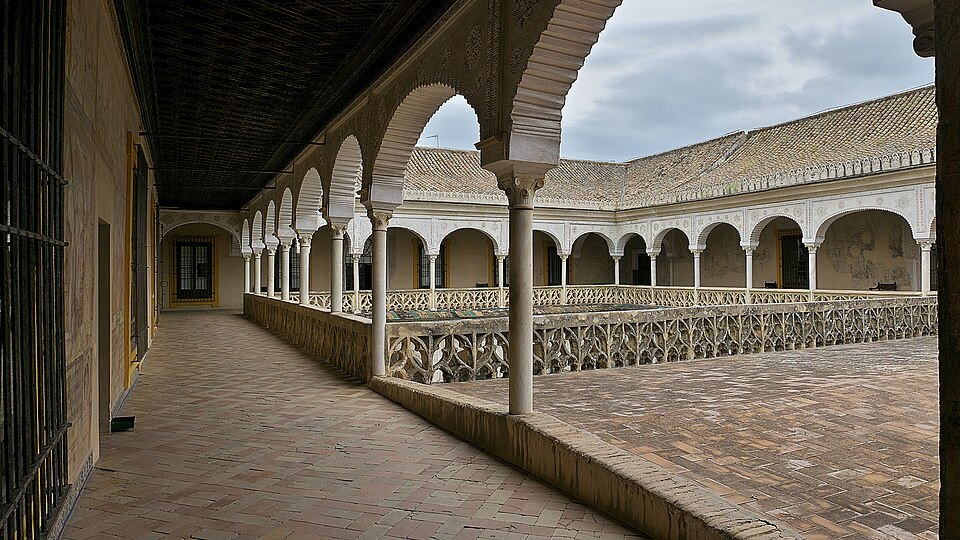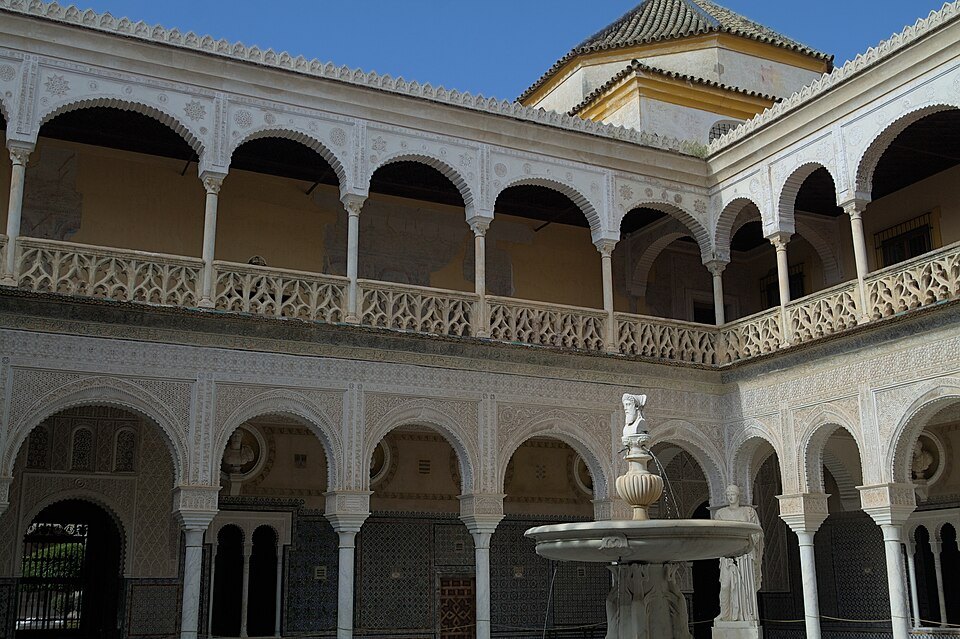
Built from the late 15th century for a noble family whose heir traveled to Jerusalem, the house takes its name from the Way of the Cross he laid out from its door. What it actually is: the clearest surviving example of how Seville's nobility built, combining Mudéjar plaster and tile with classical statuary brought from Italy.
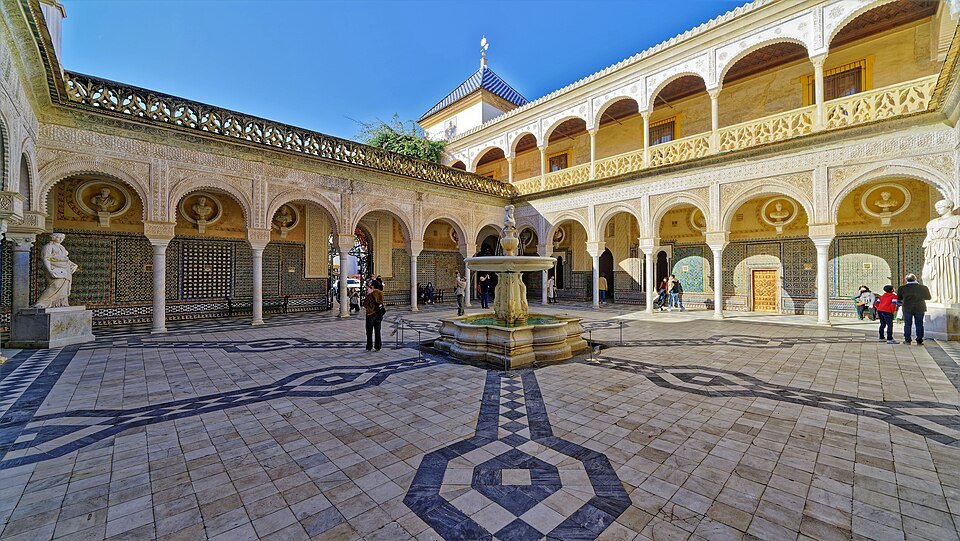
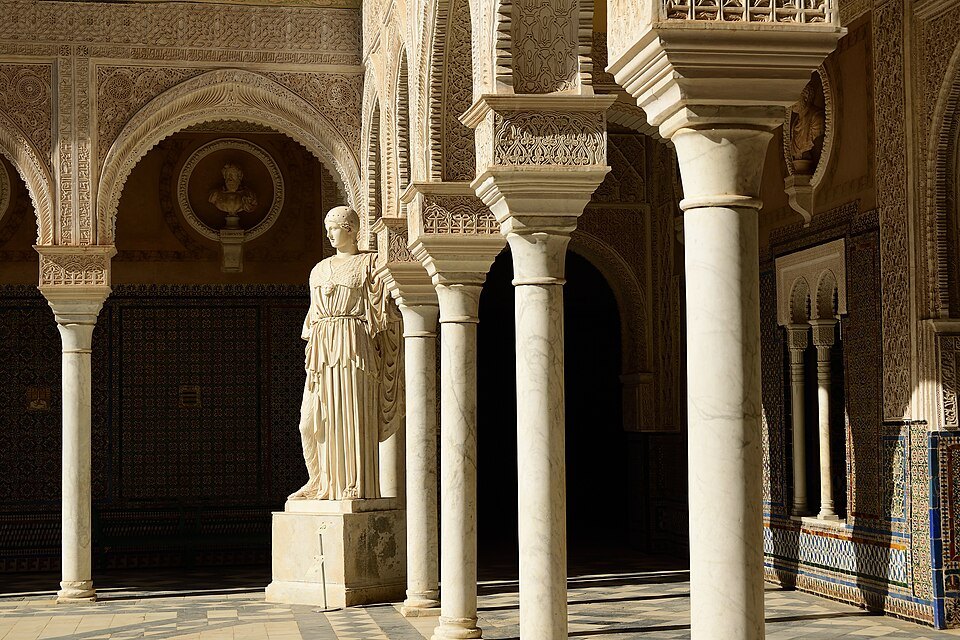
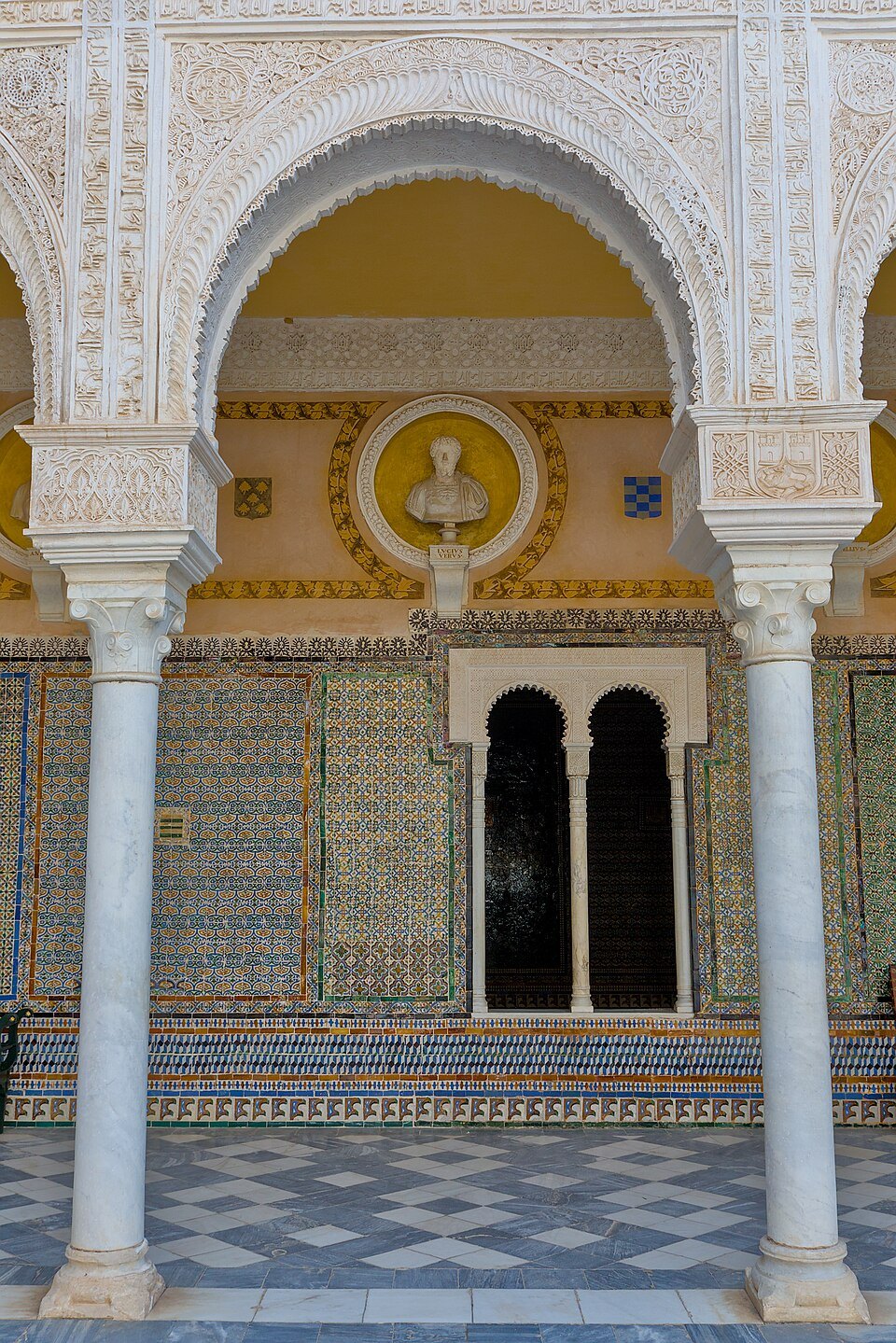
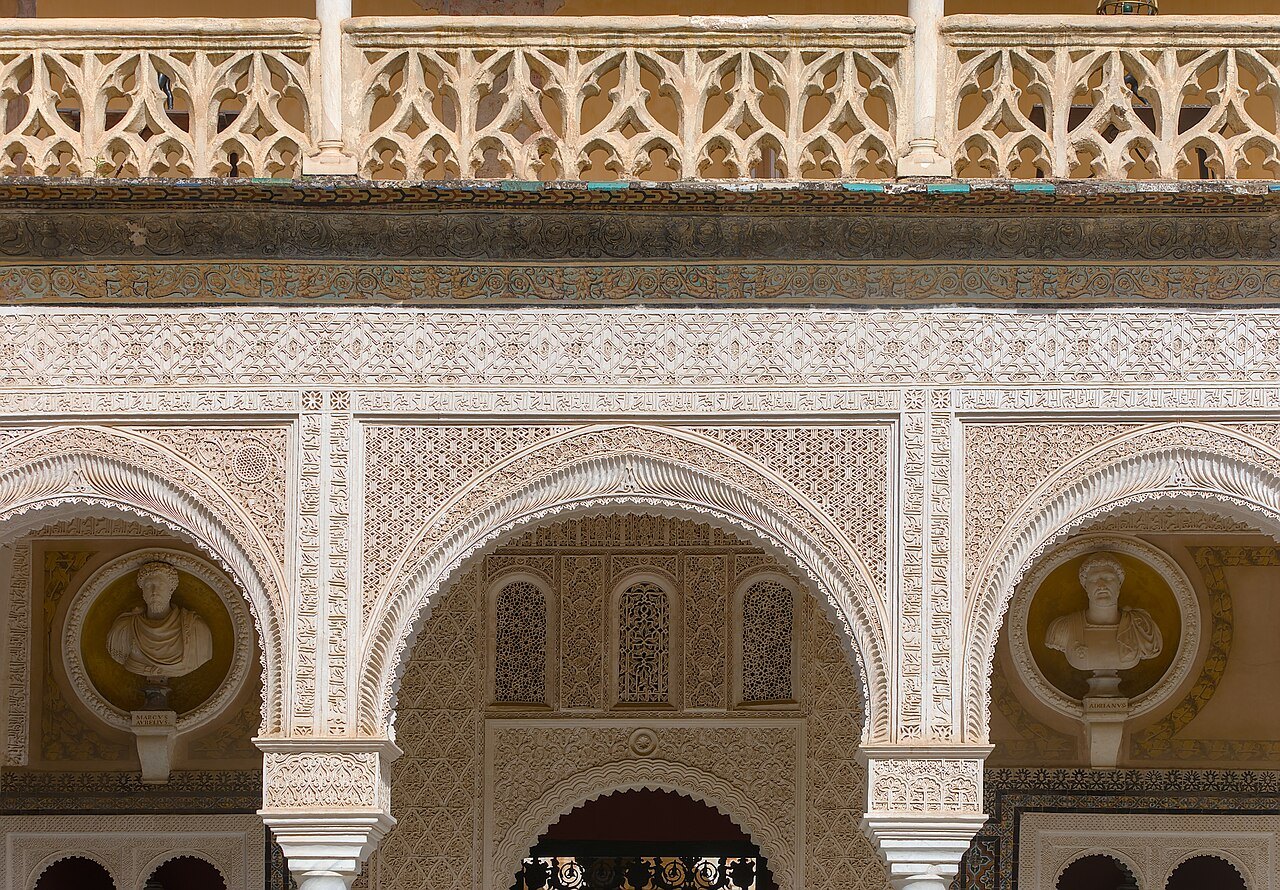
⭐ The main courtyard has Roman sculpture in its corners and a tiled dado beneath carved plaster — two traditions in the same wall, and nobody at the time thought that odd.
It is quieter than the Alcázar and shows a great deal of the same craft.
Go if the Alcázar is sold out. It is not a substitute, but it is the nearest thing and it rarely queues.
A house bought from the Inquisition
On September 27, 1483, Pedro Enríquez de Quiñones, adelantado mayor of Andalusia, and his wife Catalina de Ribera bought a group of houses in the parish of San Esteban from the royal official who sold off property confiscated by the Inquisition; they had belonged to a city officer condemned for heresy. The couple went on buying neighboring houses, some also seized by the Inquisition, until the palace filled almost the whole block, and in 1490 they demolished another to open a square with a fountain in front, the origin of today's Plaza de Pilatos. Pedro died in 1492 on his way back from the conquest of Granada, and Catalina carried out most of the work until her death in 1505, which is why her coats of arms appear more often than his.
Why Pilate?
Their son Fadrique Enríquez de Ribera, the first Marquis of Tarifa, set out for the Holy Land in November 1518, traveling through France and Italy, where he was received by the pope, and came home on October 20, 1520. In Jerusalem he noticed that the distance from the supposed praetorium of Pontius Pilate to Calvary was the same as from his palace to the Cruz del Campo, a little shrine outside the walls built in 1482. During Lent in 1521 he began a Way of the Cross with twelve stations from the chapel of his palace to the Cruz del Campo, the route said to measure 1,321 paces. Because the first station stood at his house, where Jesus left the house of Pilate, people began calling the palace the Casa de Pilatos; by the eighteenth century that was its everyday name, and its rooms were given names from the Passion. The chapel still has a column at its center, copying one Fadrique saw in the Holy Sepulchre where Jesus was said to have leaned while he was scourged.
Tiles and marble
The palace mixes Mudéjar and Italian Renaissance work from the last third of the fifteenth century to the seventeenth. You enter through a marble gateway ordered in 1529 from the Genoese sculptor Antonio Maria Aprile, carved in his workshop in Genoa and set up here in 1533; three Jerusalem crosses at the top carry the inscription "4 August 1519 entered Jerusalem". It leads into a courtyard with a fountain, galleries of carved plaster, and twenty-four busts of Roman emperors, Spanish kings and other figures, many of them from the ruins of Itálica. The house holds about 150 different designs of azulejo tiles made in the 1530s by the brothers Diego and Juan Pulido, potters of Triana, who signed a contract in 1538 to deliver 2,000 tiles a week, one of the largest collections of early modern tiles anywhere, and it is considered the prototype of the Andalusian palace. Later in the sixteenth century Pedro Afán de Ribera, viceroy of Naples, had the architect Benvenuto Tortello rebuild parts of it while leaving the old Mudéjar rooms intact.
A tiled staircase under a Mudéjar honeycomb ceiling by Cristóbal Sánchez leads up to the rooms of the upper floor, where the paintings range from the sixteenth to the nineteenth century: a Pietà by Sebastiano del Piombo, a ceiling with the apotheosis of Hercules painted by Francisco Pacheco in 1603–1604, a small bullfight by Goya and three works by Luca Giordano in the library.
Pedro Afán de Ribera, who inherited the palace when the marquis died in 1539, became Duke of Alcalá and viceroy of Naples in 1558, and he shipped home a large collection of ancient statues. Italian writers told of one cargo thrown overboard by Algerian pirates, but most of the pieces arrived, and they still fill the courtyard and gardens.
Still a ducal house
The palace belongs to the House of Medinaceli and is still a residence of the Dukes of Medinaceli. Its courtyards and gardens have been a film set many times: Lawrence of Arabia in 1962, Ridley Scott's 1492: Conquest of Paradise and Kingdom of Heaven, and Knight and Day with Tom Cruise and Cameron Diaz, filmed here at the end of 2009.
Sources
Casa de Pilatos, photographed