The museum occupies the Convento de la Merced, and the building is a large part of the pleasure: three cloisters, a church converted into the main gallery, and daylight throughout.
⭐ The collection is strongest exactly where Seville was strongest — Murillo, Zurbarán and Valdés Leal, all of whom worked here. Seeing them in the city that produced them, in a building they would recognize, is the argument for coming.
It is rarely crowded, which for a collection of this quality is unusual.
The converted church is the room to slow down in. Most people walk through it too fast.
The Mercedarian convent
The land was given by Ferdinand III to the knights of the Order of Mercy who had fought in the conquest of Seville in 1248, and their first Mudéjar convent stood here. In 1602 the head of the order, Fray Alonso de Monroy, commissioned a complete rebuilding from the architect and sculptor Juan de Oviedo y de la Bandera. The church was built between 1603 and 1612, and the convent took its present shape in the second decade of the seventeenth century: three courtyards linked by a grand staircase, with the church at one end. The playwright Tirso de Molina, a Mercedarian friar banished from Madrid, lived here in 1625.
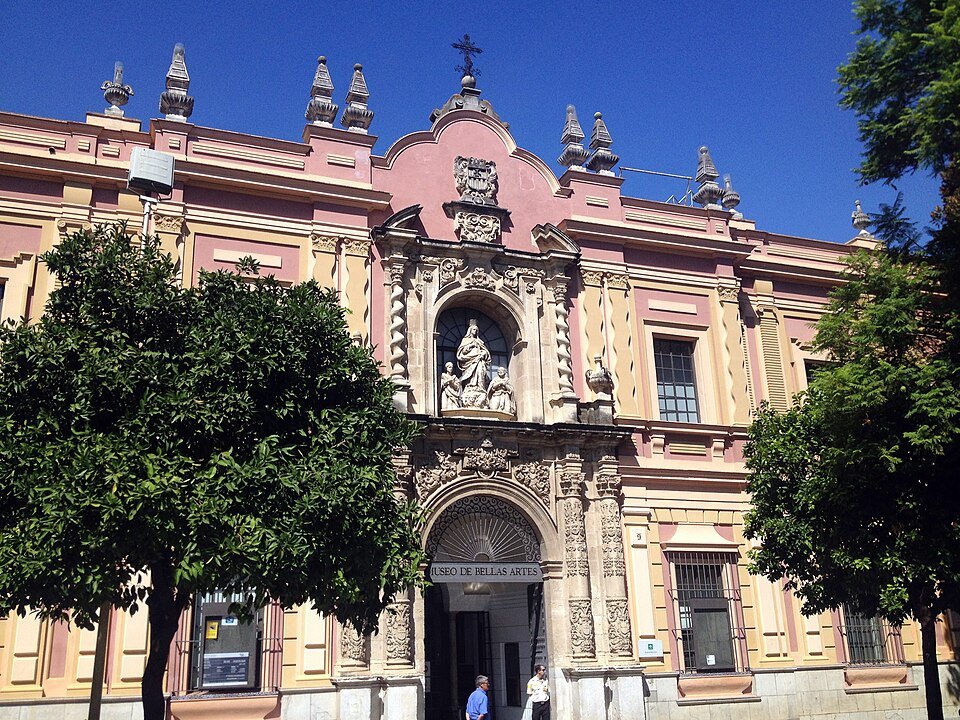
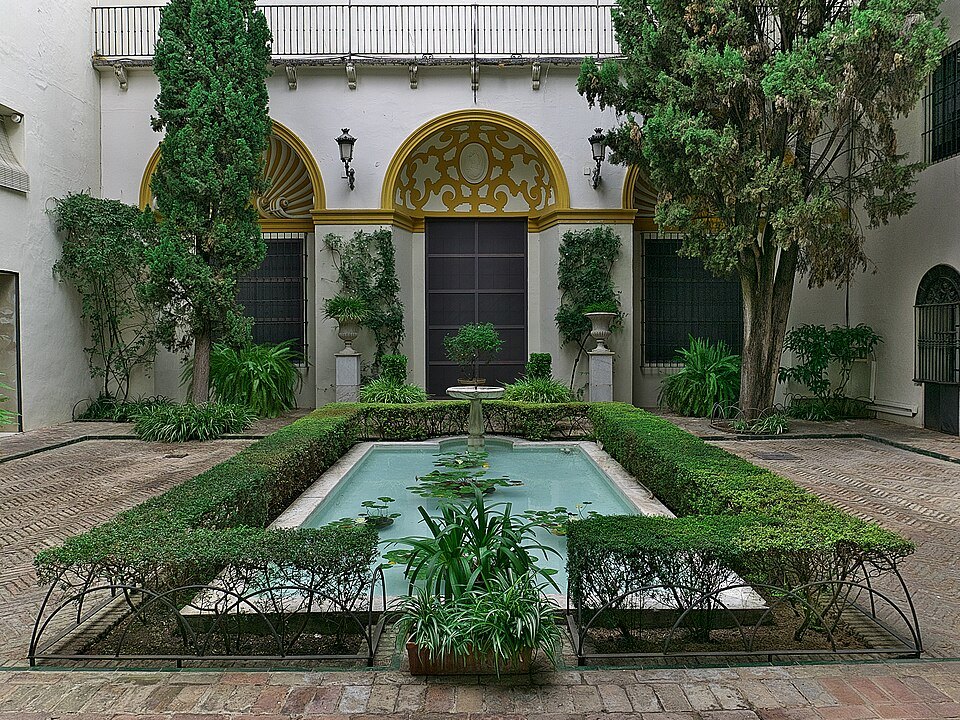
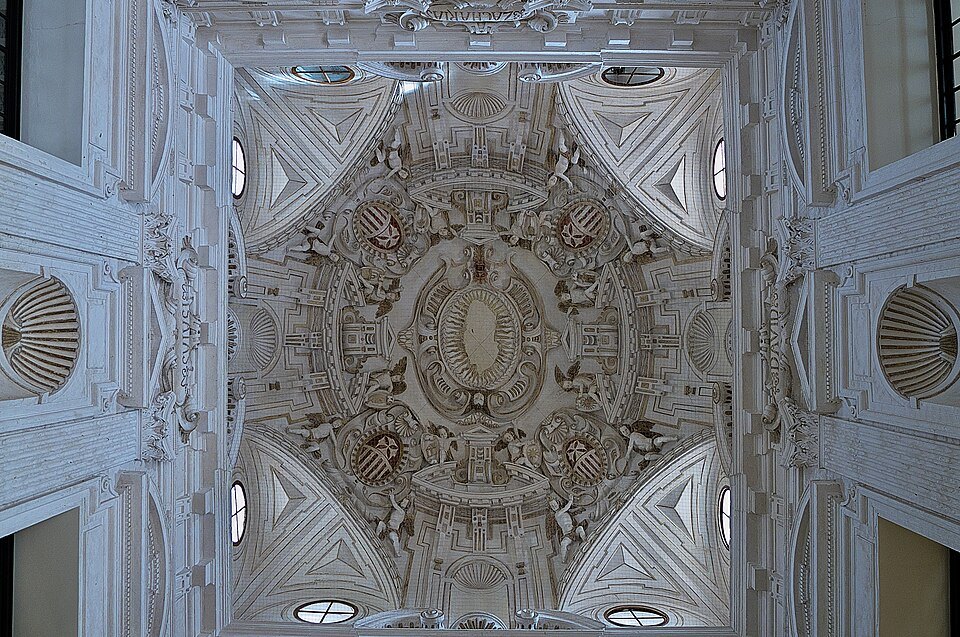
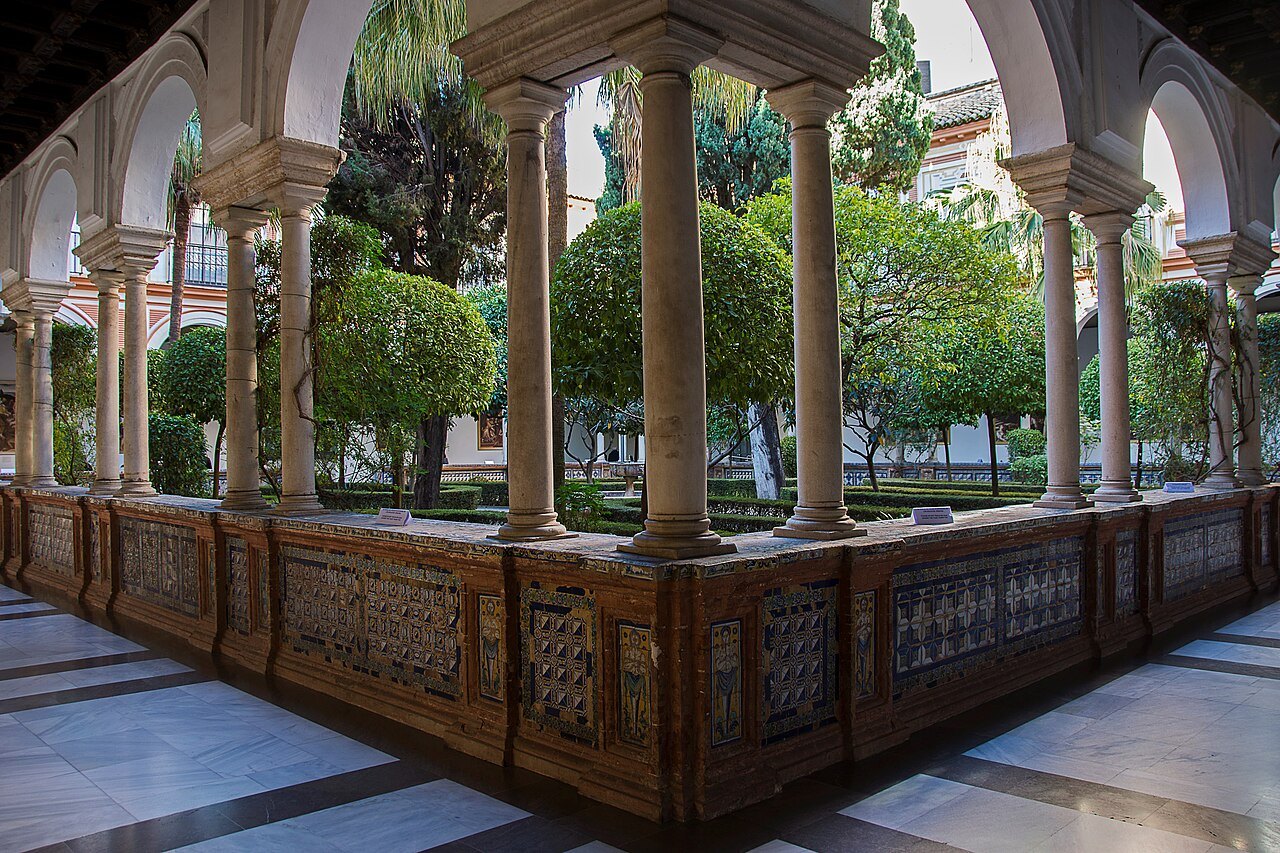
The Claustro Mayor, the great cloister, is striking for its size and slenderness, with paired columns on pedestals on the ground floor; its upper floor was remodeled in 1724 by Leonardo de Figueroa. The Claustro de los Bojes, of around 1612, holds tile panels from other convents and a doorway from the castle of La Calahorra, and the plainer Claustro del Aljibe, where you enter the galleries, has a ceramic panel of the Virgin of the Rosary made by Cristóbal de Augusta in 1577. The staircase, rising in two flights in a tall cubic space, was widely imitated in the Americas. The Baroque portal facing the square, made in 1729 by Miguel de Quintana, with statues of the Virgin of Mercy, Saint Peter Nolasco and King James I of Aragon, was the church door on Calle Bailén until it was moved here between 1942 and 1945, when the old sacristy became the Patio de las Conchas, with cypresses, a small pool and shell-topped niches.
The church as a gallery
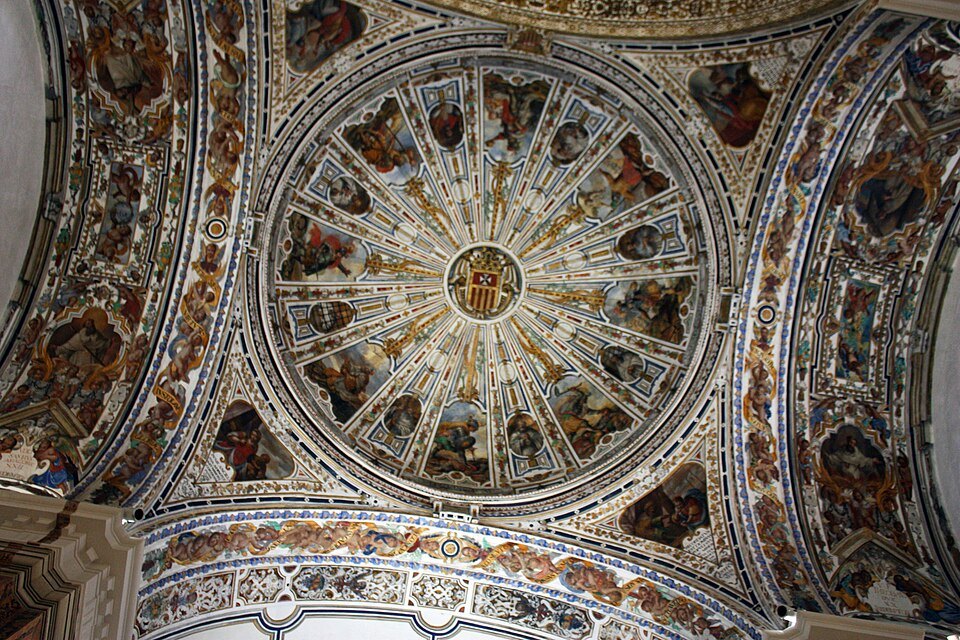
The church is a Latin cross with a single barrel-vaulted nave and a domed crossing, its walls and vaults covered in murals by the Sevillian painter Domingo Martínez. It now holds the heart of the collection, and its height and space suit the large altarpieces that were painted for buildings just like it.
A museum made from closed convents
When Mendizábal's laws suppressed the religious orders in 1835, the convent was confiscated, and a royal order of September 16, 1835, created a museum to gather the paintings of the closed monasteries. While a building was found, the works were scattered and many were lost; a Velázquez stayed in the archbishop's palace and several Zurbaráns were sold abroad. The museum settled in the Merced by 1838 and opened officially in 1841. For a century it shared the building with archaeological finds from Itálica, which moved to the Plaza de América in 1941.
The early years were chaotic. The first inventory, of around 1840, counted 2,045 works; two painters then judged that only 583 deserved a place, further purges followed, and paintings dismissed as rubbish left the building. By the inventory of 1912 the founding collection was down to 380 paintings and 41 sculptures. The great gifts of the first half of the twentieth century, from the Monti, Abreu, Gestoso and Aguiar bequests among others, and later purchases by the Andalusian government, rebuilt it. The building has had four major campaigns of work: the arcades, cloister floors and wall tiles, many brought from other closed convents, were restored between 1868 and 1898, and an unfinished campaign in the 1970s did real harm to the structure before the full rehabilitation of 1985–1993.
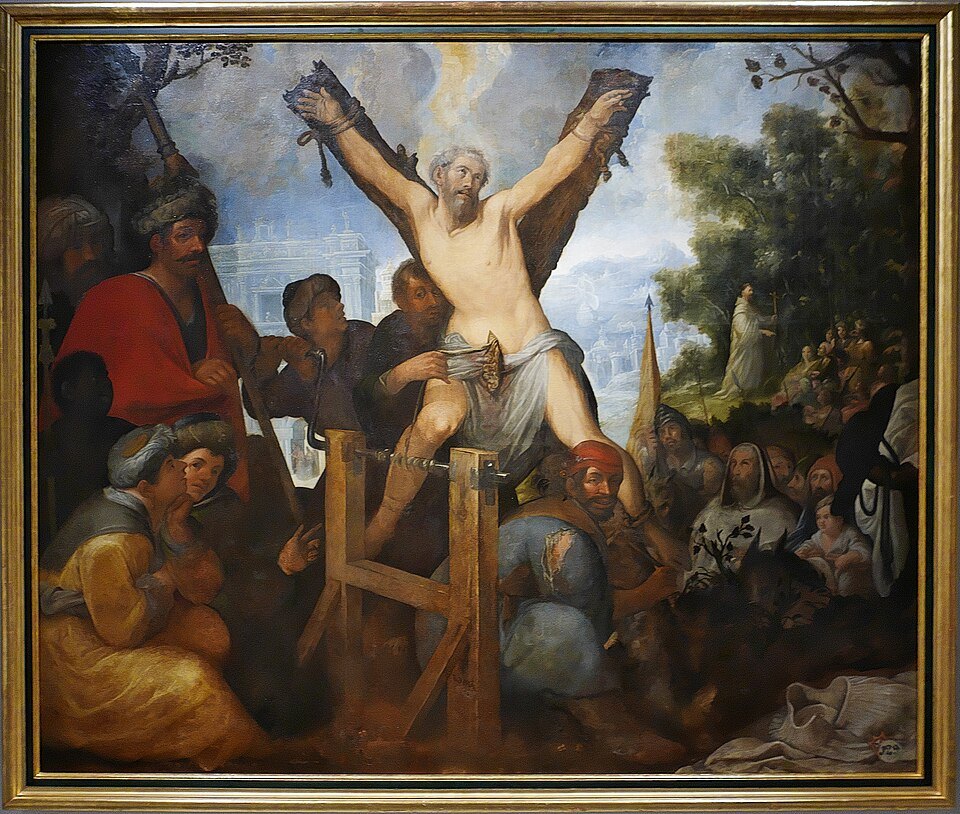
That origin explains the collection: mostly religious painting, above all of the Sevillian Baroque, with Zurbarán, Murillo and Valdés Leal at its heart, followed by the Seville school's second golden age in the nineteenth century. Donations from 1894 onward, including an El Greco given by the Infanta María Luisa Fernanda in 1897, filled the gaps. Highlights include Murillo's Virgin of the Napkin and Zurbarán's Saint Hugo in the Carthusian Refectory. The sculpture ranges from Pietro Torrigiano in the sixteenth century to Martínez Montañés and his pupil Juan de Mesa in the seventeenth, and there are drawings, prints, tiles, furniture and textiles. The building was fully rehabilitated between 1985 and 1993 and was declared a historic-artistic monument in 1962. In the square in front stands a bronze Murillo by Sabino de Medina, twin of the one outside the Prado in Madrid.
Sources
Museo de Bellas Artes, photographed