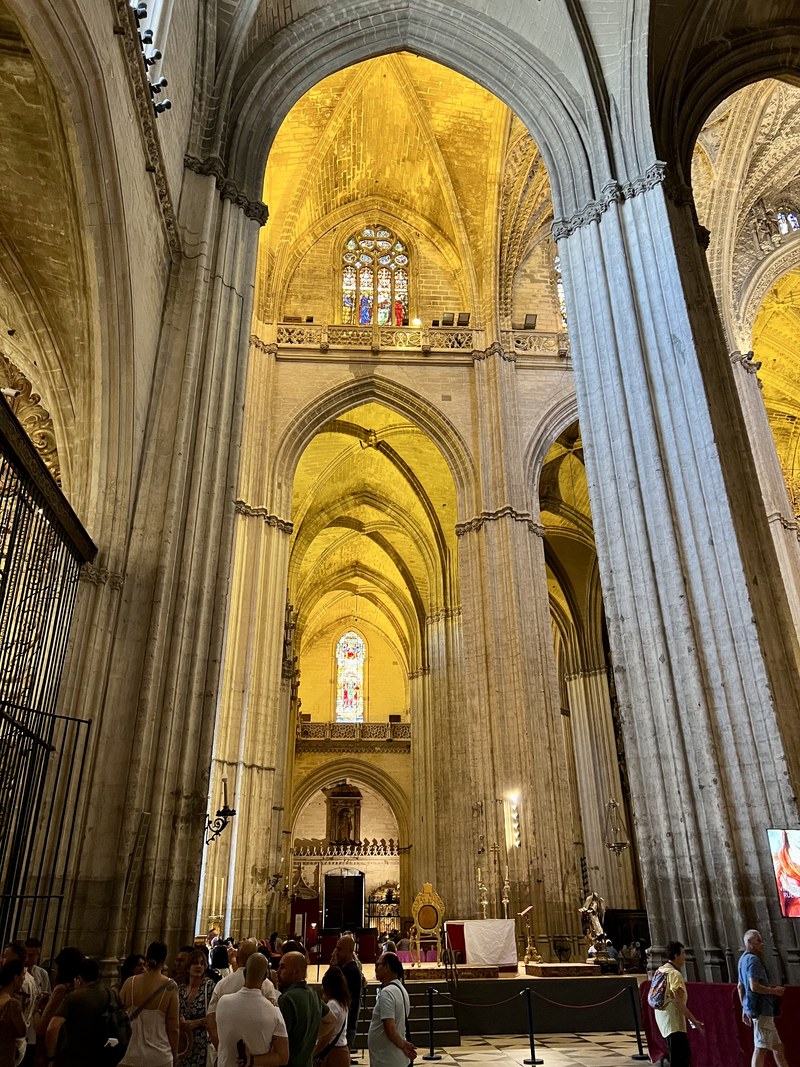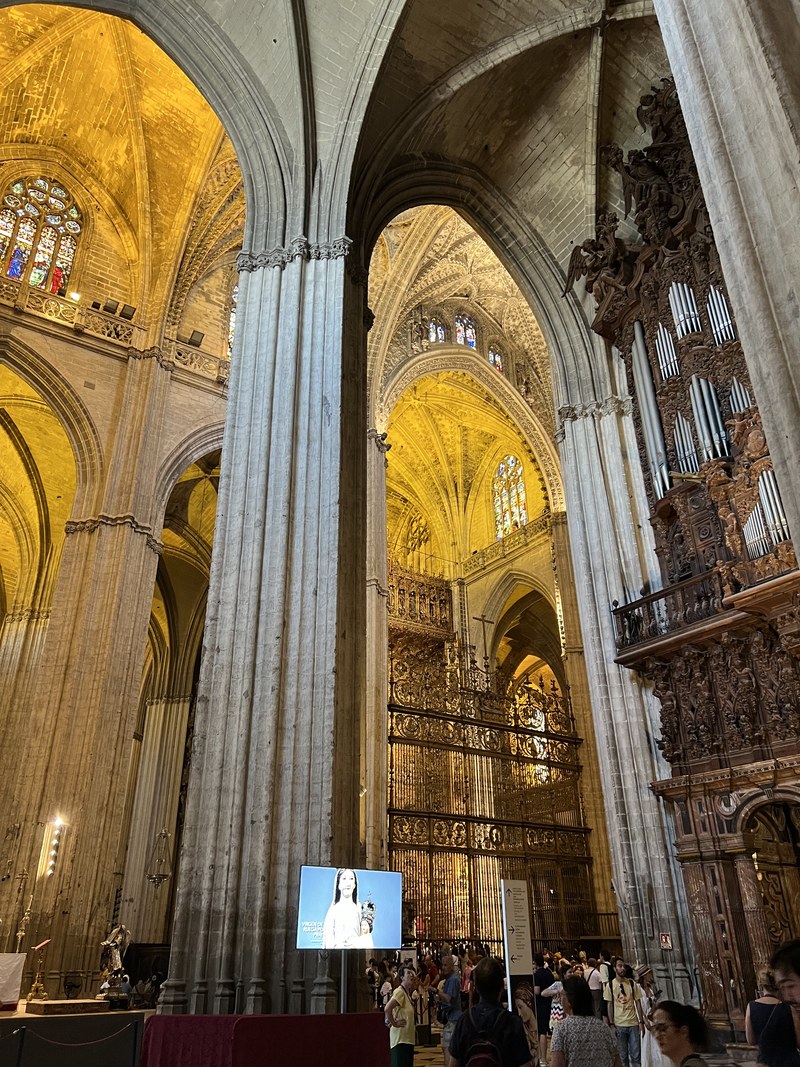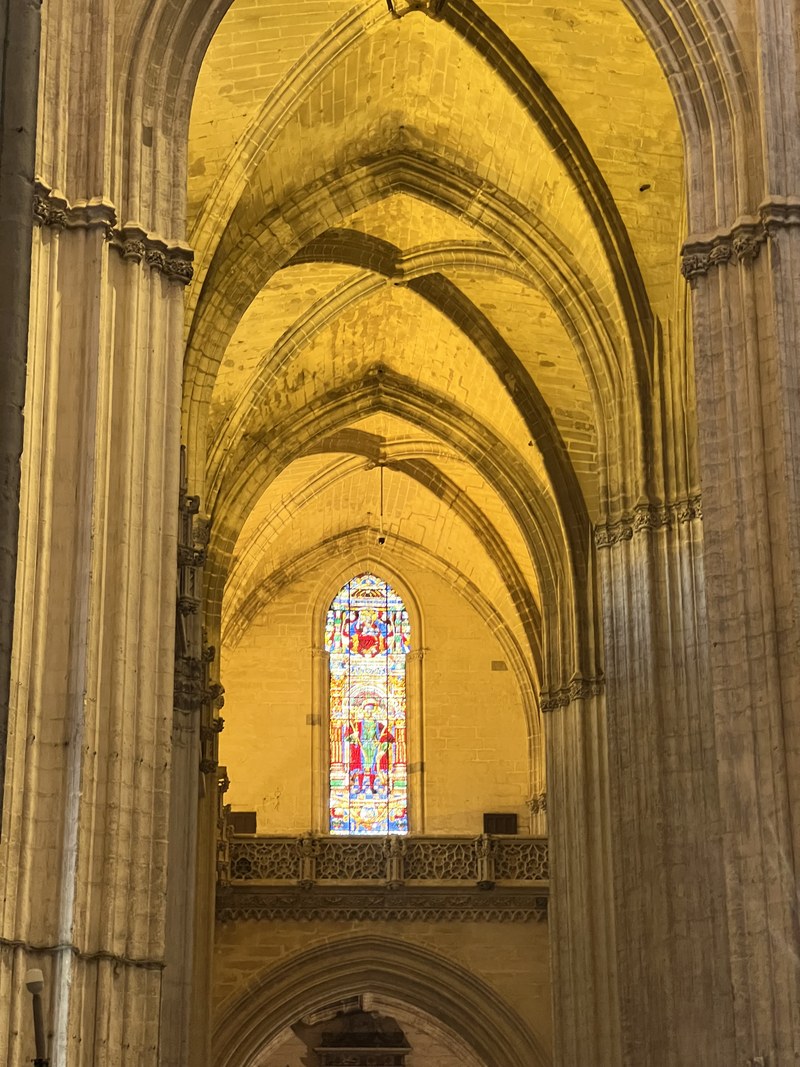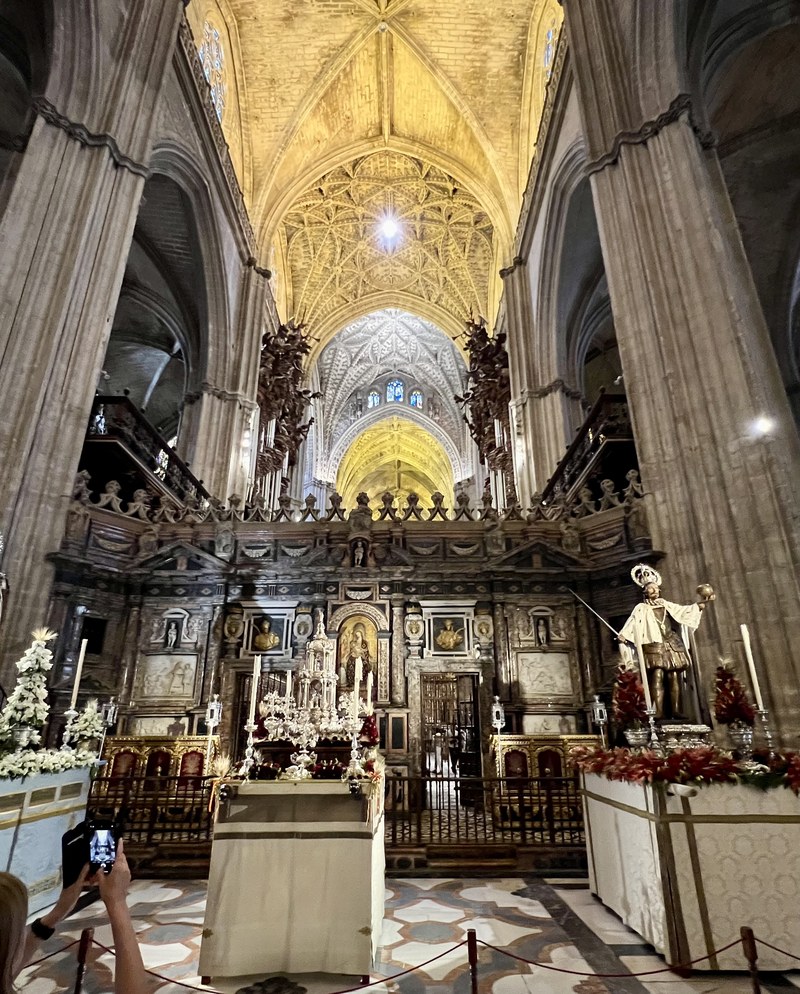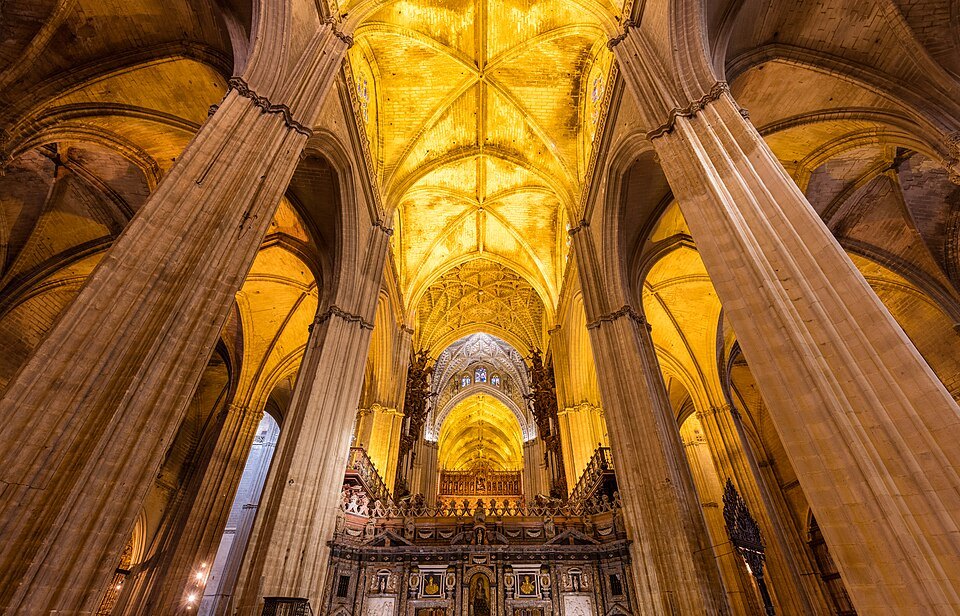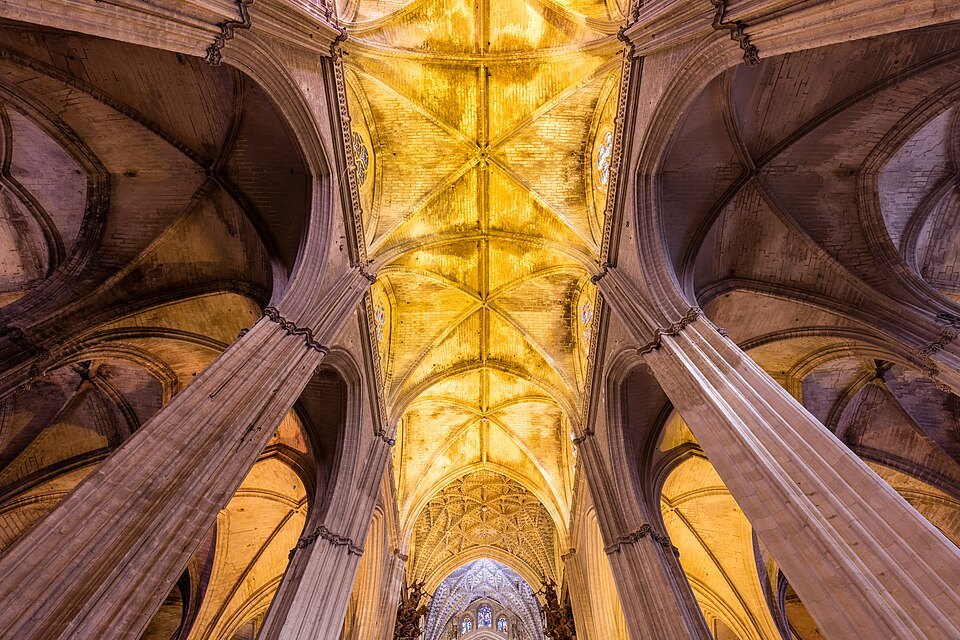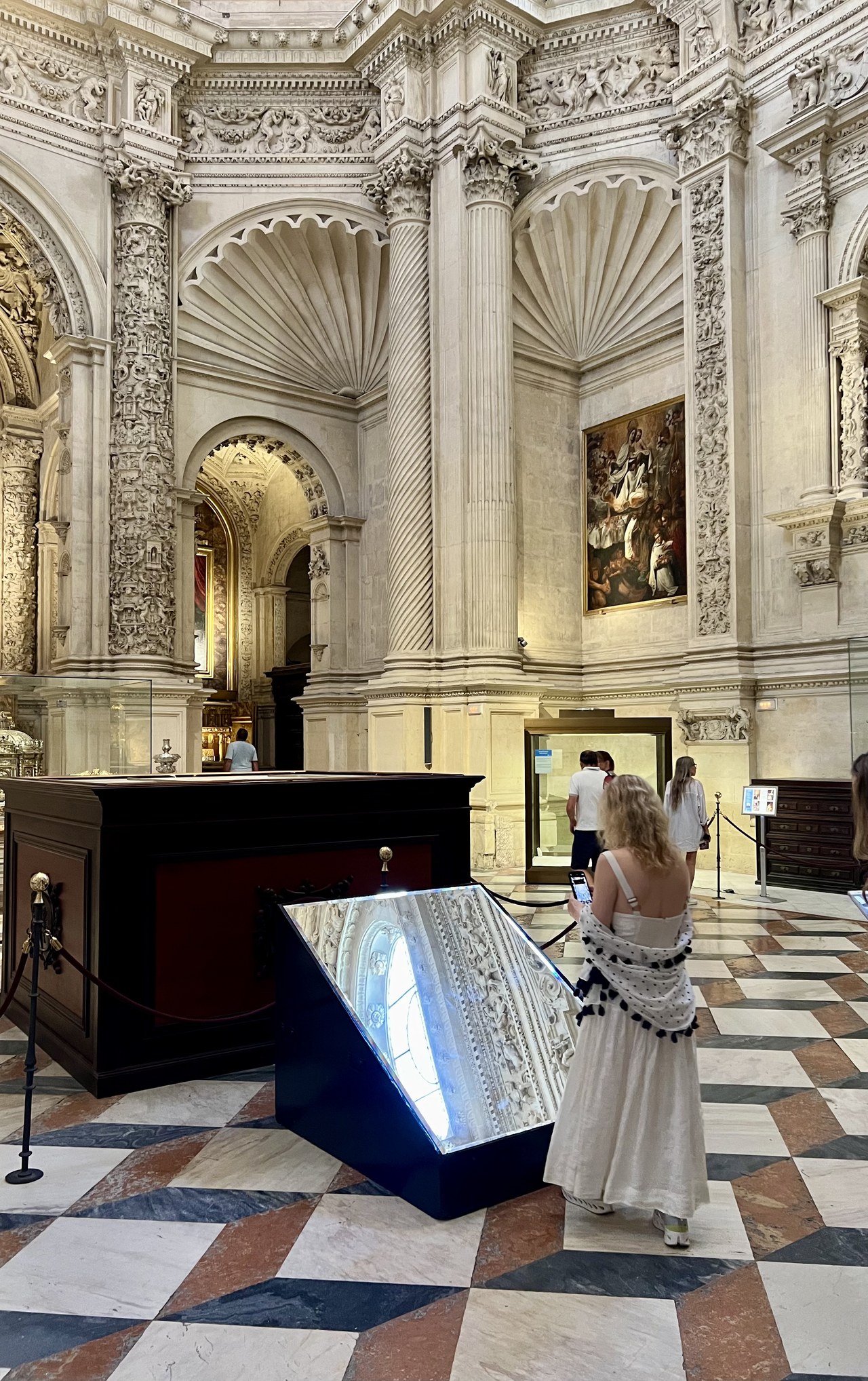
Building began in the early 15th century on the site of the Almohad congregational mosque, and the scale was the point from the start. The interior is one of the largest enclosed spaces in European church architecture, and standing in the nave is the argument the building was constructed to make.
⚠️ You will read that it is 'the largest Gothic cathedral in the world'. That depends entirely on whether you measure by area, volume or footprint, and different measures give different winners. It is unambiguously among the largest; this site leaves it there.
⭐ The retablo mayor behind the high altar is the piece that stops people: a wall of carved and gilded scenes, worked on for decades. Give it longer than you think.
The monument holding Columbus's remains is carried by four figures representing the kingdoms of Spain. ⚠️ Whether all of the remains inside are his has been argued over for a long time and testing has not entirely settled it.
Two survivals of the mosque are still here: the courtyard of orange trees and the minaret, now the Giralda.
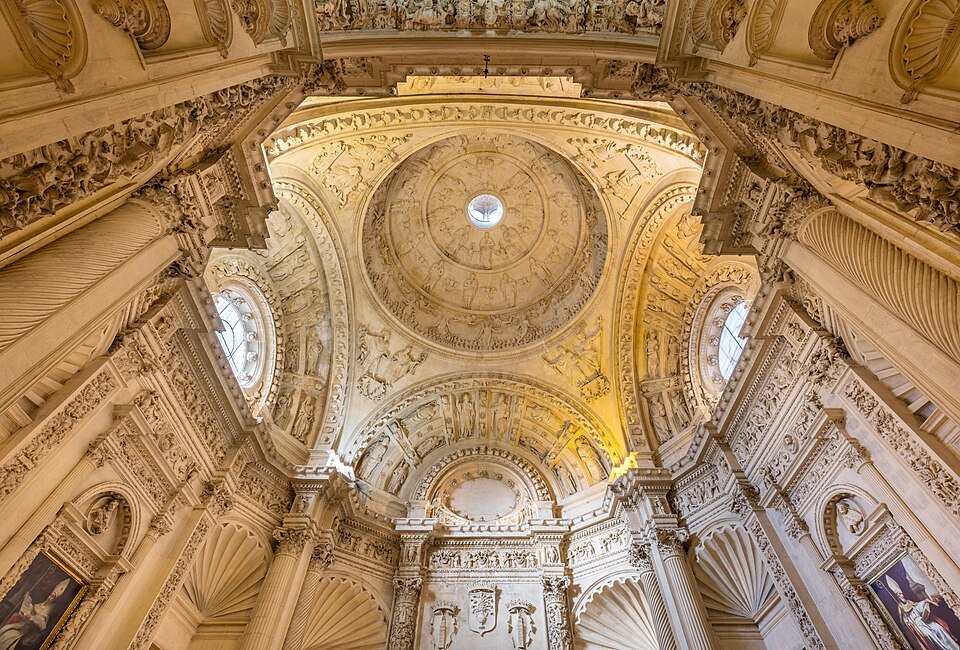
Go into the nave and look up before you look at anything else. The scale is the thing, and it stops registering once you start reading the chapels.
From mosque to cathedral
The story starts with a mosque. In 1172 the Almohad caliph Abu Yaqub Yusuf ordered a new great mosque for Seville, close to the Alcázar; it was dedicated in 1182 and finished in 1198, a rectangle of 113 by 135 meters covering more than 15,000 square meters, with a minaret and a courtyard for ablutions. When Ferdinand III conquered the city in 1248 the mosque was turned into the cathedral: its orientation was changed, chapels were walled off along its sides, and almost the whole eastern half became a royal chapel for the king's tomb.
On July 8, 1401, the cathedral chapter decided to replace it. Local tradition gives them the words "let us build a church so beautiful and so grand that those who see it finished will take us for mad"; the actual minutes, now lost, asked for a church "so good that none will be its equal". Work began in 1402 and went on for more than a century under a line of masters from across Europe — the Dutchman Ysambert, the Frenchman Carlín, Juan Normán, Master Ximón and Alfonso Rodríguez — and the clergy gave up half their stipends to pay for it. It was finished in 1506–7, but in 1511 the crossing lantern and some vaults fell in, and the present lantern, designed by Juan Gil de Hontañón, was completed in 1519. The crossing collapsed again in 1888 after an earthquake, and the repairs went on until at least 1903.
How big it is
When it was finished it overtook Hagia Sophia as the largest cathedral in the world. The Gothic body alone is 126 meters long and 76 meters wide, it has the longest nave of any cathedral in Spain, and the vaults over the crossing are the highest in the building. It has 80 chapels and fifteen doors on its four facades; in 1896 it was reported that 500 masses were said every day. In 1987 UNESCO listed it as a World Heritage Site together with the Alcázar and the Archive of the Indies.
The high altar and the choir
The main chapel, closed off by gilded Renaissance iron screens, holds the retablo mayor, considered the largest altarpiece in Christendom. It was begun in 1482 by the Flemish carver Pieter Dancart, who died with it unfinished; the central part was done by 1526 and the side sections only between 1550 and 1594. Its scenes tell the life of Christ, and among them sits the small thirteenth-century Virgen de la Sede, the patron of the cathedral. The retablo was restored from 2011 in a job that lasted thirty months.
Facing it across the crossing is the choir, a stone box in the middle of the nave with 127 carved stalls, their backs inlaid with different woods and their armrests and misericords full of grotesque figures. One stall carries the carver's signature, Nufro Sánchez, and the date 1478. The twin organs above it replaced two older instruments destroyed in the 1888 earthquake.
Kings and an admiral
The Royal Chapel at the east end holds the remains of the city's conqueror, Ferdinand III, his son Alfonso X the Wise, and Peter the Cruel. The monument to Christopher Columbus, by Arturo Mélida, stands in the south transept opposite the Door of Saint Christopher and was unveiled on November 17, 1902: four bronze heralds 260 centimeters tall, with alabaster faces and hands, carry the coffin, those in front standing for Castile and León and those behind for Aragon and Navarre.
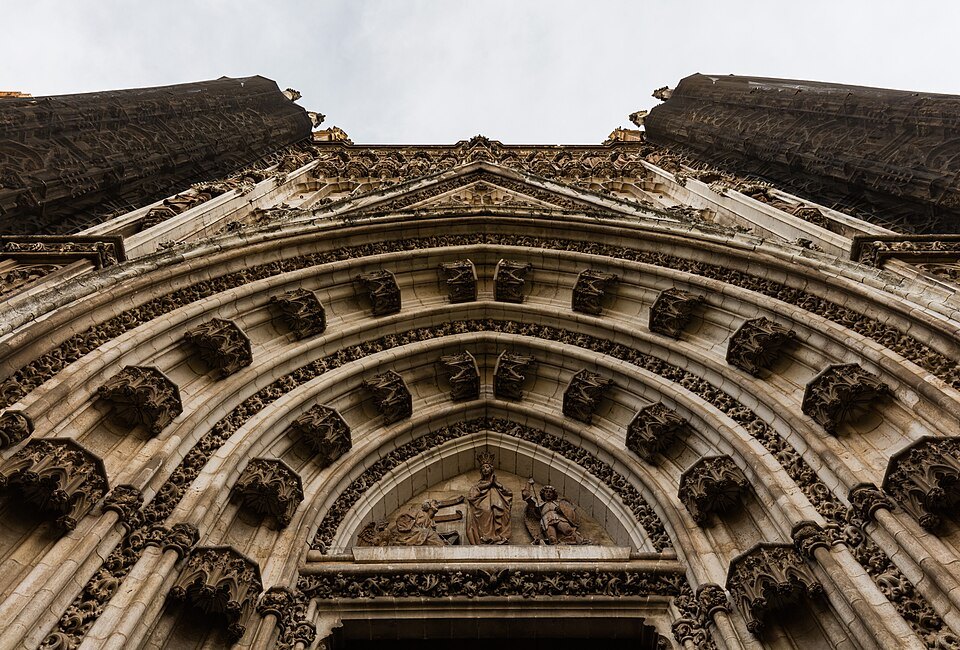
Look out too for the doors. The Door of Forgiveness on Calle Alemanes, which leads into the orange-tree courtyard, still has the horseshoe arch of the mosque, and the Door of the Lizard is named for the stuffed crocodile hanging from its ceiling. In the baptistery chapel of Saint Anthony, Murillo's Vision of Saint Anthony of 1656 had its saint cut out by thieves in 1874; the fragment turned up for sale in New York the next year and was sent home and put back.
Sources
Catedral de Sevilla, photographed