The Alcázar is the oldest royal palace still in use in Europe — the Spanish royal family keeps apartments here. What you visit is a complex of buildings from several centuries layered on a Muslim fortress.
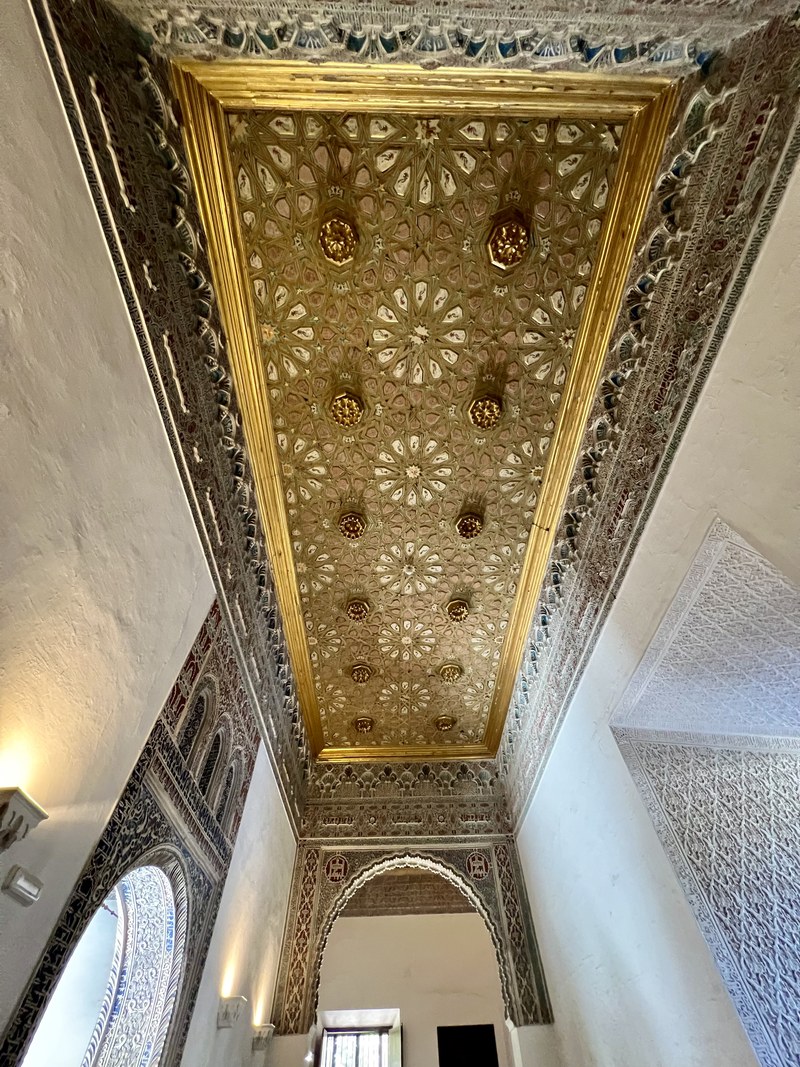
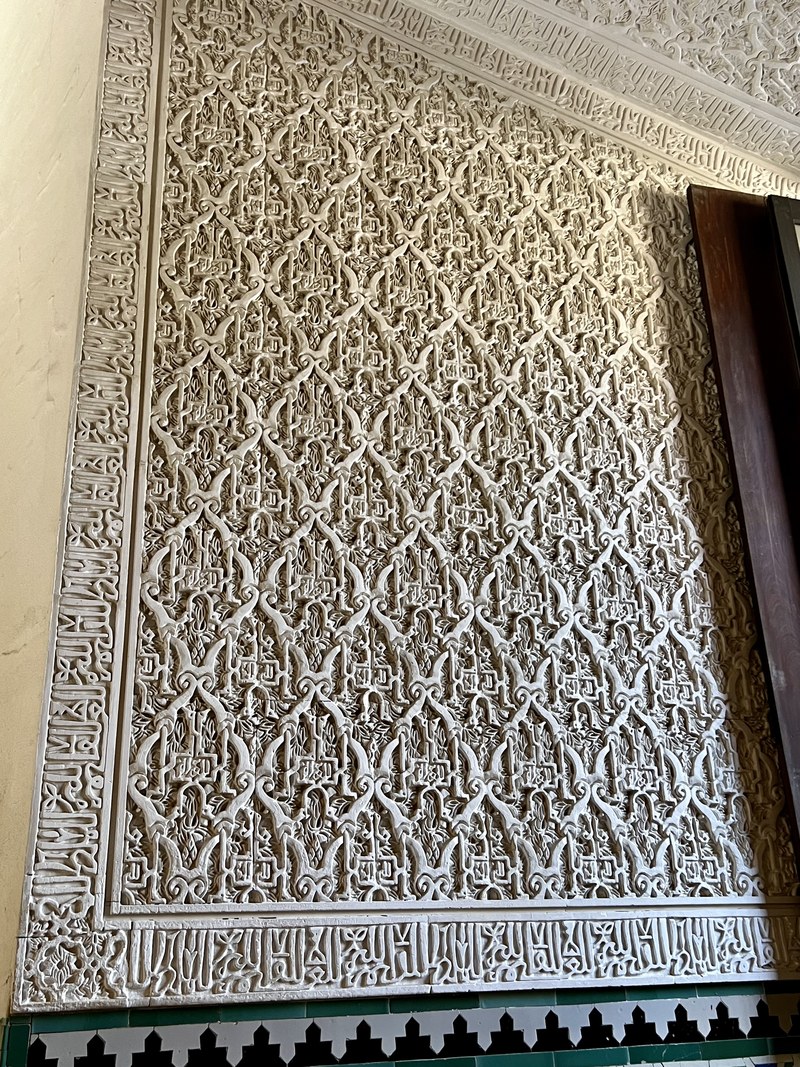
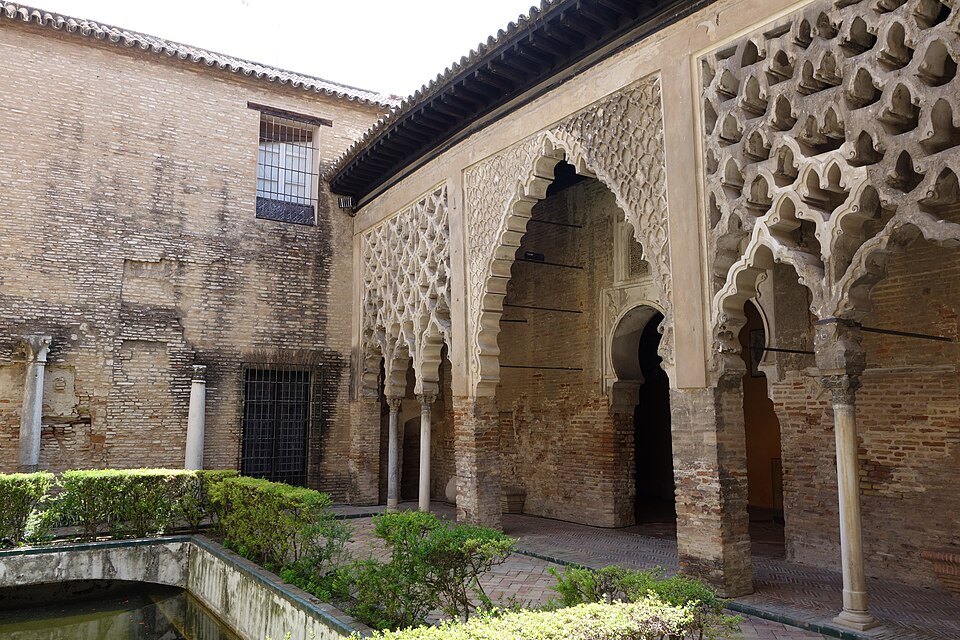
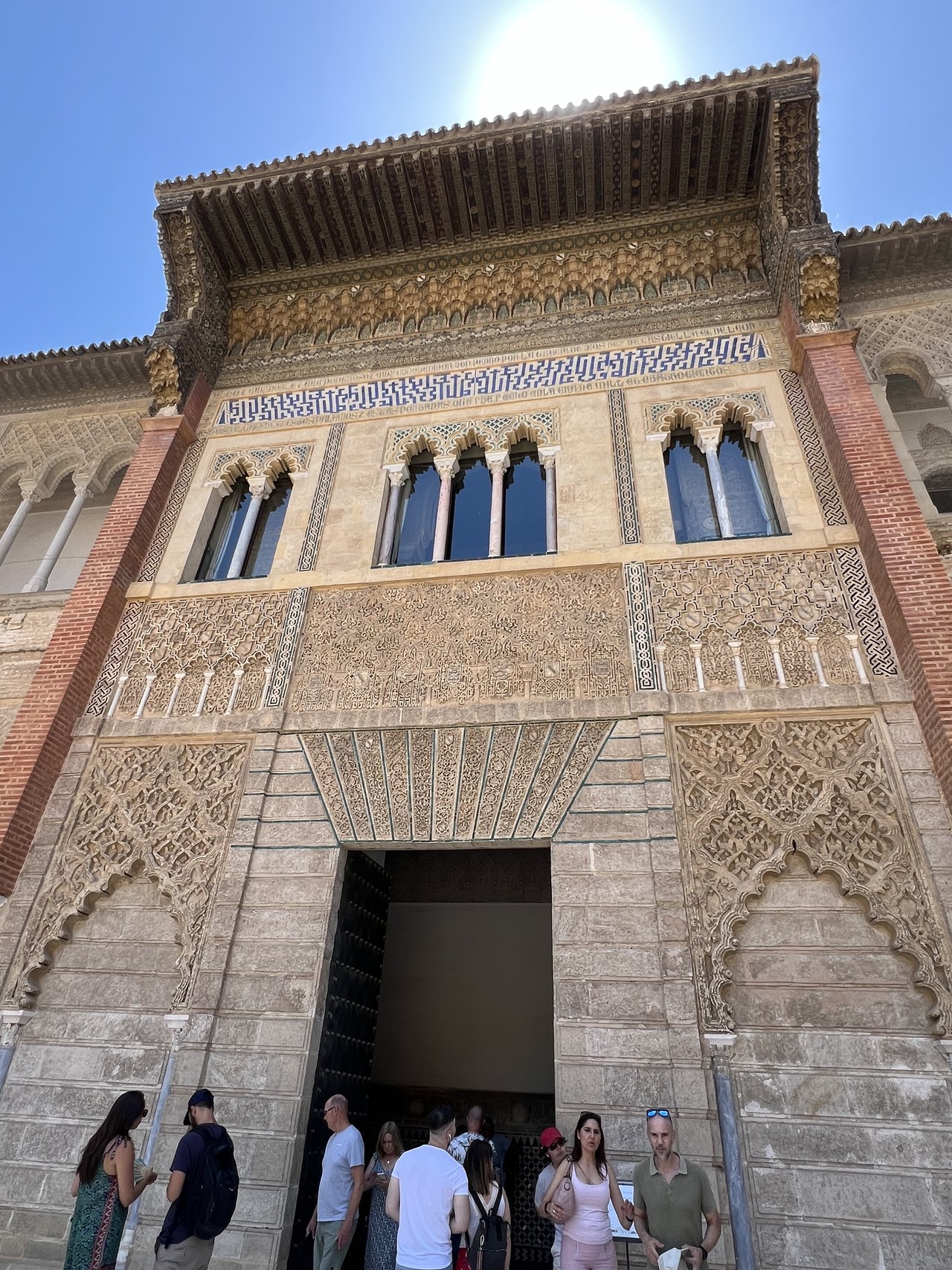
⭐ The heart of it is the Palacio del Rey Don Pedro, built in the 1360s for a Christian king by Muslim craftsmen, in a style so close to Granada's that craftsmen were reportedly sent between the two courts. This is Mudéjar architecture: Islamic form and technique, Christian patron.
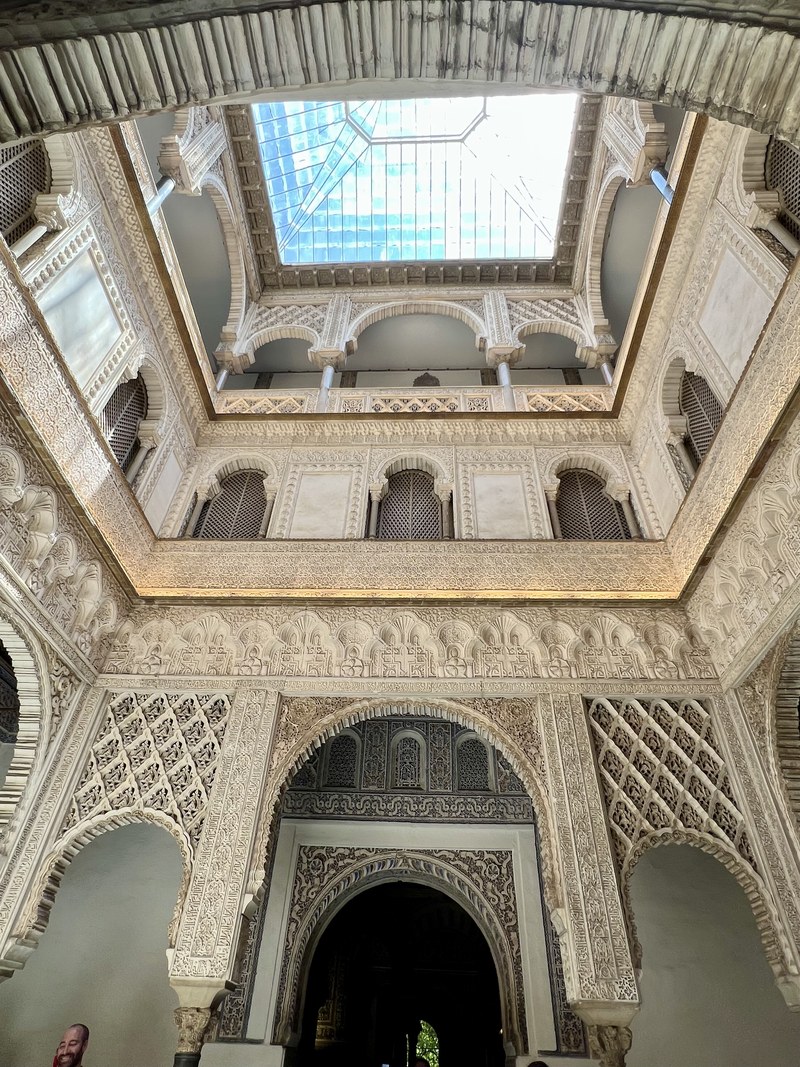
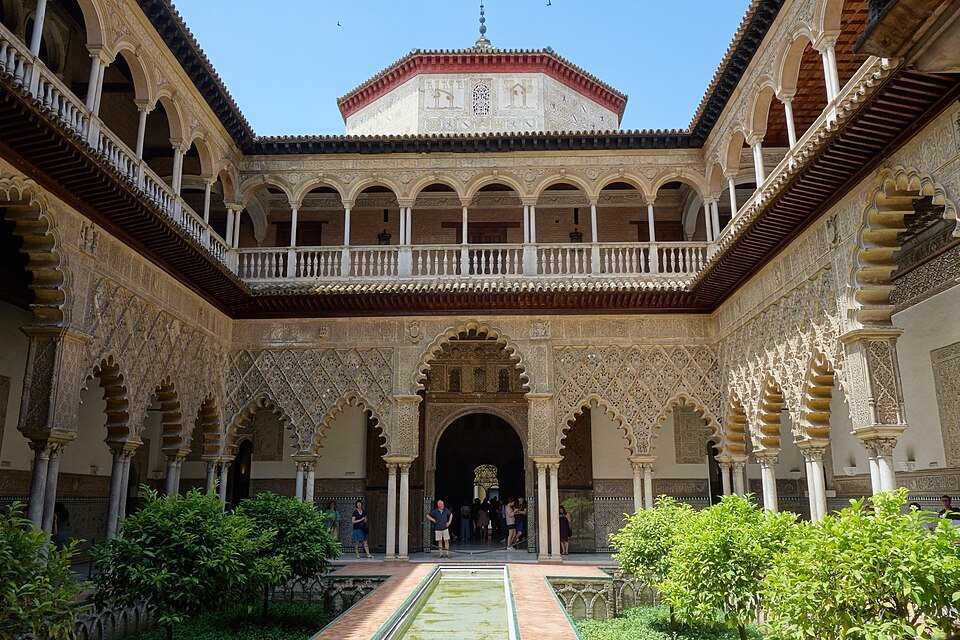
The Patio de las Doncellas is its center — a long pool between arcades of carved plaster. ⚠️ Its sunken garden was paved over for centuries and only excavated back to something like the original in recent decades.
⭐ The gardens are large, and most people run out of time before reaching the far end of them. Allow more than you think.
⚠️ It sells out, genuinely, and in season entry is timed. The operator publishes what is available; no price or time appears on this site.
Book the first slot of the day and go straight to the Patio de las Doncellas before the groups reach it.
A thousand years of palaces
The Alcázar began as a fortress. After a revolt against Córdoba, Abd al-Rahman III built a walled enclosure here in 913–914, roughly square and about 100 meters a side, on the site of a Visigothic basilica. In the eleventh century the Abbadid king al-Mutamid extended it with a palace called al-Mubarak, "the Blessed", whose remains lie under the Patio de la Montería. Then the Almohads, who made Seville their capital in al-Andalus, nearly doubled the complex; from 1163 the caliph Abu Yaqub Yusuf lived here, and his architects Ahmad Ben Baso and Ali al-Ghumari, who also built the mosque and its minaret, added more palaces. The Patio del Yeso, with its pool and plaster sebka lattice, survives from that time.
After Ferdinand III took Seville in 1248, the Castilian kings rebuilt most of it. Alfonso X raised a Gothic palace between 1252 and 1260, of which the vaulted Sala de las Bóvedas and the so-called Baths of María de Padilla, a long cistern under Gothic rib vaults, survive. Alfonso XI added the Hall of Justice to celebrate his victory at the Río Salado in 1340, and after the earthquake of 1356 Pedro I had three Almohad palaces pulled down to build his own. Upstairs the royal apartments are still used by the Spanish royal family when they visit Seville, which makes it the oldest royal palace in use in Europe. It became a UNESCO World Heritage Site with the cathedral and the Archive of the Indies in 1987.
King Pedro's palace
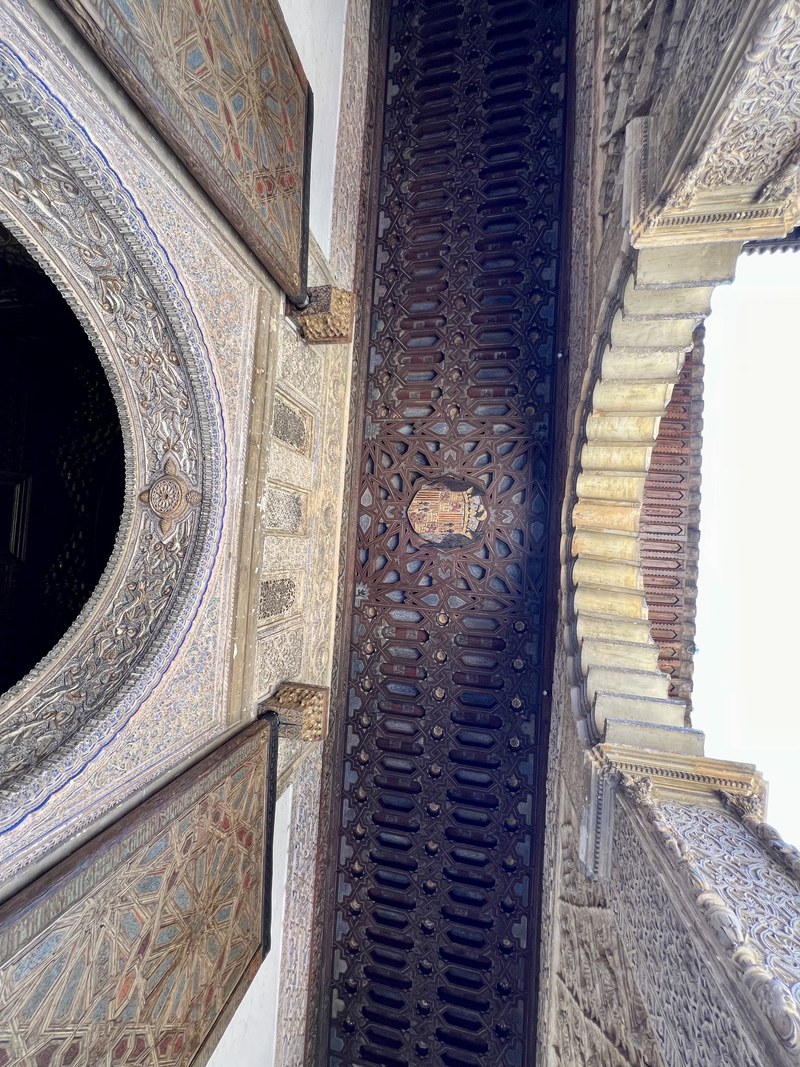
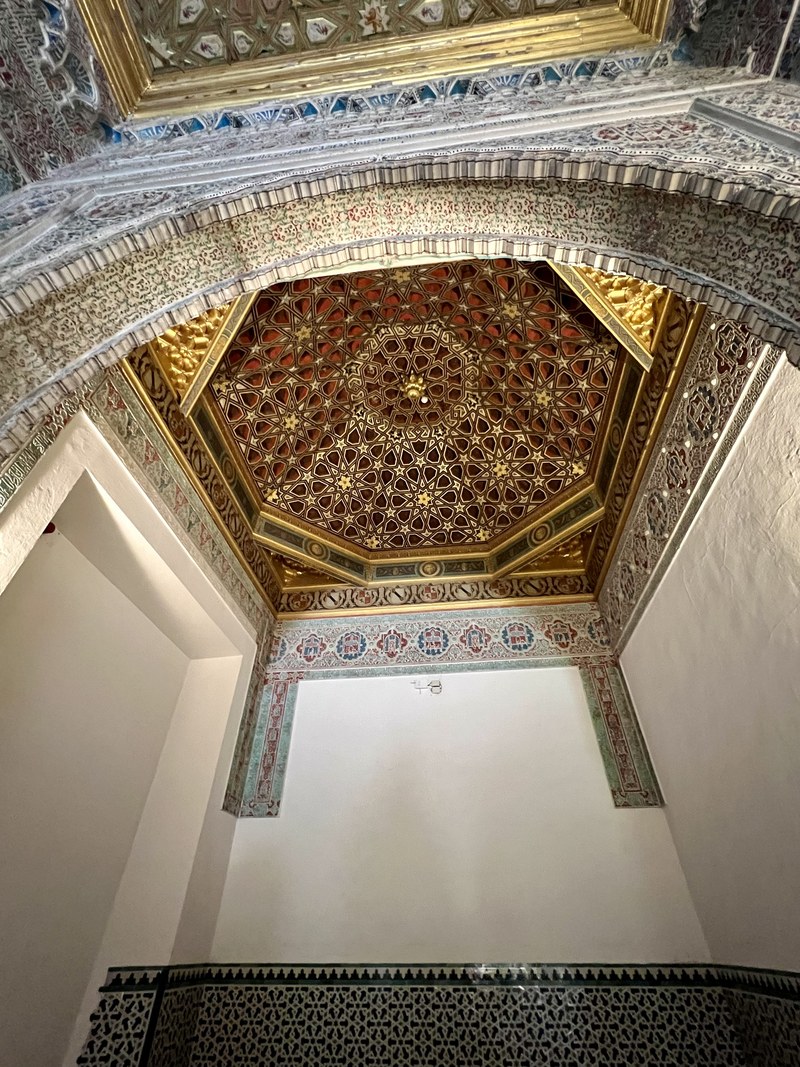
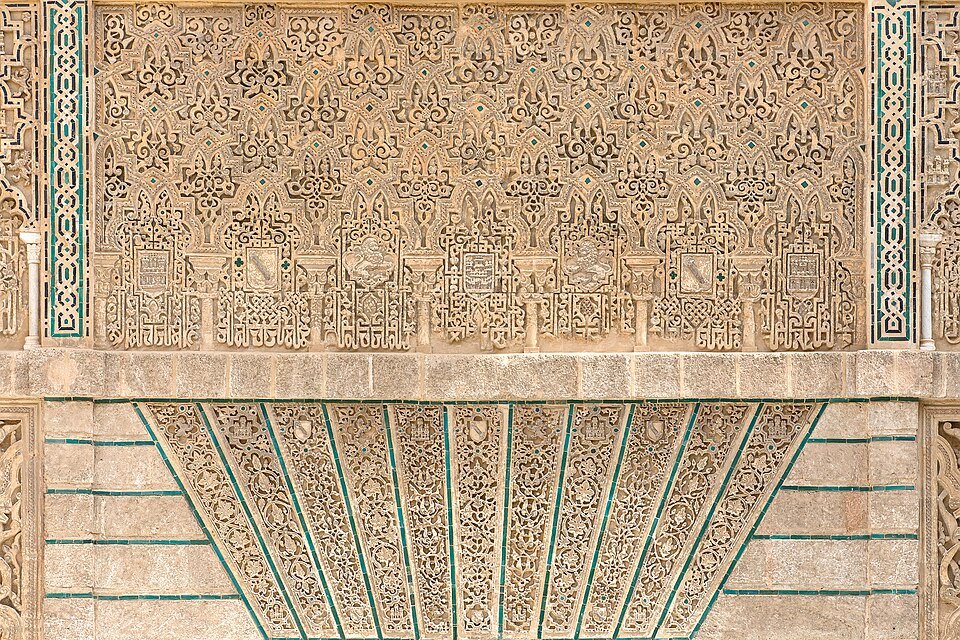
A Latin inscription on the facade of Pedro I's palace gives the year 1364 and an Arabic one in the Hall of the Ambassadors gives 1366, probably the start and the finish. Its plaster, tile and carved wood are so close to the Nasrid palaces of the Alhambra that the two are always compared, and the inscriptions around the Patio de las Doncellas call the Christian king "Sultan Don Bidru". The courtyard's name, the Maidens, recalls a legend of a tribute of a hundred virgins paid to the Muslim rulers. Its upper story is a Renaissance addition for Charles V, designed by Luis de Vega and built between 1540 and 1572.
The sunken garden you see there now is a twenty-first-century reconstruction. The pool and garden of 1356–1366 were buried between 1581 and 1584 under a marble pavement with a fountain in the middle, and stayed hidden until excavations led by the archaeologist Miguel Ángel Tabales between 2002 and 2005 found them in good condition.
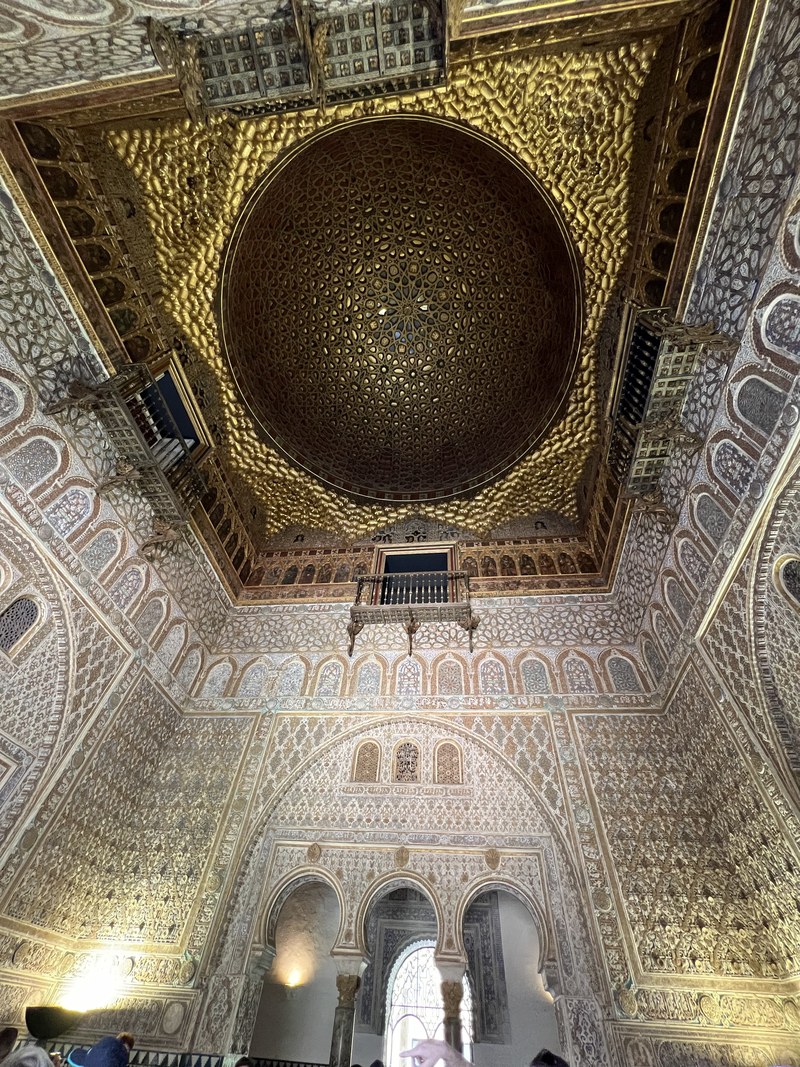
The Hall of the Ambassadors
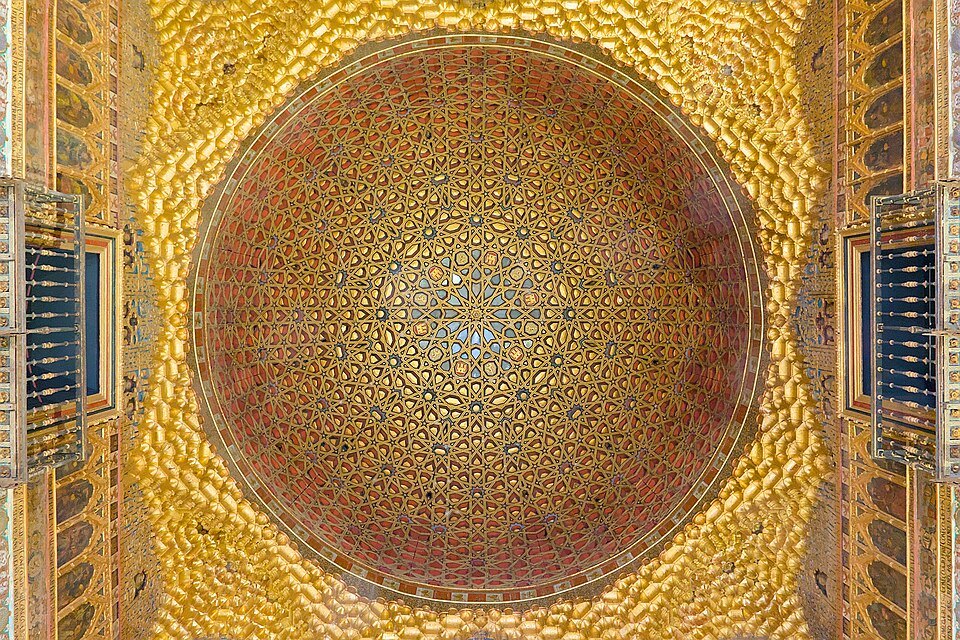
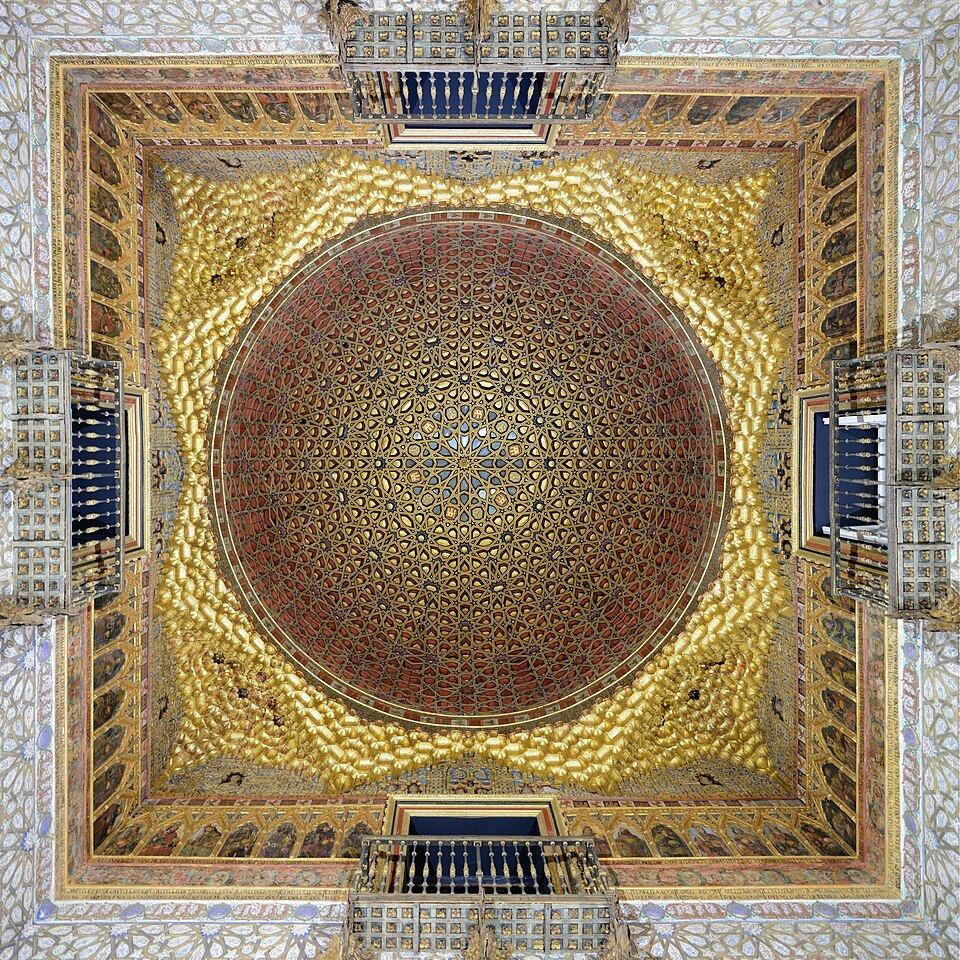
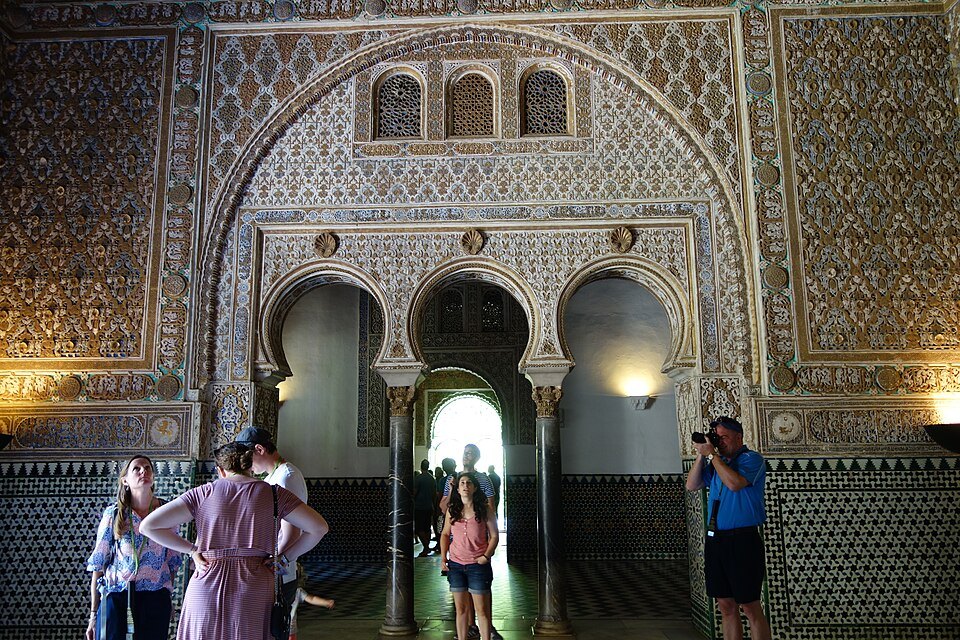
The domed throne room at the heart of the palace is the Salón de los Embajadores. Three of its sides open through triple horseshoe arches on marble columns; its decoration was finished in 1366, as an Arabic inscription on its wooden doors by craftsmen from Toledo records, and the dome above was rebuilt in 1427. The emperor Charles V married Isabella of Portugal in this room in 1526.
Tiles, gates and courtyards
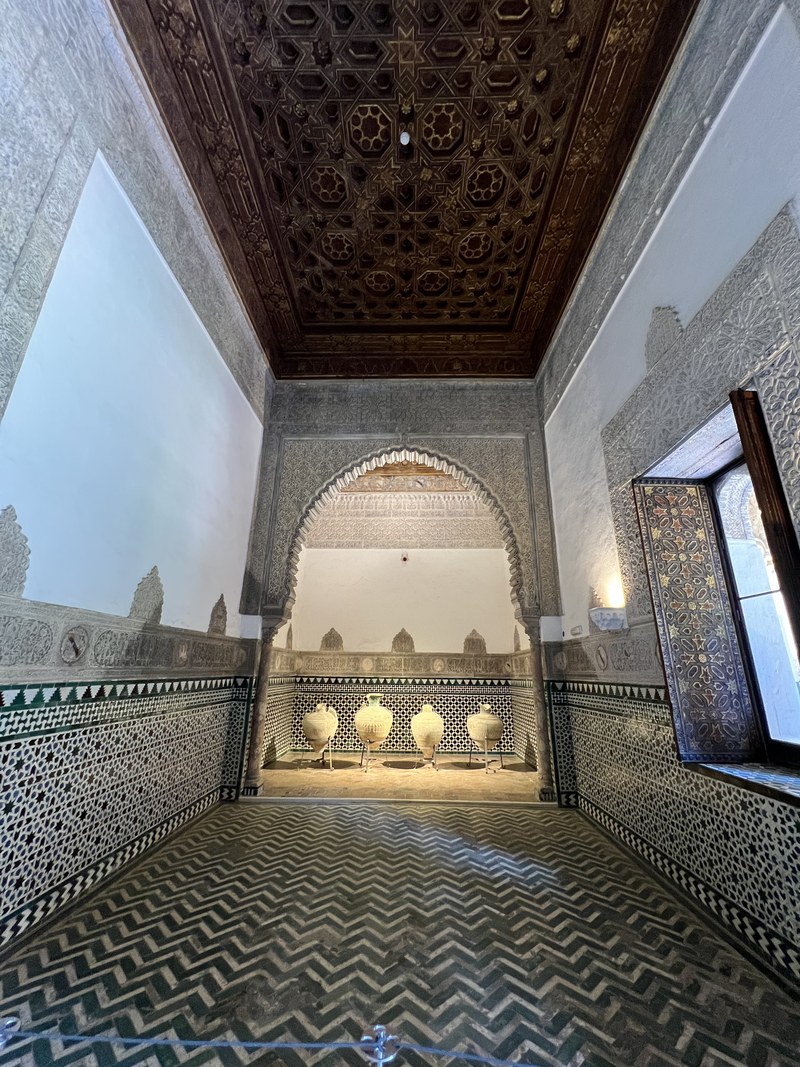
You enter by the Puerta del León, named for the tile lion of 1892 over the gate, holding a cross and a banner, with the motto Ad utrumque, "for one thing and the other". Beyond it lies the Patio de la Montería, the main courtyard, with Pedro's palace facade on one side and on the other the rooms of the Casa de Contratación, set up in 1503 to control trade with Spanish America. The palace is famous for its tiles: early arista tiles pressed in molds with raised ridges, and later flat painted majolica, including an altarpiece by Francisco Niculoso Pisano made for the Catholic Monarchs' private chapel. Much of Alfonso X's Gothic palace was destroyed in the Lisbon earthquake of 1755. Fans of Game of Thrones may recognize parts of the palace from the fifth season, which was partly filmed here.
Sources
Real Alcázar, photographed