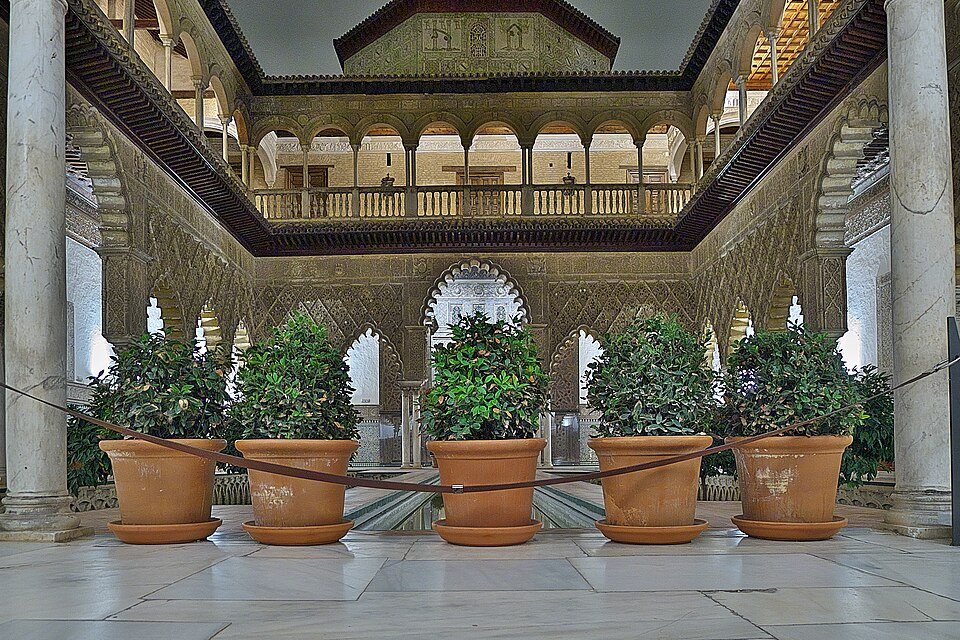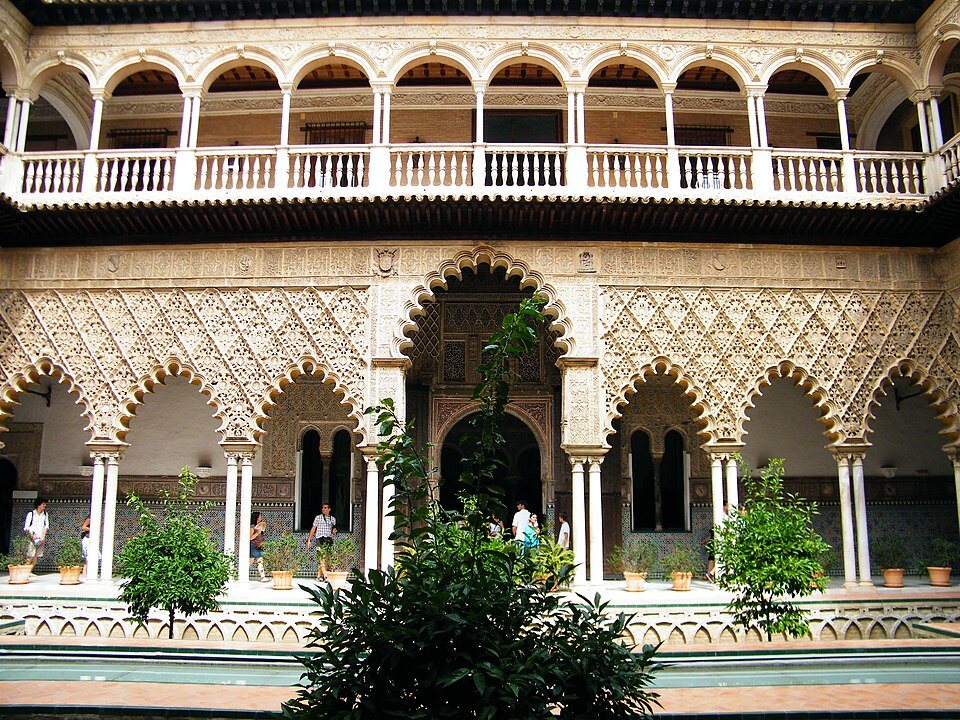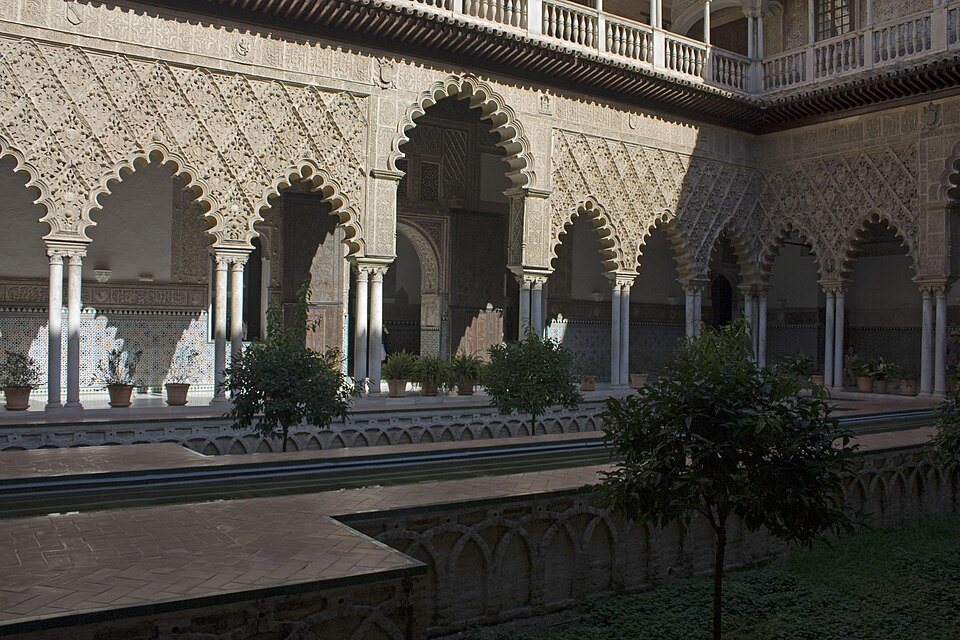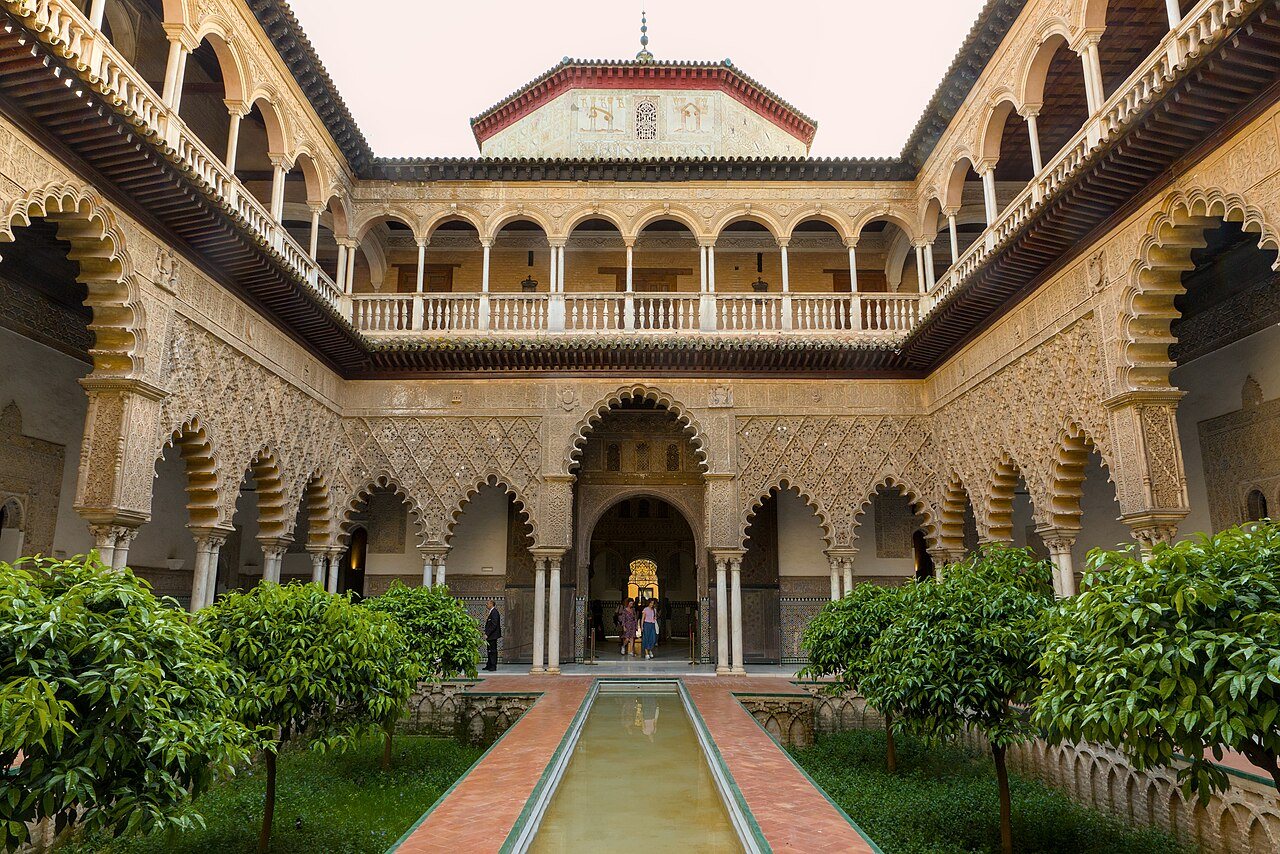
Walk into the Real Alcázar expecting a Spanish palace and you will stand in the Patio de las Doncellas trying to work out why it looks like it belongs in Granada or Marrakesh rather than Castile. The answer is a king named Pedro I, who ruled in the fourteenth century, long after Seville had been retaken from Muslim rule, and who chose to build his private palace inside the old fortress using Islamic craftsmen, Islamic forms, and Islamic inscriptions praising Allah — on the walls of a Catholic monarch's own house.
This was not an oversight or a cheap shortcut. It was a deliberate architectural statement, and understanding it changes what you see as you move through the rooms.
Who Pedro I actually was
Pedro I became king of Castile in the middle of the fourteenth century and ruled for roughly two decades before being killed by his own half-brother in a civil war over the throne. History has not been kind to his reputation: Castilian chroniclers, many writing for the dynasty that replaced him, called him Pedro el Cruel — Peter the Cruel. Others, less hostile, called him Pedro el Justiciero, Peter the Just, for his habit of punishing nobles who broke the law regardless of their rank. Both versions probably contain some truth. He executed relatives, rivals, and at least one archbishop's household; he also built roads, reformed currency, and kept Castile's finances in order better than most of his predecessors.
What matters for the Alcázar is his relationship with Muslim Granada, the last independent Islamic kingdom left in Iberia at the time. Pedro was, improbably, an ally of Granada's Nasrid ruler Muhammad V. The two had a working diplomatic and military relationship, and when Pedro decided to rebuild his Seville residence, he asked Muhammad V to lend him craftsmen from Granada's own royal workshops — the same workshops responsible for the Alhambra.
Why a Christian king built in Islamic style
By Pedro's day, the style now called Mudéjar had been developing in Christian Iberia for well over a century. It is not Islamic architecture built by a conquered population hiding in plain sight; it is a hybrid tradition, produced largely by Muslim and Jewish craftsmen working for Christian patrons who actively wanted the result to look this way. Intricate plasterwork, glazed tilework, horseshoe arches, and wooden ceilings built up from interlocking geometric panels were, in fourteenth-century Castile, simply what high-status architecture looked like. A king who wanted to signal wealth and sophistication reached for these forms the way a Renaissance prince later reached for columns and pediments.
Pedro took this further than almost anyone. Inscriptions around the Patio de las Doncellas and the Salón de Embajadores include Arabic phrases praising God, alongside Pedro's own motto rendered in Arabic script. One frequently cited inscription translates roughly as "and there is no conqueror but God" — a phrase borrowed directly from the Alhambra, where it appears throughout Nasrid building work as a kind of dynastic signature. Seeing it repeated on the walls of a Castilian king's palace is the detail that stops most visitors cold once a guide points it out.
This was partly genuine aesthetic taste, partly diplomacy with Granada made visible in plaster, and partly a claim to legitimacy: by building in the idiom of the most sophisticated court culture he knew, Pedro was asserting that Castile's king could command the same craftsmanship as any Muslim ruler, inside walls that had literally been a Muslim governor's fortress a century before.
What to look for inside the Palacio de Don Pedro
The section of the Alcázar built under Pedro — generally called the Palacio Mudéjar or Palacio de Don Pedro — sits at the heart of the complex and is where most visitors spend the bulk of their time. A few things are worth deliberately looking for rather than just photographing:
- The Patio de las Doncellas (Courtyard of the Maidens): the sunken garden in its center is a relatively recent archaeological restoration, reinstating a planted layout closer to what Pedro's original courtyard likely had, after centuries of it being paved over.
- The Salón de Embajadores (Hall of Ambassadors): the domed wooden ceiling is the single most photographed interior in the palace, and it rewards standing directly underneath it and looking straight up rather than across.
- Arabic and Gothic script side by side: in several rooms you can find inscriptions in Arabic script and Gothic Latin lettering within the same decorative band — a literal interweaving of the two traditions Pedro was drawing on.
- The upper floor, the Cuarto Real Alto, which is still used on occasion by the Spanish royal family and is only viewable on a separate, restricted route — check current access with the Alcázar's own ticketing before assuming it is included.
⭐ Go slowly in the smaller side rooms off the main courtyards, not just the two or three famous halls. Much of the plasterwork is at its most detailed at eye level in rooms most people walk straight through on the way to the next photo opportunity.
Where Pedro's palace fits in the wider Alcázar
The Alcázar you visit today is not one building but a patchwork of additions from different centuries, built on top of the original ninth-century Islamic fortress and expanded by successive Christian monarchs. Pedro's palace is the richest and most coherent single phase, but it connects directly into Gothic halls built under earlier Castilian kings, and later Renaissance and Baroque additions layered on by his successors. Walking from one section to another, the shift in style is often abrupt — plain Gothic stone giving way without warning to carved plaster and tile — and that abruptness is itself a kind of timeline, if you know which king to blame for which room.
⚠️ It is easy to assume the whole Alcázar is "Moorish" because of Pedro's palace. Much of the complex, including large sections of the upper floors and the later state rooms, is Christian work from the fifteenth century onward with no Islamic styling at all. The confusion is understandable — it is also exactly the confusion Pedro seems to have wanted some future visitor to have.
Once outside the Palacio de Don Pedro, the gardens extend the same logic outward: terraced, geometric, and clearly indebted to Islamic garden design even though they too were laid out and repeatedly altered under Christian rule. For context on the broader site and practical visiting logistics, see the main Alcázar guide; for how this building relates to the cathedral and Giralda next door, see the cathedral and the Alcázar overview pages.
In pictures