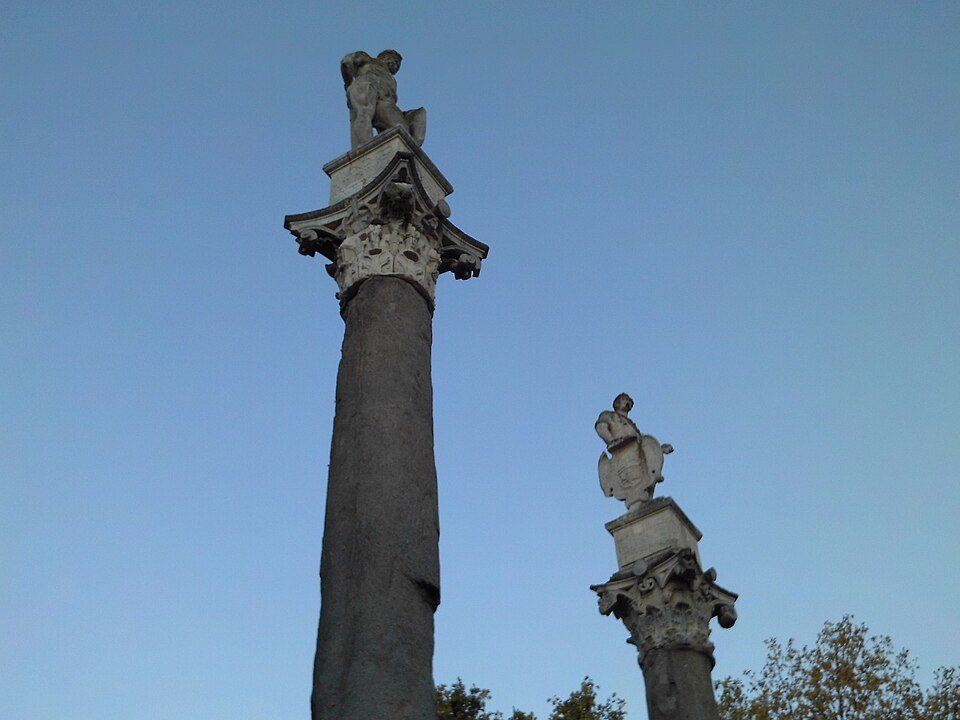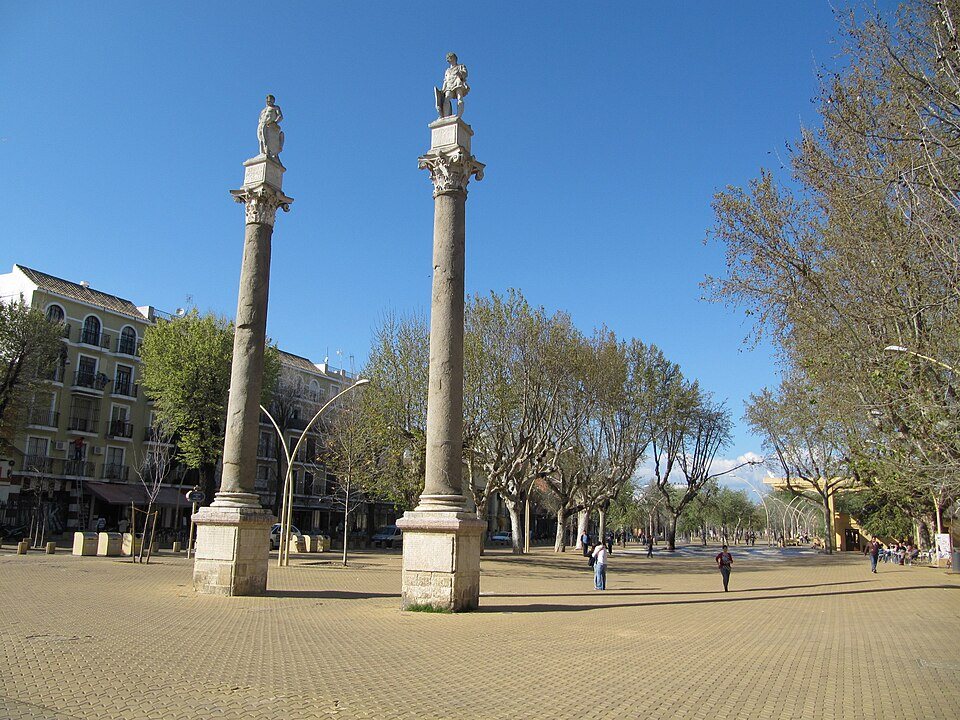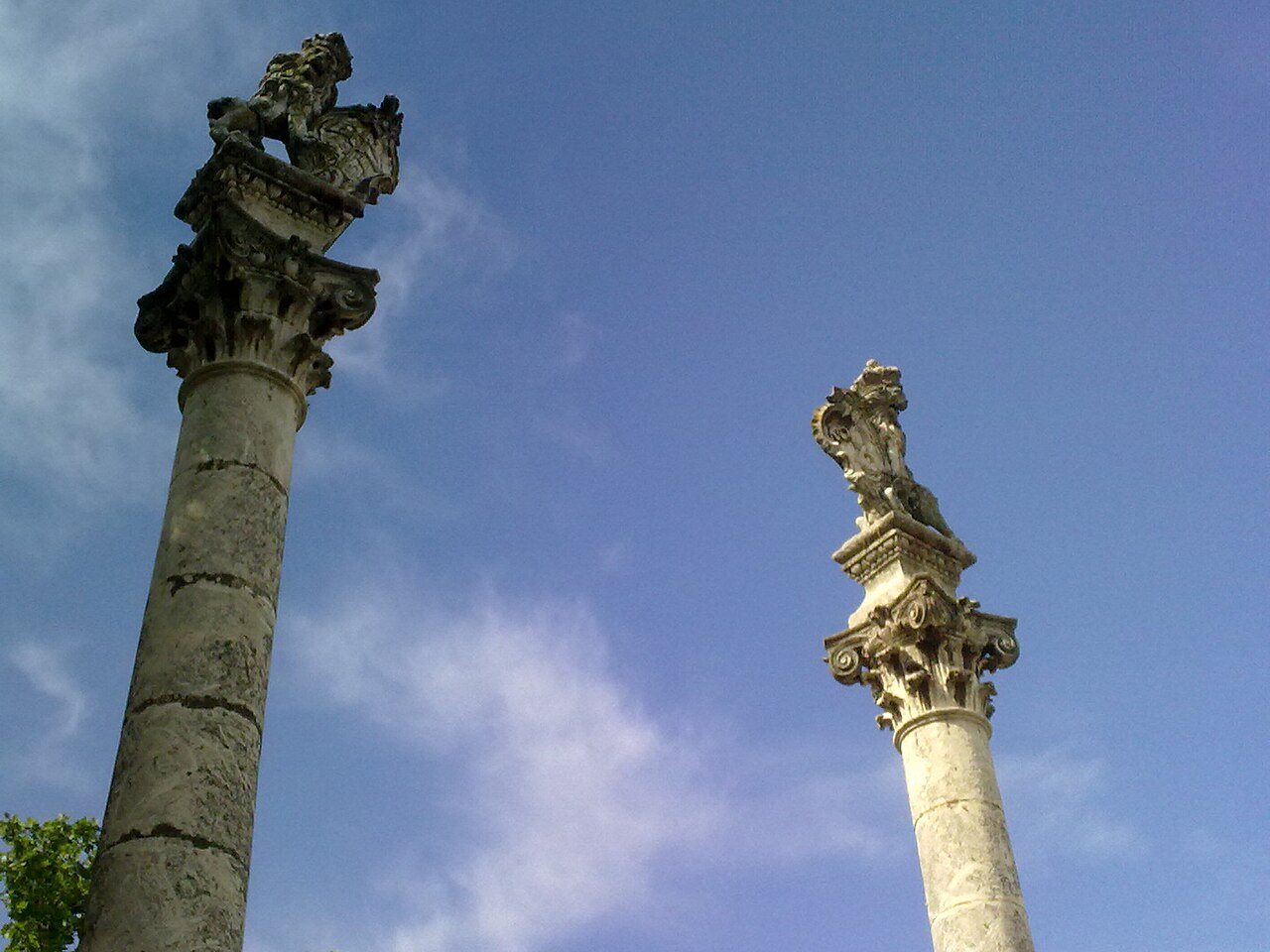
The Alameda de Hércules is a long rectangular square at the top end of the old city, planted with rows of trees and bookended by two pairs of Roman columns that have nothing to do with each other historically but have ended up as the square's informal logo. By day it can look a little scruffy — some benches, a playground, a market stall or two. By early evening, when the heat has come off the stone and the bars along both long sides start carrying tables out, it becomes one of the places where Seville visibly spends its leisure time, and it's worth understanding why, and when, before you just wander in.
What the Alameda actually is
It was laid out in the sixteenth century as a public promenade on reclaimed marshy ground — the name comes from the poplars (álamos) planted along it — which makes it one of the oldest purpose-built public gardens in the city. The two sets of columns at either end are ancient, pulled from a Roman building elsewhere in the city and re-erected here centuries ago with later statues added on top; they're a good landmark for meeting someone ("by the columns") but not a monument to linger over in themselves.
For much of the twentieth century the square had a rougher reputation, and some of that history is still visible in the mix of businesses around its edges. What's changed is the density of bars, small theaters, and restaurants that have moved in along both flanks, turning the square itself into a kind of shared outdoor living room for whoever is sitting at any of them. Locals use "Alameda" to mean both the specific rectangle of trees and benches, and the wider surrounding streets — if someone suggests meeting "in Alameda" they probably mean the neighborhood, not the exact spot under the columns.
The evening shift
The rhythm is fairly predictable once you've seen it a few times. In the late afternoon, the square is still mostly locals with children, dog walkers, and people cutting through. As the light starts to go soft — which in summer is quite late — tables multiply along the sides, and by the time it's properly dark the whole central strip has the feel of an open-air party that nobody organized. There isn't a dress code or an door charge for sitting on a terrace; you order a drink, or several, and the evening unfolds from there. People move between bars rather than committing to one for the whole night, which is part of the appeal and part of what can make it a slow place to actually get served quickly.
⭐ If you want to watch the square fill up rather than fight for a table in the thick of it, arrive before the main rush and claim a terrace seat early — you can always move later, and you'll get a much better sense of how the crowd changes over an hour or two than if you arrive once it's already loud.
⚠️ The benches and open ground in the middle of the square are used heavily by younger locals doing their own informal pre-drinks, bringing bottles and cans from nearby shops rather than buying from the bars. It's a normal and generally good-natured part of Seville's nightlife culture, not a sign that something's wrong, but it does mean the atmosphere in the central strip can get considerably rowdier and louder than the terraces around it, especially on weekend nights.
What the square is good for, and what it isn't
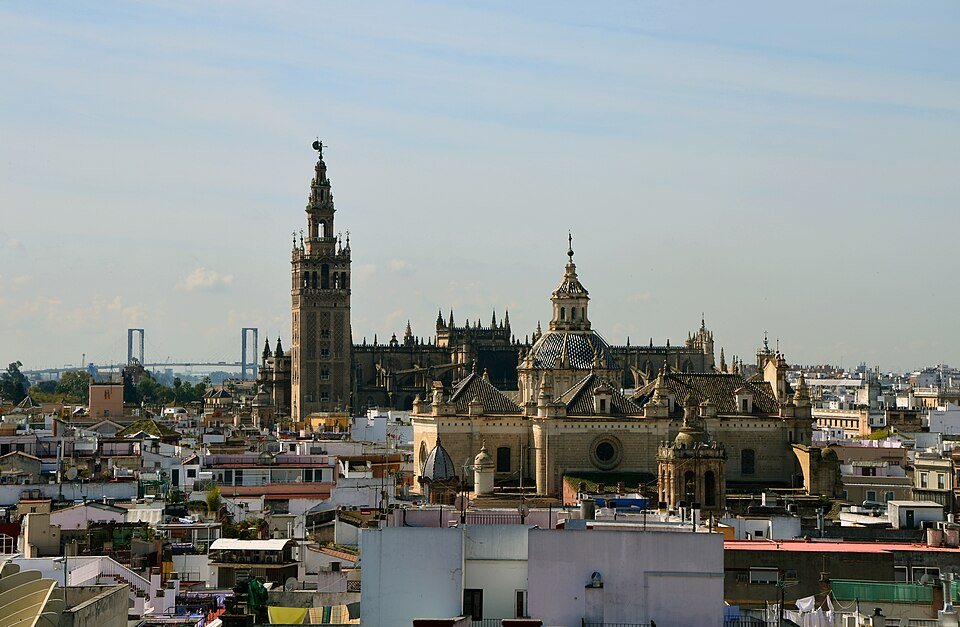
The Alameda works best as an evening destination rather than a sightseeing stop. There's no single monument here that demands a specific visit; the point is the accumulated effect of trees, terraces, and a few hours with nowhere particular to be. It's a reasonable base if you're choosing a neighborhood to stay in and want nightlife within walking distance, since it sits a short walk north of the cathedral and the historic core covered elsewhere on this site under neighborhoods, without being inside the densest, priciest part of it.
The bars along the square cover a wide range — some are straightforward beer-and-tapas places, others lean toward cocktails, and a handful have a more bohemian, alternative edge that reflects the square's history as a gathering point outside the mainstream. A few small theaters and live-music venues sit just off the square itself, so an evening here can easily extend into something with a show attached, though programs change often enough that it's worth checking what's on rather than assuming.
For food, the Alameda itself is more about drinking than dining, though there are kitchens attached to several of the bars and a scattering of restaurants on the streets feeding into it. If you want a fuller meal, the surrounding Alameda-Macarena area and the streets toward the Iglesia del Salvador and the Calle Sierpes shopping district have more range; this site's broader notes on where and how to eat are gathered under food & drink.
Getting there and getting around once you are
The Alameda is walkable from most of the central city — it sits close enough to the cathedral and Santa Cruz quarter that a visitor based there could cover it on foot in well under half an hour, and it's a natural stop if you're working your way north from the center toward the Basílica de la Macarena. General notes on getting around the city, including when walking stops being the efficient option, are covered under getting around.
Because the square fills with pedestrians and loose crowds in the evening, it's not a place to expect quick taxi pickup right at the columns; it's usually easier to walk a block or two to a quieter street if you need a ride home. The surrounding streets are a genuine residential and shopping neighborhood by day — there's a small daily market and a cluster of secondhand and vintage shops nearby — so the square has a daytime identity that's worth a passing look if you're in the area for something else, even if you come back for the evening version.
⚠️ Like much of central Seville, the Alameda's terraces and surrounding streets are not heavily air-conditioned refuges — they're outdoor space, which is exactly the point in spring and autumn but means summer evenings only really get comfortable once the sun has been down for a while. If you're visiting in high summer, the Alameda rewards a later start more than almost anywhere else in the city; see the general notes on timing the day around the heat under shade.
In pictures