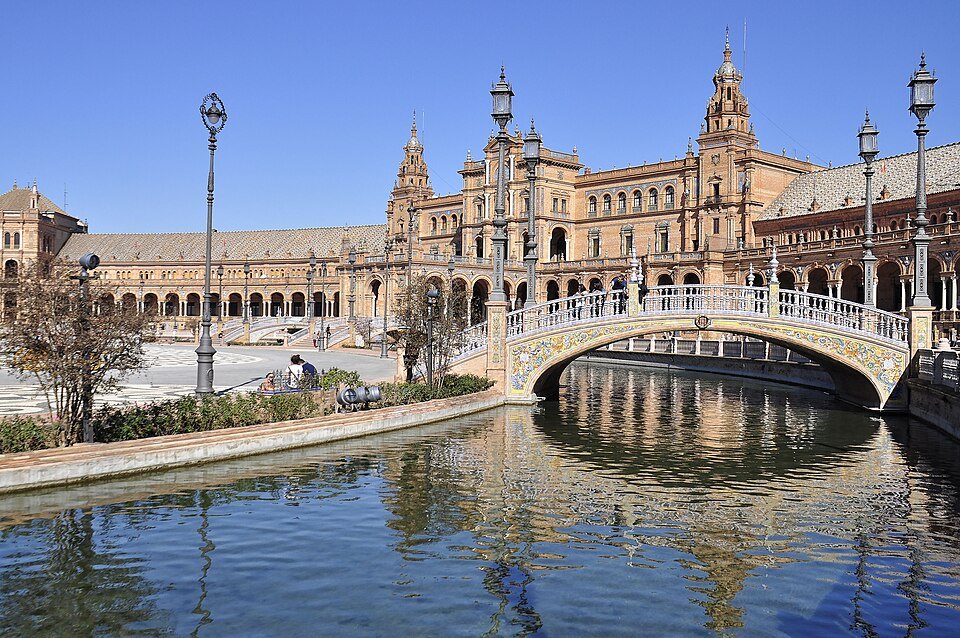
The park was laid out on the grounds of a palace and remodeled for the same 1929 exposition that produced the Plaza de España, which sits at its northern edge.
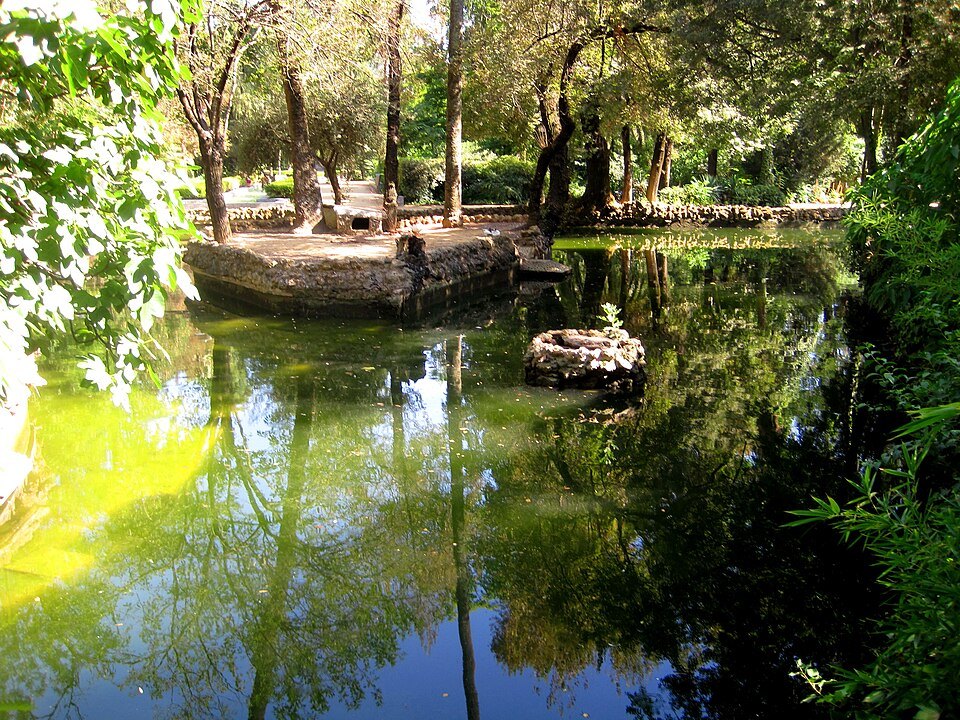
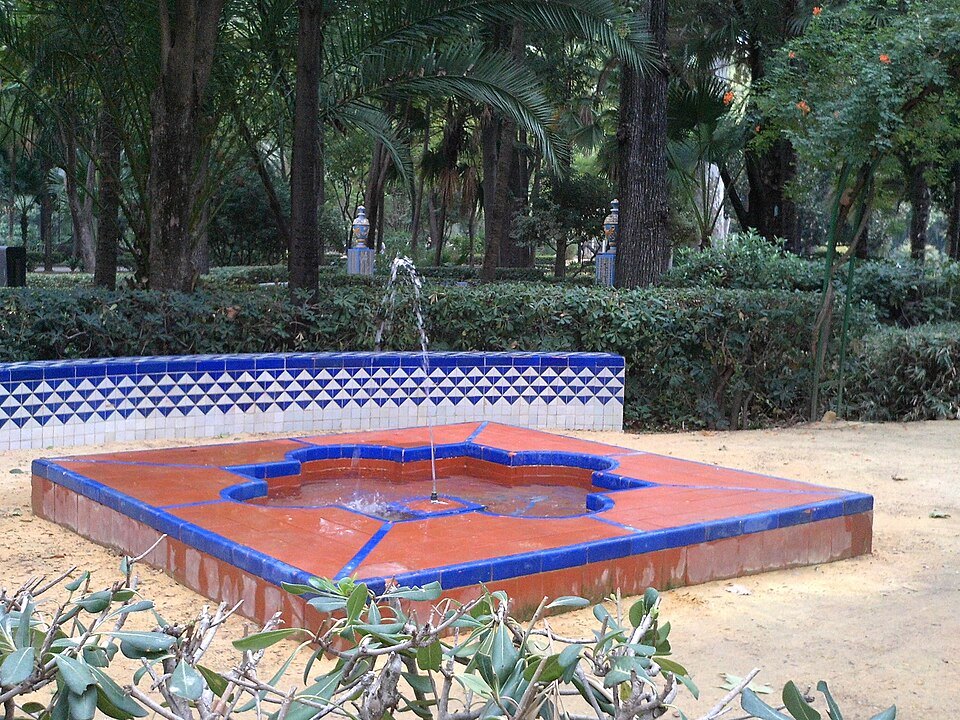
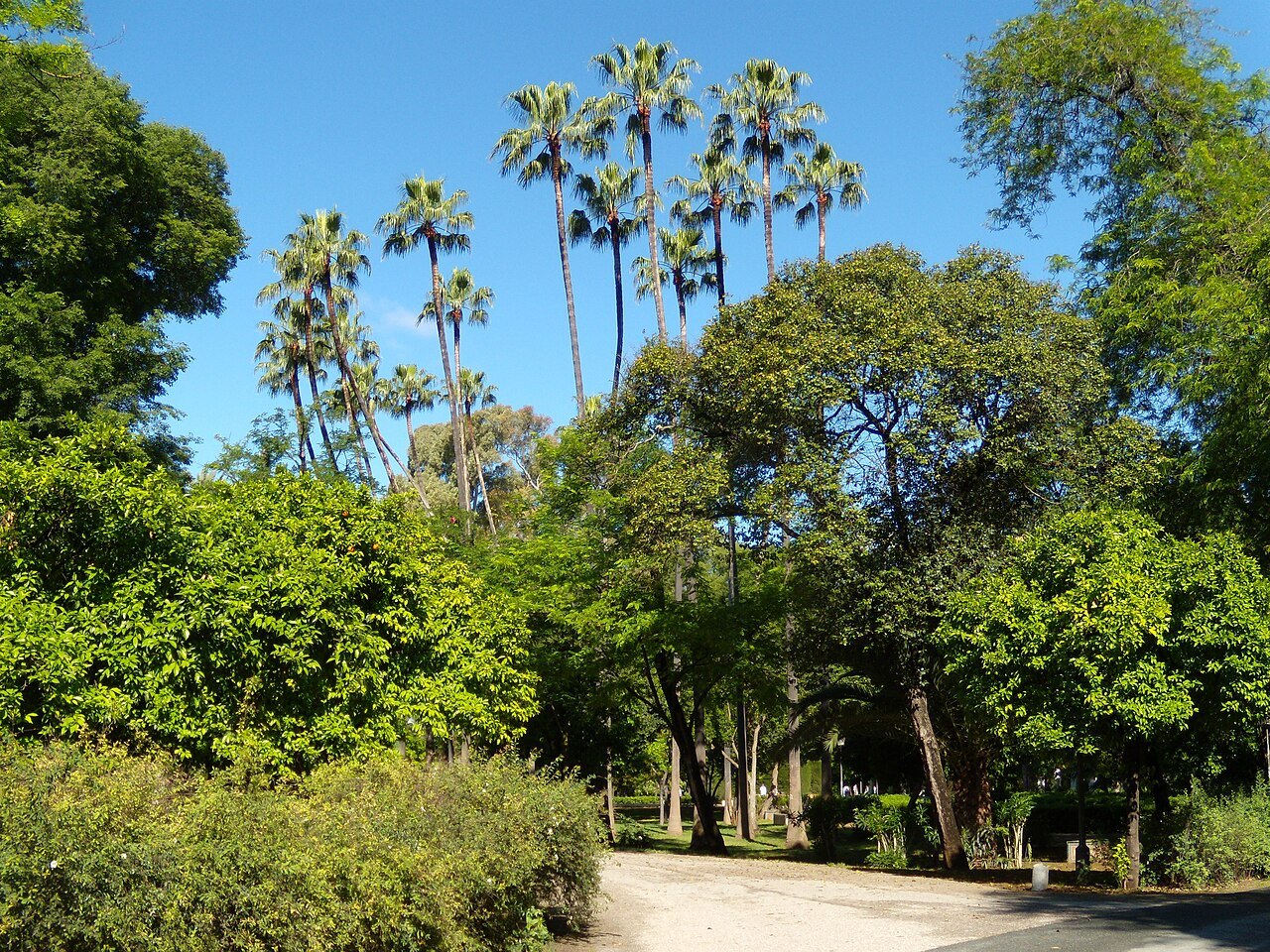
⭐ It is the shadiest large space in central Seville, which in July is not a small thing. Tiled benches, ponds, and pavilions from the exposition scattered through it.
The Plaza de América at the far end has three exposition buildings around it, two of which are now museums.
Use it as the shaded route between the Plaza de España and the museums rather than as a destination in itself.
A duchess's gift
In 1848 the Duke of Montpensier, Antoine d'Orléans, and his wife, the Infanta María Luisa Fernanda de Borbón, settled in Seville, and in 1850 they bought the Palace of San Telmo. To make its gardens they bought two neighboring estates, one of them holding the remains of the Franciscan convent of San Diego, and had them laid out by the French gardener André Lecolant. The little kiosk on the Isleta de los Pájaros, now known as the Alfonso XII pavilion, dates from that time. On June 19, 1893, the widowed duchess gave a large part of the San Telmo gardens to the city; the same year the architect Juan Talavera built the Costurero de la Reina, and a glasshouse with an iron frame went up.
Forestier's park
When Seville prepared for its Ibero-American Exposition, the gardens were folded into the fairground. In January 1911 the organizers chose Aníbal González to direct the architecture and Jean-Claude Nicolas Forestier, the French landscape architect who looked after the Bois de Boulogne in Paris, to redesign the gardens. Forestier did not impose French classicism; he adapted the park to Seville's climate and drew on what he had seen around Spain — the Alhambra and Generalife, Madrid's Retiro, the Alcázar and the courtyards of Seville's great houses — while keeping the existing trees.
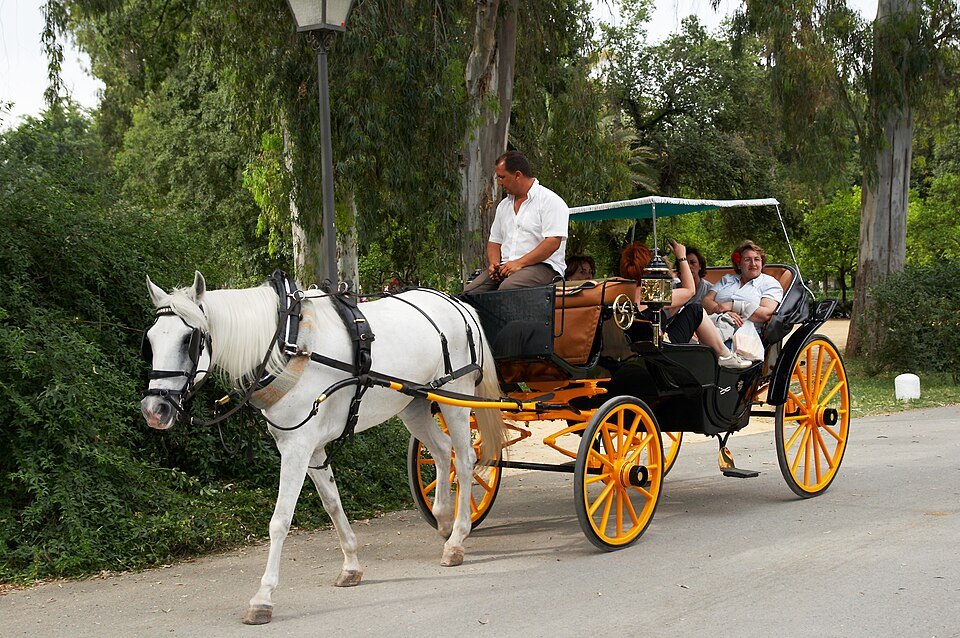
He organized the park along a central axis running through the old Gurugú mound and the duck pond, to which he added the Fountain of the Lions and the Lotus Pond, with two long avenues, Hernán Cortés and Pizarro, running parallel for carriages. Around them he set a series of small self-contained gardens built around pools, fountains, monuments and pavilions, the glorietas, each meant to feel like the private courtyard of an Andalusian house, and he used tiles and water everywhere to keep the place cool. The main works ran from 1912 to 1922, but the people of Seville could walk in from April 18, 1914, the day it opened as the Infanta María Luisa Fernanda park, during that year's fair.
Fountains, glorietas and monuments
The Fountain of the Lions, designed by Forestier and sculpted by Manuel Delgado Brackembury in 1913, is octagonal, with four stone lions holding shields and spouting water; the tiles come from the workshop of Ramos Rejano. In the north of the park, the monument of 1911 to the poet Gustavo Adolfo Bécquer by Lorenzo Coullaut-Valera shows his bust above a tree, with a young Cupid shooting arrows at three women on one side and a wounded Cupid on the other, a scene drawn from his Rimas. On the Plaza de América, a polygonal glorieta to Cervantes by Aníbal González of 1913 is lined with tiles showing scenes from his books. More glorietas and monuments were added between 1931 and 1972.
Look out too for two remarkable trees. A swamp cypress in the Bécquer glorieta was planted around 1850, in the days of the duke and duchess's private garden, and near the glorieta of the Machado brothers grows a bunya pine, Araucaria bidwillii, the only one in the whole city.
The park today
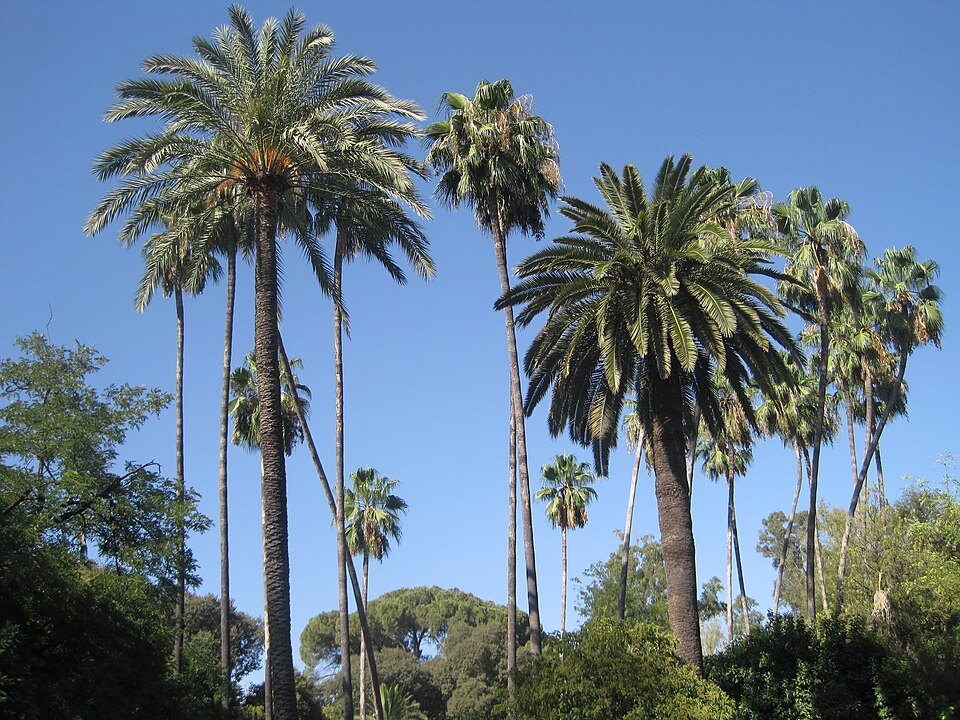
The park covers 34 hectares and looks much as it did in 1929. It works as a botanical garden too, with native and exotic species, palms, orange trees and Mediterranean pines, and panels explaining them, and it is full of birds: peacocks and songbirds, ducks and swans on the ponds, parakeets in the trees, and so many doves on the Plaza de América that part of it is called the Parque de las Palomas. On June 1, 1983, it was declared an artistic garden, which gives it protection as a historic garden.
The two plazas
The Plaza de España, at the park's northern end, has housed the Military History Museum since 1992. At the southern end, the Plaza de América is framed by three buildings designed by Aníbal González between 1913 and 1916 for the exposition, each in a different style: the Fine Arts pavilion, now the Archaeological Museum, whose collections include Roman mosaics and finds from nearby Itálica; the Mudéjar pavilion, now the Museum of Popular Arts and Customs; and the Royal Pavilion, now used as city offices. In 1915 Forestier drew up plans to extend the park into the ground beside the Plaza de España, and literary and cultural glorietas kept appearing right up to the opening of the exposition.
Sources
Parque de María Luisa, photographed