Most visitors to Seville spend their time south of the cathedral, circling between Santa Cruz, the river, and Plaza de España. La Macarena sits on the other side of the old town, to the north, and it rewards anyone who walks up there with something increasingly rare in central Seville: streets where locals genuinely outnumber tourists, prices that haven't adjusted to coach parties, and a long stretch of the city's old defensive wall still standing in daylight.
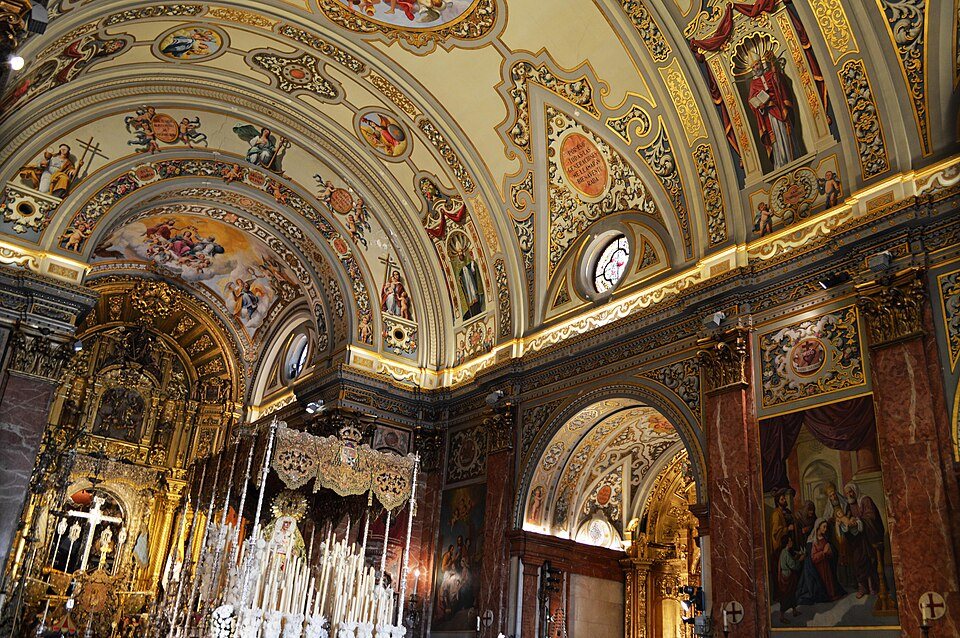
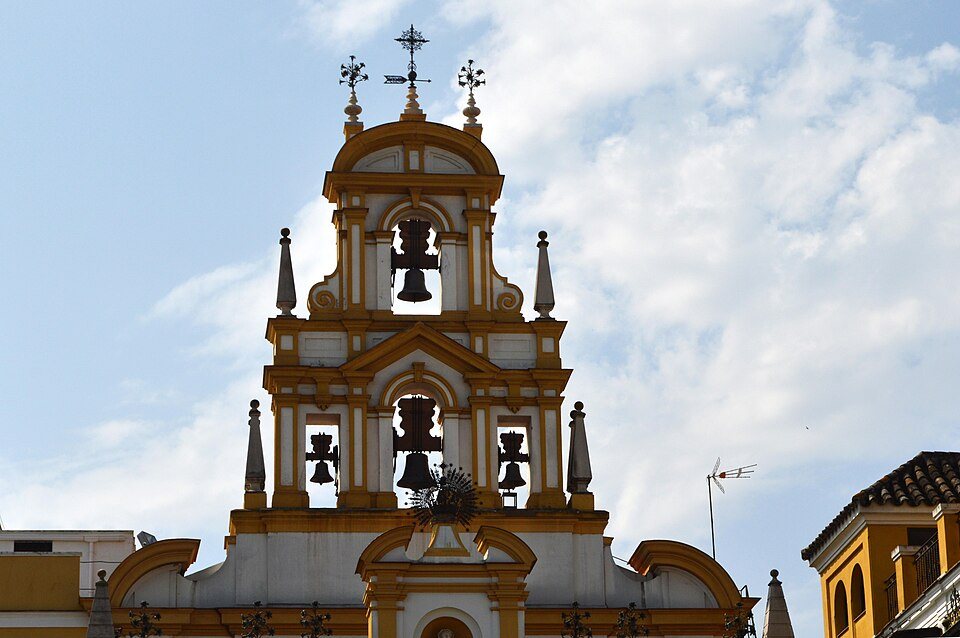
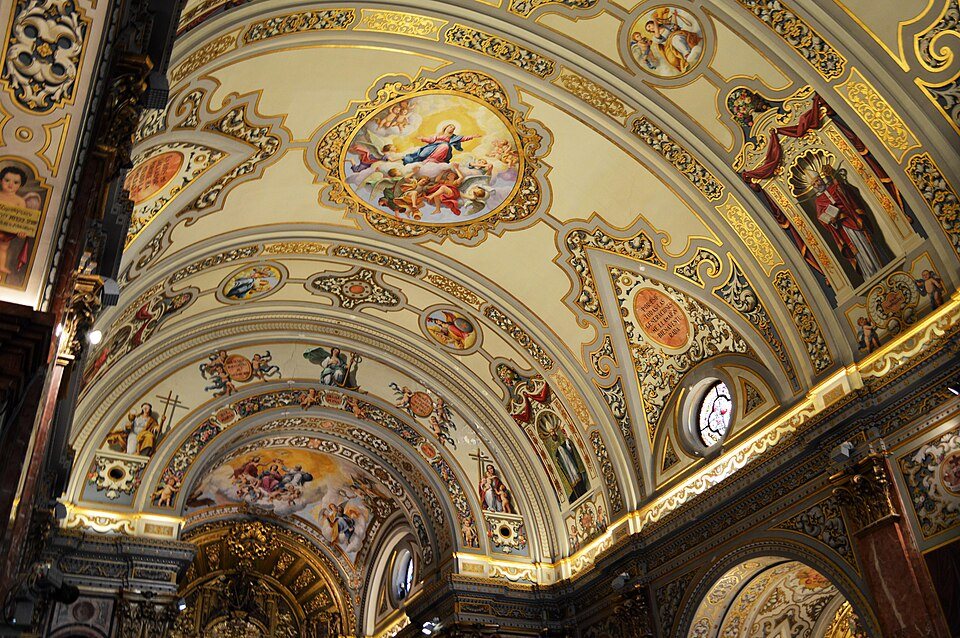
The neighborhood takes its name from the Basílica de la Macarena, home to the Virgen de la Macarena, one of the most venerated images carried through the streets during Holy Week. The basilica itself is modern by Seville standards, built in the twentieth century, but the devotion around the statue is anything but recent, and the building includes a small museum of the brotherhood's processional floats and embroidered robes. Even outside Semana Santa, the basilica gets a steady trickle of locals stopping in briefly, crossing themselves, moving on — this is a working parish, not a tourist stop that happens to be a church.
The walls and the gate
What makes La Macarena distinct architecturally is the stretch of Almohad-era city wall that still runs alongside the basilica, one of the few surviving sections of the fortifications that once encircled the entire old town. Seville tore down most of its walls in the nineteenth century to let the city expand; this piece survived, and it's worth the short detour just to stand next to it and register the scale of what used to ring the whole historic center. The adjacent gate, the Puerta de la Macarena, is a rebuilt version of the original, but it marks the same point where roads from the north funneled into the city for centuries.
⭐ The wall is best appreciated in the late afternoon, when the stone changes color and the traffic on the surrounding road thins out enough that you can actually hear yourself think. It's not fenced off or ticketed — you walk right up to it, which is unusual for a monument this old in a European city center.
Markets, squares, and a different pace
South of the basilica, the Alameda de Hércules is the neighborhood's social anchor: a long rectangular square, originally laid out in the sixteenth century as one of Europe's first public promenades, now lined with bars, converted warehouses, and two Roman columns at its southern end that were moved there centuries ago from a demolished temple. The Alameda has gone through real cycles — decades of neglect, then a wave of bars and restaurants reopening the ground floors of its older buildings — and it still reads as a square that belongs to residents first. In the evening it fills with a mixed crowd of students, families, and neighborhood regulars rather than visitors working from a checklist.
Closer to the market, the Mercado de la Feria (sometimes called the Mercado de Encarnación de la Feria, not to be confused with the Setas) is reputed to be one of the oldest covered markets in the city, and it still functions as a genuine neighborhood market — fishmongers, fruit stalls, a bar or two where locals have a beer before lunch. It isn't curated for tourists, which is exactly the point: go to see how the neighborhood actually shops and eats, not to find souvenirs.
- Alameda de Hércules — long square with Roman columns at one end, best for an evening drink outdoors.
- Puerta de la Macarena and the old walls — a surviving stretch of Almohad fortification, free to walk up to at any hour.
- Mercado de la Feria — a working market rather than a tourist market; go in the morning when stalls are busiest.
- Basílica de la Macarena — home to the Virgen de la Macarena and a museum of Holy Week floats and embroidery.
Why bother, if you're short on time
Seville's historic center is compact enough that visitors often do all their sightseeing within the loop formed by the cathedral, the Alcázar, and the river, and never make it north of Calle Sierpes. That's a reasonable choice if you have a day and a half, but it means missing the part of the old town that still functions as an ordinary residential neighborhood — balconies with laundry out, corner bars with handwritten chalkboard menus, a slower rhythm generally.
If you're building an itinerary and have already covered Santa Cruz and Triana, La Macarena is the natural next stop, especially if you care about Holy Week traditions, since this is one of the neighborhoods where the processions that define Semana Santa actually begin and gather. Walking here also gives a clearer sense of Seville's layered history than the monuments alone: Almohad walls, a Renaissance public square, nineteenth-century market architecture, and twentieth-century religious building, all within a fifteen-minute walk of each other.
Practical notes on getting there and getting around
The neighborhood is walkable from the cathedral area, though it's a longer walk than it looks on a map — plan twenty to twenty-five minutes at an easy pace, more if you detour through the center. Several city bus routes run along the main roads bordering the neighborhood, and it's also an easy cycle if you're using Seville's bike-share system, since the route north is mostly flat. See getting around for specifics on routes and how the city's transit passes work.
⚠️ The Alameda and the streets right around it get genuinely lively at night, with bars staying busy late, especially on weekends — fine if that's what you're looking for, less fine if you're staying nearby and want quiet. Streets just a block or two off the main square tend to be calmer.
Shade is patchy in this part of town compared to the tighter lanes of Santa Cruz — the Alameda itself has some tree cover but plenty of open pavement, and the walk up from the center crosses some exposed stretches. In summer, aim for morning or early evening; see shade for a broader sense of which routes stay cooler through the city. Pair a Macarena visit with a stop at the market first thing, then the walls and basilica as the day cools, and you'll have covered the neighborhood's essentials without fighting the midday heat.
In pictures