Everyone plans for the palace rooms. The tiled halls, the Patio de las Doncellas, the ceiling in the Salón de Embajadores — these are the images people have seen before they arrive, and so they queue for them, photograph them, and move on. Then they walk out a doorway at the back and find themselves in a garden that keeps going, and going, and they realize with a small jolt that they have perhaps twenty minutes left before they need to be somewhere else. This is the most common regret we hear about the Real Alcázar: not that the palace disappointed, but that the gardens got the leftover time instead of the good time.
It is an easy mistake to make, because nothing in the entry sequence tells you the gardens are the bigger commitment. The palace rooms are compact and can be seen with real attention in under an hour. The gardens are not a courtyard you glance at on your way to the exit — they are a series of distinct, walled spaces that add up to a genuine landscape, built up over centuries by different rulers with different ideas about what a garden should do.
Why the gardens take longer than they look
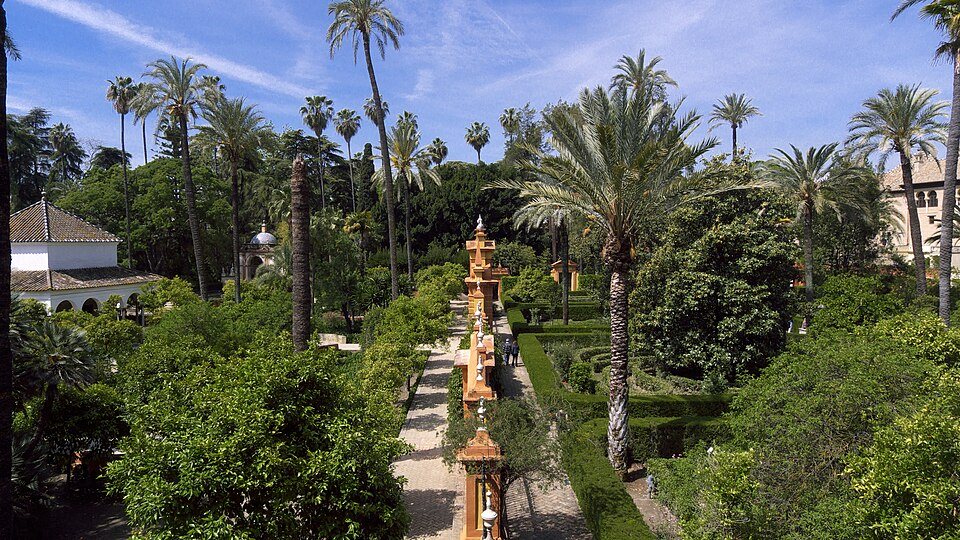
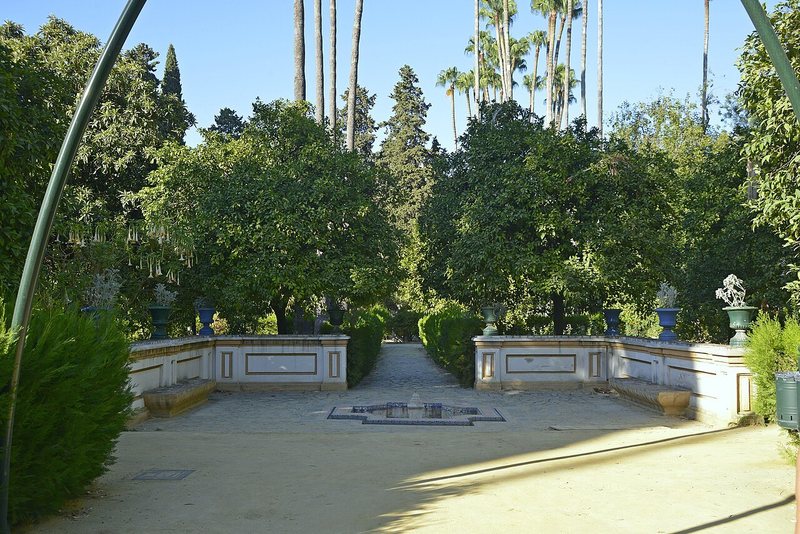
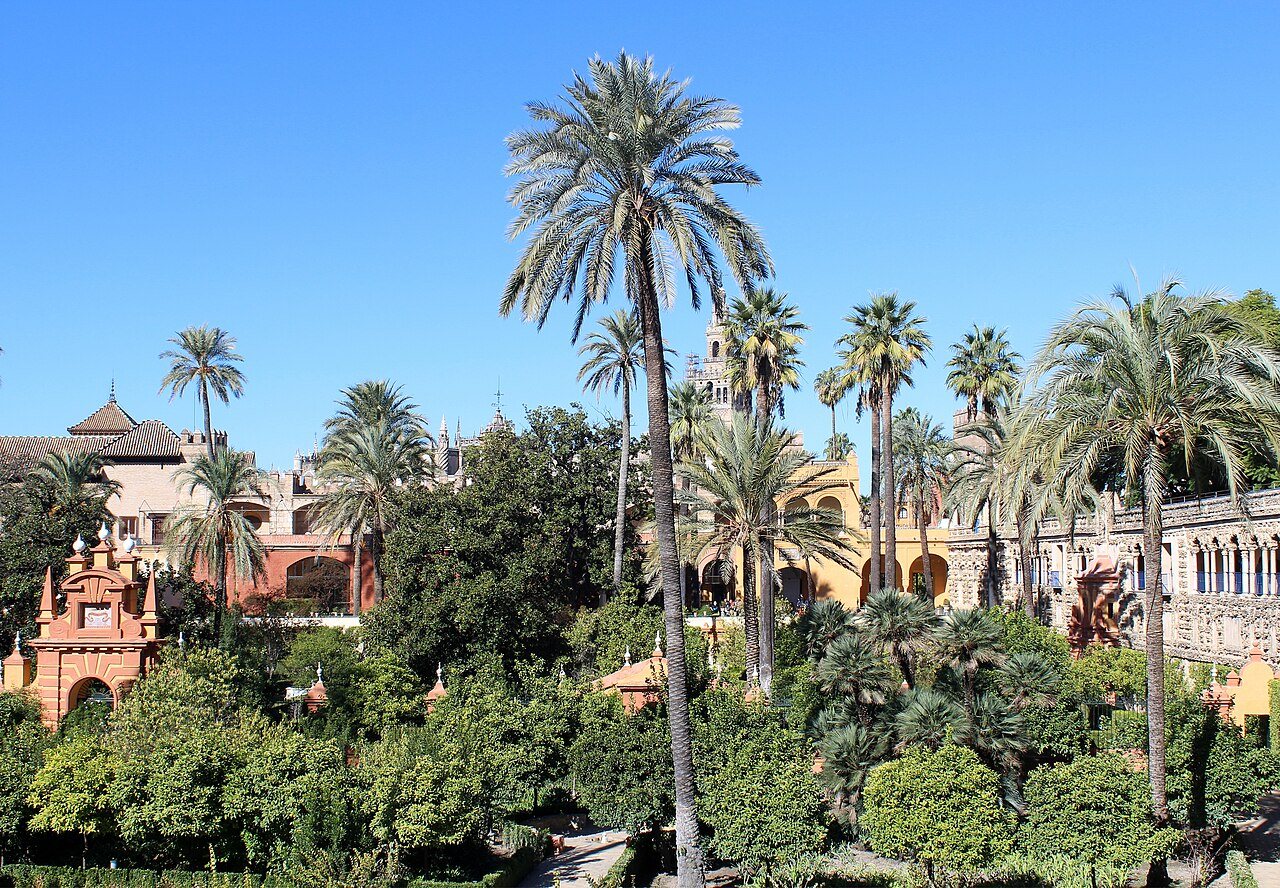
Part of the problem is scale that isn't obvious from any single vantage point. Because the gardens are divided into separate enclosed sections — the Jardín del Príncipe, the Jardín de las Damas, the Jardín de la Galera, the English-style plantings added later — you can't stand in one spot and see how much there is. Each walled garden reveals itself only once you're inside it, and each one has a different character: some are formal and geometric with clipped hedges and pools, others are looser and shadier, planted with palms and cypress and the kind of dense greenery that muffles the sound of the city almost completely.
There's also the Galería del Grutesco, a raised walkway along an old Almohad wall that was reworked in the 17th century with a rusticated, grotto-like facade. It's easy to miss entirely if you're moving quickly, because it doesn't look like a "sight" from ground level — it's a wall you walk along, with views back over the garden beds, and it rewards slowing down rather than checking off.
Then there are the fountains and pavilions tucked into corners: the Estanque de Mercurio with its central figure, the Pabellón de Carlos V standing alone in its own garden, faced in tile patterns that reward a close look rather than a passing one. None of these are large stops individually. Collectively, they are why a "quick walk through the gardens" so often turns into forty-five minutes, and why forty-five minutes still doesn't feel like enough.
The peacocks, and other things that eat your schedule
Peacocks live in parts of the gardens and wander with no particular urgency, which means visitors stop with no particular urgency too. Watching one cross a gravel path is not on any itinerary, but it happens to almost everyone, and it costs five minutes you didn't budget. The same goes for the orange and myrtle hedges, which are trimmed into shapes precise enough that people stop to photograph the hedges themselves rather than anything behind them.
⭐ If you only have limited time and have to choose, go to the gardens before the palace interior, not after. Palace rooms have a natural end point — you reach the last hall and you're done. Gardens don't signal their own end, so if you save them for "afterward," they're the part that gets cut short when you notice the time.
⚠️ There is very little shade in some of the more open garden sections, particularly around the pools and the newer plantings, so a visit in the middle of a hot day can feel like a different, more draining experience than the same walk in the early part of the morning. For general shade strategy across the city, see our shade guide.
What the gardens are actually showing you
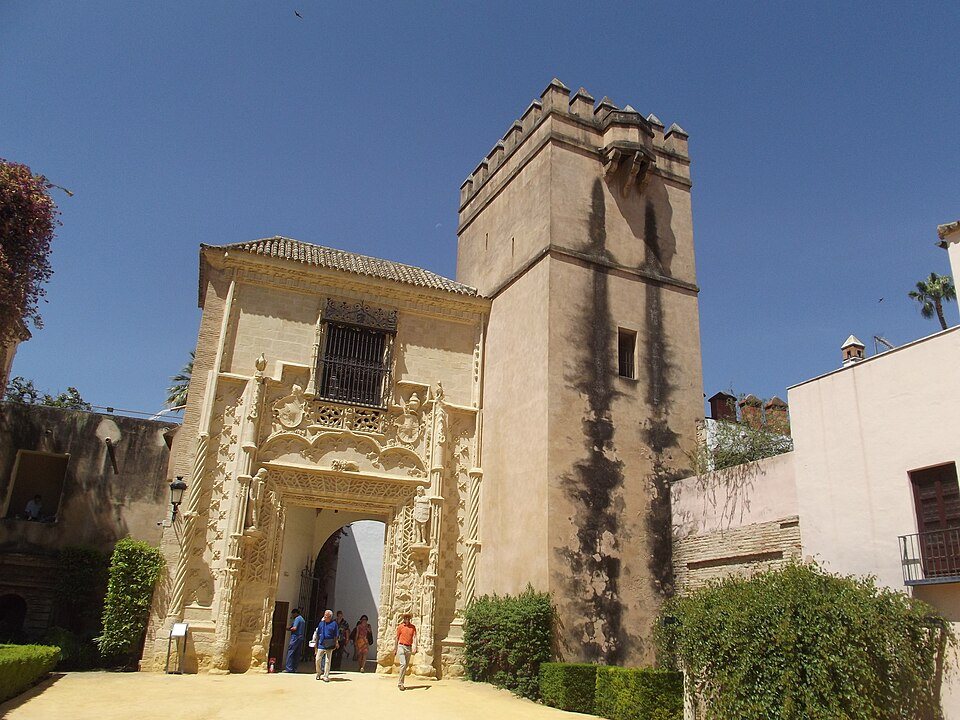
It helps to know that the gardens aren't a single design — they're a layered record of the same instinct that shaped the palace itself: successive rulers adapting what was there rather than starting over. Sections trace back toward the Almohad period, when the emphasis was on enclosed, irrigated spaces organized around water. Later Christian-era additions brought in more elaborate fountains, statuary, and eventually the kind of Renaissance and later Romantic touches you see in the wall galleries and the more naturalistic plantings toward the edges. Walking from one walled garden to the next, you are walking through renovation history the same way you do inside the palace, just outdoors and at a slower pace.
This is also why the gardens don't feel like a single unified park. They feel like a sequence of rooms with the roof taken off — which, structurally, is close to what they are. Each walled garden has its own boundary, its own sightlines, its own microclimate. That compartmentalization is exactly what makes them slow to see properly and easy to underestimate from the entrance.
A practical way to plan the visit
Treat the palace interior and the gardens as two separate visits that happen to share one ticket. If you're combining the Alcázar with other stops in a single day — the cathedral and the Patio de los Naranjos are the obvious pairing, both close by and often grouped into the same morning — decide in advance which half of the Alcázar gets the bulk of your time, because you likely won't do justice to both at a brisk walking pace.
For sequencing, timed-entry mechanisms and how the palace and garden sections connect, check with the official ticketing system directly rather than relying on secondhand schedules — these details change and are outside what we track here. What we can tell you is the shape of the problem: the palace is a fixed, bounded experience, and the gardens are an expandable one. Budget accordingly, and if you're unsure where to trim, trim the palace, not the gardens — you can see photographs of the tiled halls anywhere. You can't get the specific, filtered light through the Galería del Grutesco, or the sound of a fountain in the Jardín de las Damas, from a photograph.
Afterward, the Barrio Santa Cruz sits right against the Alcázar walls and makes a natural next stop if you still have energy for narrow streets after the open space of the gardens — though after a full circuit of the grounds, many visitors are just as happy to sit down with a drink and let the peacocks be someone else's problem for the rest of the afternoon.
In pictures