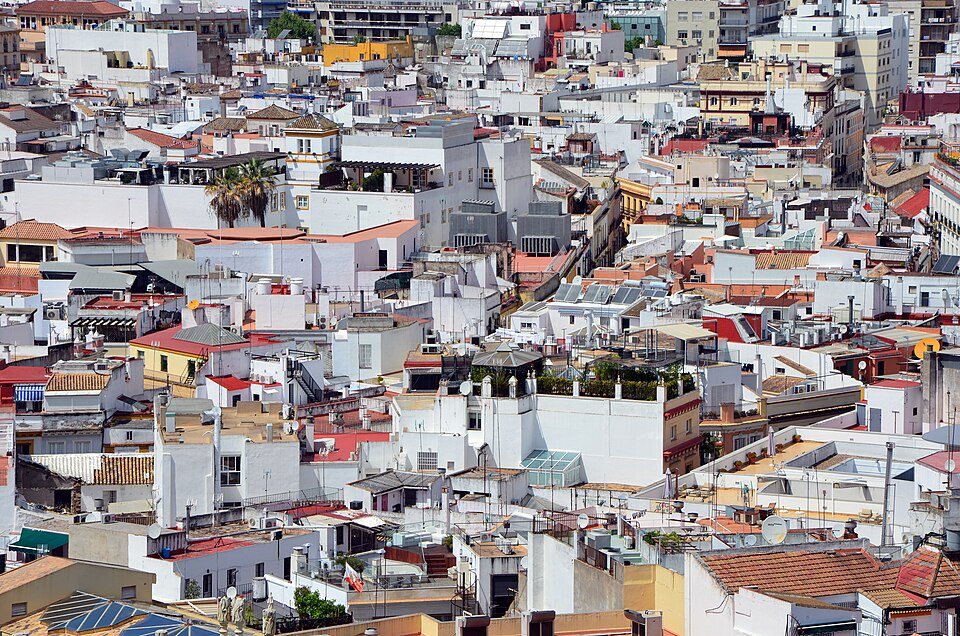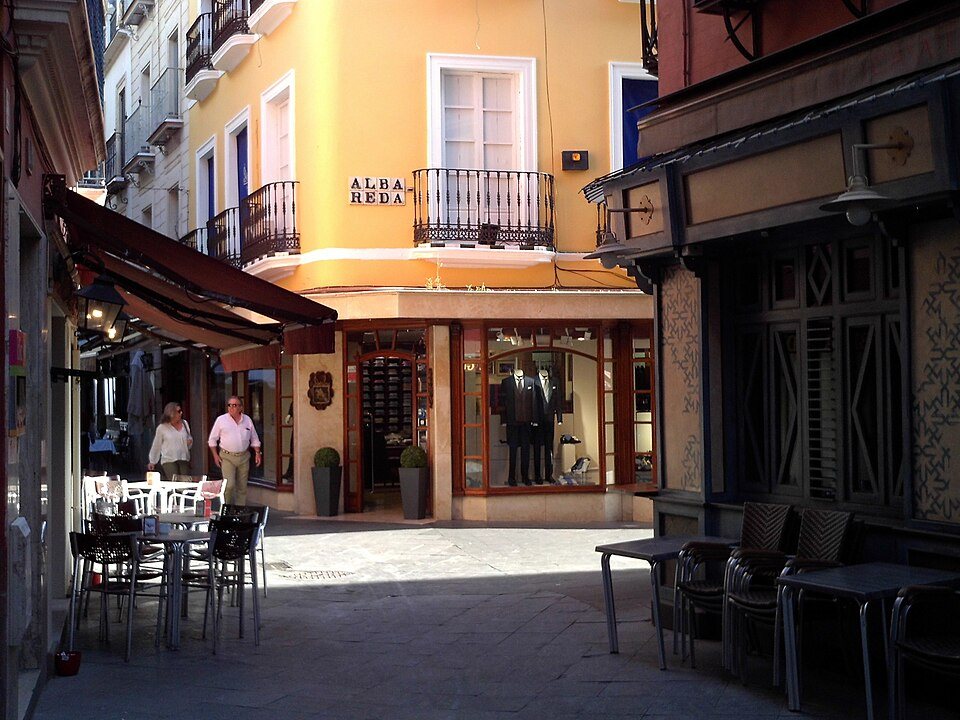
Walk into Santa Cruz at midday in July and the first thing you notice isn't the whitewash or the orange trees in the courtyards — it's that you can suddenly stand in it, in the shade, while the plaza you just left was a griddle. The lanes here are narrow enough that you can sometimes touch both walls at once, and that is not an accident of history nor quaintness for its own sake. It's a working piece of climate engineering that happens to also be very old.
The geometry of shade
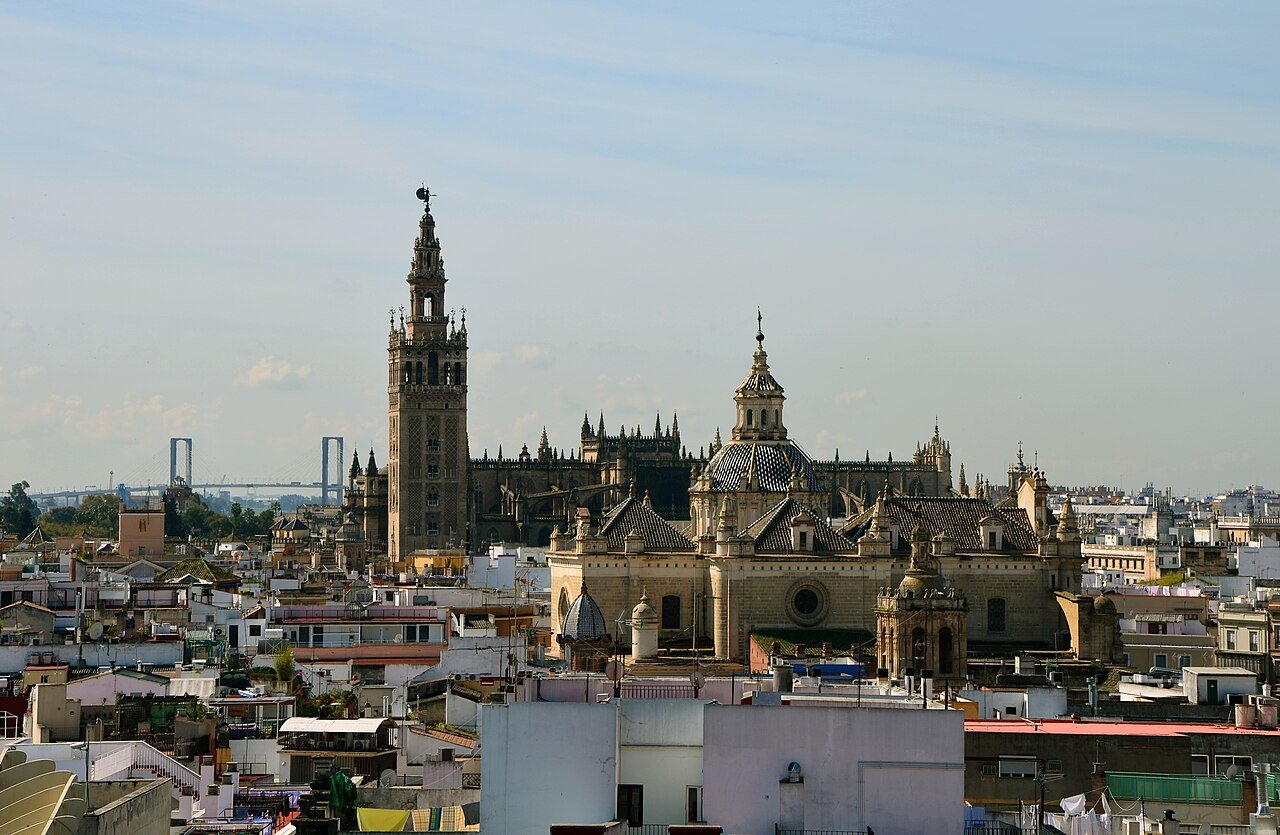
A street's width relative to the height of its buildings determines how much sun actually reaches the ground. In a wide avenue, the sun clears the rooflines for most of the day and the pavement bakes. In an alley where the buildings are two or three stories tall and the gap between them is barely the width of a cart, the opposing walls shade each other for all but a narrow window around midday — and in high summer, even that window is brief. Sevillanos didn't need a diagram to work this out; generations of trial and error, in a city that regularly tops the hottest readings in mainland Spain, did the job. The result is a neighborhood where you can walk from the cathedral end down to the old Jewish quarter's heart almost entirely in shadow on a sunny afternoon, just by choosing the right sequence of lanes.
The orientation matters as much as the width. Many of the alleys twist rather than run straight, and that's partly deliberate too: a straight north-south corridor lets the sun rake down its full length at certain hours, while a bent lane blocks that line of sight entirely. You'll notice this if you try to use Santa Cruz as a shortcut — the street rarely goes where you expect, and the detours are usually the price of staying in shade.
Moorish layout, Christian subdivision
The street pattern predates the current buildings by centuries. This part of the city was shaped under Islamic rule, when Seville's urban fabric followed patterns common across Al-Andalus: dense residential quarters organized around blind alleys and inward-facing courtyards, with few openings onto the public street and almost no interest in grand facades facing passersby. Privacy, shade, and airflow through a central patio mattered more than street presence. When this quarter became Seville's Jewish quarter in the medieval period, and then was absorbed into the Christian city after 1492, the parcels were subdivided further rather than rationalized. Small plots got smaller plots. What had already been an irregular grid of narrow passages turned into something even tighter and more maze-like, because nobody ever came through with the authority or the money to knock it flat and start over.
That's really the second half of the explanation: Santa Cruz was never rebuilt wholesale the way parts of central Seville were after later fires or redevelopment schemes. It was patched, infilled, and built up rather than out, which is why the lanes kept their medieval dimensions while the rest of the city, in places, grew boulevards.
Practical effects for a 21st-century visitor
None of this is only of historical interest — it changes how you should actually move through the neighborhood.
- Shade follows a schedule, not a map. A lane that's fully shaded at 10 a.m. may be lit edge to edge by 1 p.m. if it happens to run east-west. The north-south lanes tend to hold their shade later into the day. ⭐ If you're trying to stay cool, favor the alleys that feel like they're barely wider than a doorway — they're usually the ones doing the most work.
- Balconies and plants narrow things further. Wrought-iron balconies, potted geraniums, and the occasional string of lights across the gap all eat into the already slim width. In the tightest stretches, two people with shopping bags will need to turn sideways to pass each other.
- Cars mostly don't belong here, and that's correct. Some lanes permit a single resident's car at walking pace; most don't admit vehicles at all. If you hear an engine, press yourself to a doorway rather than assuming the car will find room to let you by — often it won't.
- Getting lost is normal, and fine. The street layout doesn't reward a logical sense of direction, because it wasn't built for through-traffic in the first place. ⚠️ Phone signal and GPS accuracy can wobble between high walls, so treat a map app as a rough guide rather than turn-by-turn gospel, and expect to double back.
The payoff for all that disorientation is that Santa Cruz rewards slow walking more than almost anywhere else in the city. Courtyards open off the alleys without warning — a gate left ajar reveals tiled walls and a well-worn patio, then closes again a few steps later. Small plazas appear where you expected another junction, usually with an orange tree and a bench occupied by someone who has clearly been using that particular patch of shade for years.
Where this fits with the rest of Seville
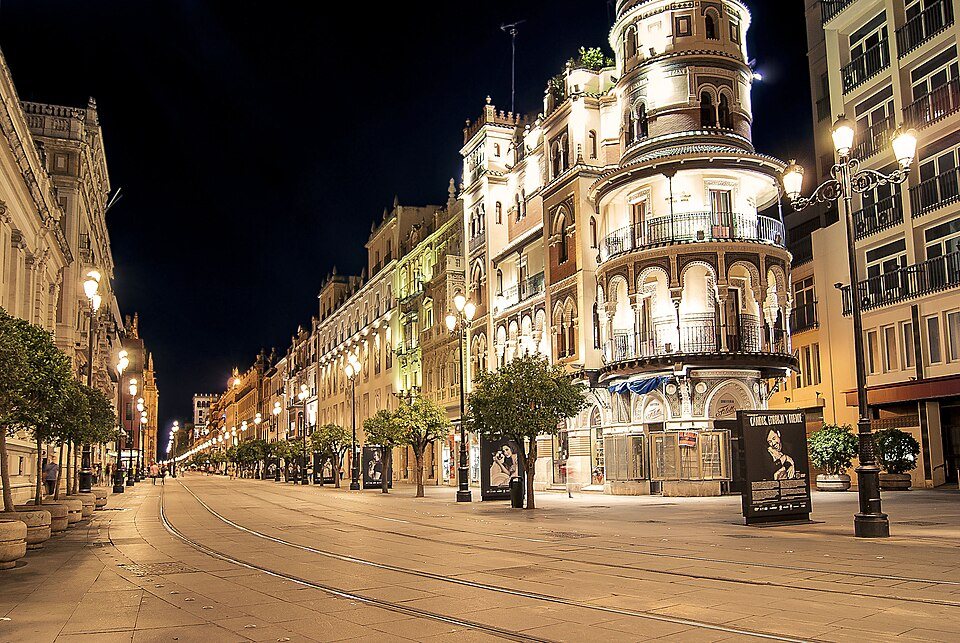
It's worth contrasting Santa Cruz with the city's showpiece set-pieces. Plaza de España and the avenues around Parque de María Luisa were laid out for the 1929 Ibero-American Exposition, with width and symmetry as the whole point — grand sightlines, not shade management. Santa Cruz is the opposite instinct, inherited rather than designed for spectacle: keep the sun out, keep the air moving through courtyards, and let the street be secondary to the house. Both approaches are authentically Sevillian; they just answer different questions.
If you're building an afternoon around escaping the heat, Santa Cruz pairs naturally with a stop at the Patio de los Naranjos or a slow lap of the Alcázar gardens, both of which use the same basic logic — walls, water, and shade — on a larger scale. For more on reading the city's shade patterns street by street, see our broader notes on finding shade in Seville, and for how the neighborhood fits into a day's walking, check itineraries and neighborhoods.
In pictures