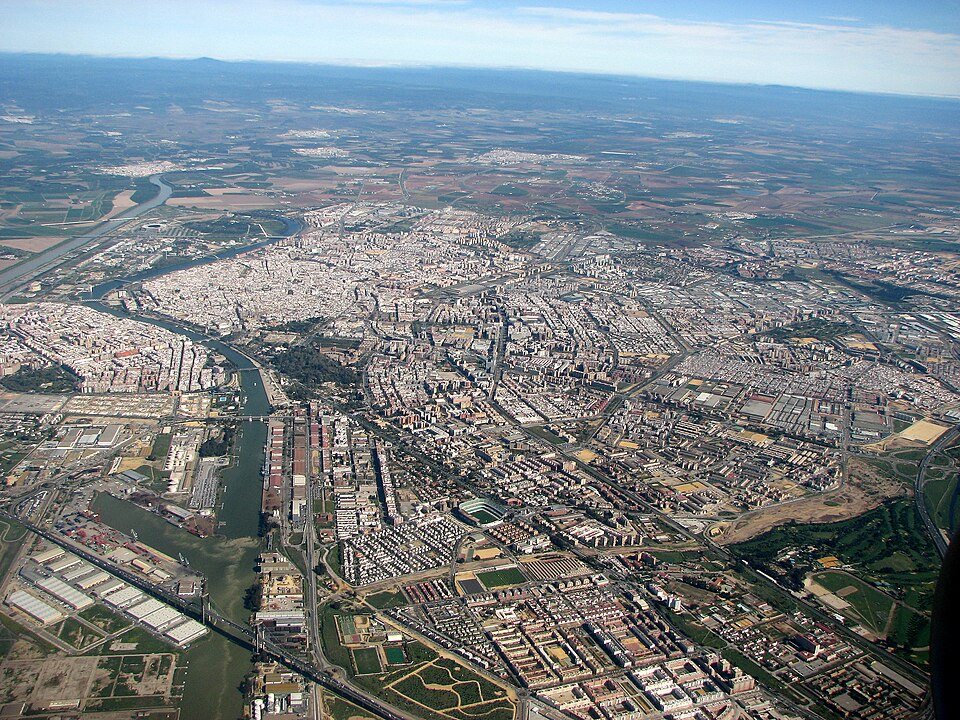
Walk the Guadalquivir today and you are mostly walking through the wreckage of two parties. The 1929 Ibero-American Exposition and the 1992 Universal Exposition were each meant to announce Seville to the world, and each left behind a landscape that the city never quite finished digesting. One gave Seville a monumental semicircle it still can't stop photographing. The other gave it an island full of pavilions nobody fully knew what to do with afterward, plus the bridges that finally let the city grow across the river. Neither fair paid for itself at the time. Both are now just part of how Seville looks.
1929: a fair that bankrupted the city and built its postcard
The Ibero-American Exposition was conceived in the 1910s as a showcase of ties between Spain and its former American territories, and it kept slipping its opening date for over a decade before finally running in 1929. The timing was brutal — it closed into the first shocks of the global economic crash, and Seville's city coffers took years to recover from the debt. But the physical legacy survived the financial one.
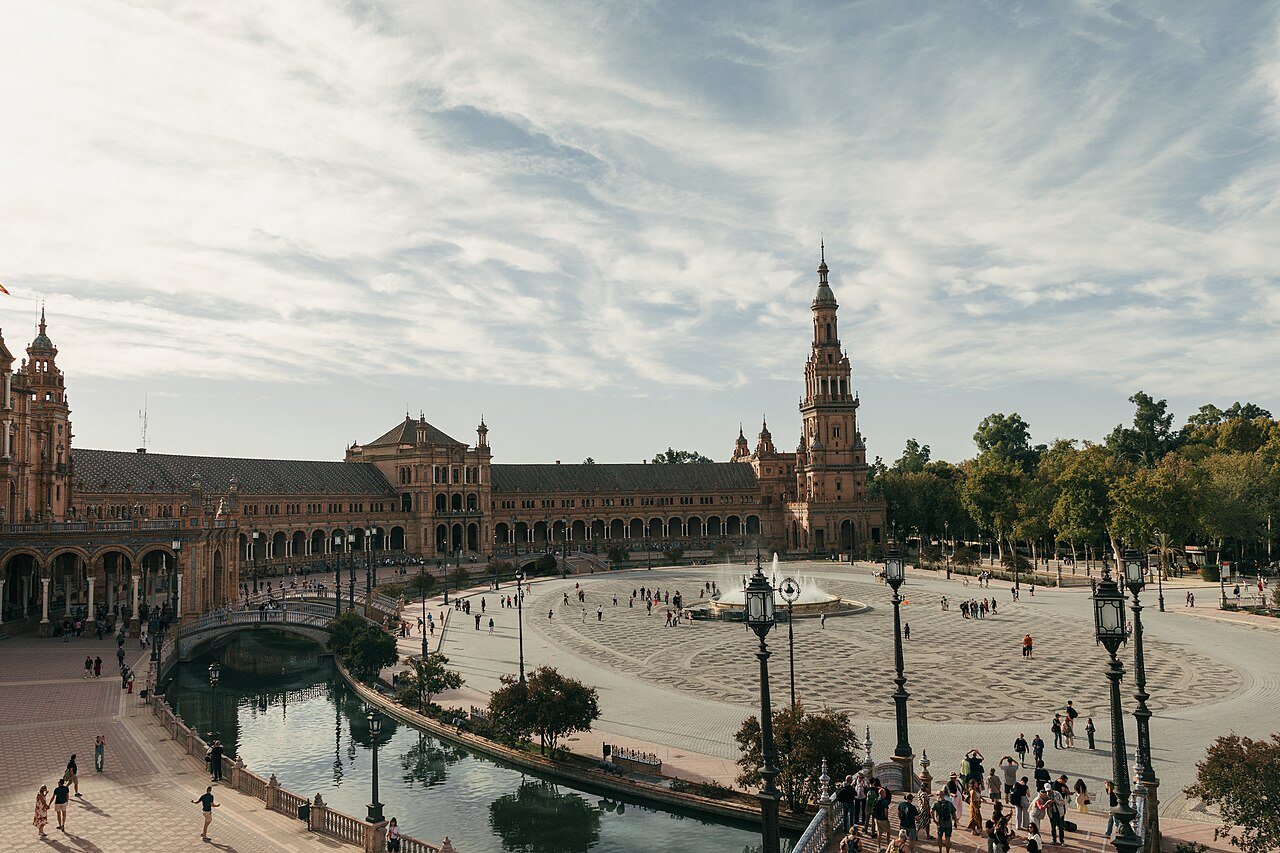
The fair's centerpiece, Plaza de España, was built as the Spanish pavilion: a vast curved building facing a plaza with a canal you can still rent a rowboat on. Its tiled alcoves, one for each Spanish province, turned the building into a sort of permanent geography lesson, and they're the reason visitors from a particular province will often go looking for their own bench. The brick-and-tile style used across the site, a deliberate nod to Seville's Mudéjar past dressed up in a more confident, exportable form, is sometimes called Regionalist architecture, and it set the tone for an entire neighborhood.
That neighborhood is Parque María Luisa, which absorbed most of the exposition grounds once the fair ended. Several national pavilions built for 1929 — Peru's, Chile's, Colombia's among them — still stand along its edges, repurposed as consulates or civic buildings, their facades a small open-air museum of early twentieth-century exoticism and homesickness. Few visitors realize the shady park they're ambling through was, for one year, a trade fair with pavilions representing a dozen countries.
⭐ If you want to see the fair's logic in one glance, stand at the Plaza de España's central bridge and look both ways: the exposition's grand civic face behind you, the park's quieter, unplanned paths in front. The contrast is the whole story of 1929 — a monumental front door attached to a much more improvised house.
1992: an island, five months, and a lot of concrete
The 1992 Universal Exposition was a different animal entirely — shorter, bigger, and aimed squarely at a television audience rather than a handful of invited nations. It ran for about six months on La Cartuja, the river island north of the old city that had previously held little but a Carthusian monastery and some market gardens. Overnight, infrastructure Seville had needed for decades got built in a rush: a new airport terminal, a high-speed rail line to Madrid, and most visibly, a set of new bridges across the Guadalquivir.
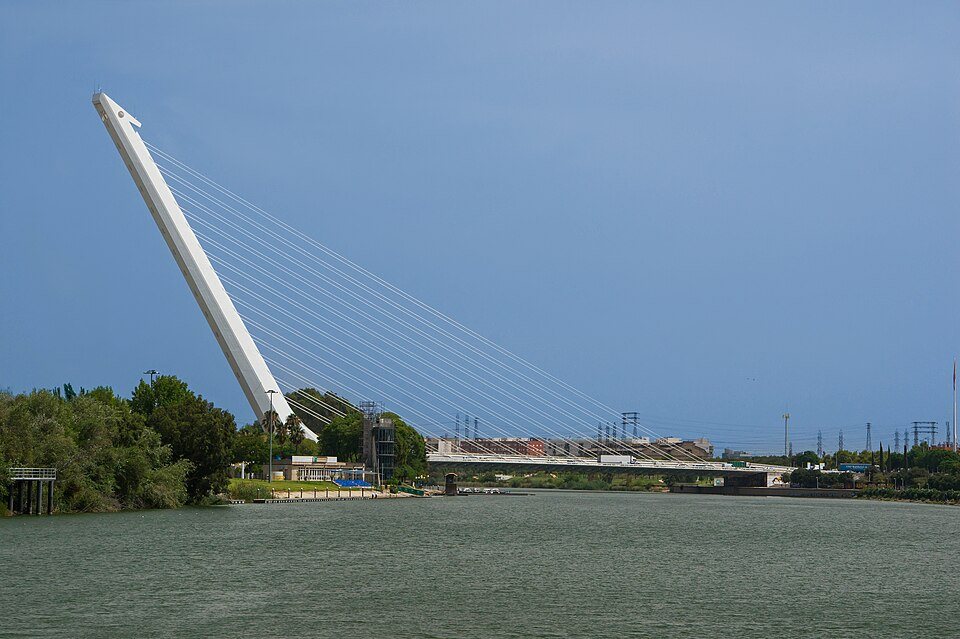
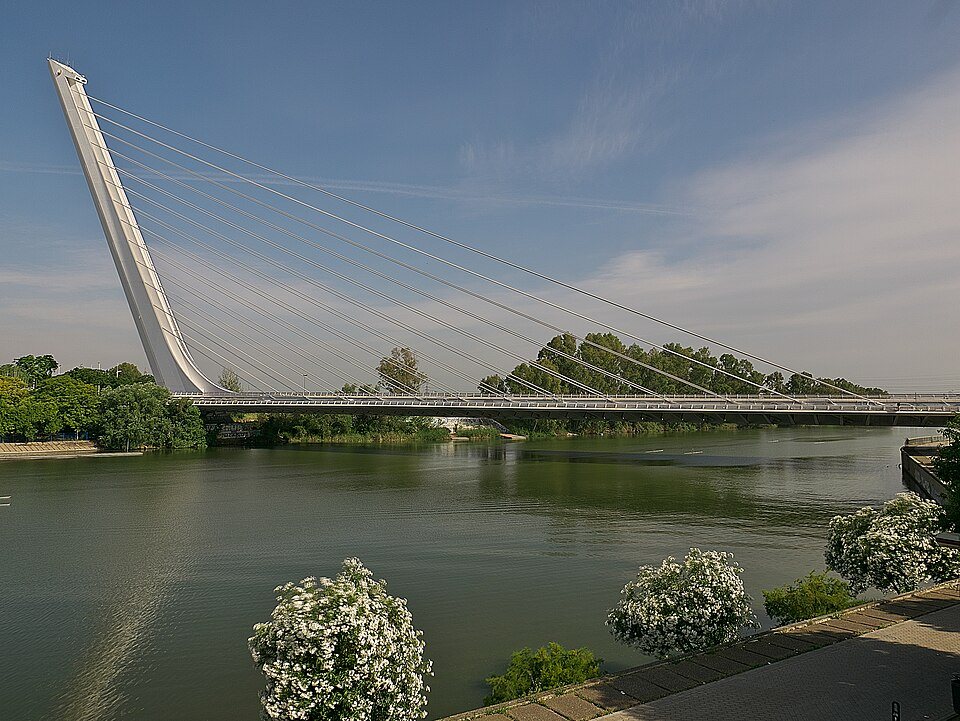
Those bridges are probably Expo '92's most used legacy. Before 1992, Seville had very few crossings for a city split by a river; afterward, it had several, each a small architectural statement in its own right. The Puente del Alamillo, with its single leaning pylon and cable-stayed deck, is the one that ended up on postcards and is still the most recognizable addition to the skyline from that era. Unlike the fair itself, the bridges never stopped working — they carry daily traffic now the way they carried fairgoers then.
The exposition grounds themselves had a messier afterlife. Many national pavilions were temporary by design and came down once the gates closed; others were meant to be converted to permanent use and sat empty for years while the city worked out what a post-fair La Cartuja was supposed to be. Some became research facilities, some became the Isla Mágica amusement park, and some simply deteriorated behind fencing, giving the island a reputation for decades as the place where Seville's future had been promised and then quietly parked. That reputation has faded as more of the site has filled in with offices and university buildings, but the patchwork quality — shiny new blocks next to 1992-vintage structures showing their age — is still visible if you cross over and look.
⚠️ La Cartuja isn't a single attraction with a gate and a map; it's a district, and the exposition remnants are scattered across it rather than gathered in one preserved "Expo park." Anyone expecting a tidy open-air museum of 1992 should adjust expectations before making the trip across the water.
What's actually worth seeing from each fair
If your time is limited, the honest answer is that 1929 rewards a visit far more than 1992 does. Plaza de España and Parque María Luisa are finished, maintained, and genuinely central to how the city presents itself — they sit a short walk from the Real Alcázar and the old quarter, so they're easy to fold into a day that also covers Barrio Santa Cruz. The 1992 legacy is more about infrastructure you use without noticing — the bridges, the rail line — than about a site you'd deliberately visit, with the exception of the Alamillo bridge itself, which is worth a detour if you're interested in how Seville tried to signal modernity at the end of the twentieth century.
There's a useful contrast to draw, too, with the city's river towers. The Torre del Oro predates both fairs by seven centuries and has outlasted them with far less fuss — a reminder that Seville's riverbank has been reinvented more than once, and that not every reinvention sticks equally well. The 1929 fair tried to build permanence through ornament and mostly succeeded; the 1992 fair tried to build permanence through infrastructure and partly succeeded, leaving behind bridges everyone uses and pavilions almost nobody visits on purpose.
For a walk that ties the two eras together, start at Puente de Triana — a nineteenth-century bridge that predates both fairs — then follow the river north past the newer crossings toward La Cartuja, before doubling back through Triana itself. It's a way of reading the riverbank in layers: the old bridge, the 1992 bridges, and the neighborhood that watched both fairs happen from the opposite bank without hosting either one.
A river that kept being asked to perform
Both expositions treated the Guadalquivir less as a river to live alongside and more as a backdrop for an event — something to be dammed, diverted, bridged, or dressed up for a few months of international attention. The 1929 fair reshaped the river's southern edge into parkland and ceremonial plazas; the 1992 fair rerouted a stretch of the river itself to create the island site, a piece of hydraulic engineering most visitors never think about as they cross the Alamillo without a second glance. What's left, more than a century after the first fair was first proposed, is a riverbank built almost entirely out of leftover ambition — some of it gracefully absorbed into daily life, some of it still waiting, on La Cartuja, for a third act.
In pictures