Seville is one of the few European cities where the geography and the infrastructure both agree that you should get around on two wheels. The old town sits on a river plain with no hills to speak of, the historic core is small enough to cross in twenty minutes, and the city has spent two decades building a network of segregated bike lanes that actually connects the places visitors want to go. None of that is an accident. Seville's cycling network was built deliberately, in a short burst of investment, and it shows: the lanes are physically separated from traffic by curbs rather than painted lines, which is the single biggest difference from cycling in most other historic European cities.
That said, the network has edges where it thins out or disappears, and the parts of the city that make Seville worth visiting — the tangle of medieval streets — are mostly not bikeable at all, by design or by necessity. Knowing where the lanes run and where they don't is most of what you need.
Why the city works this way
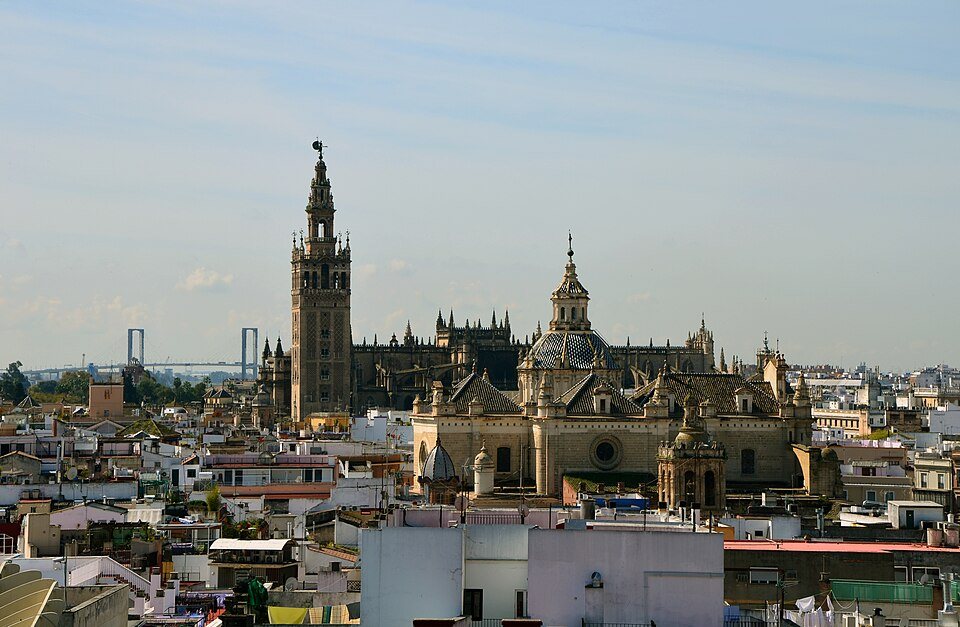
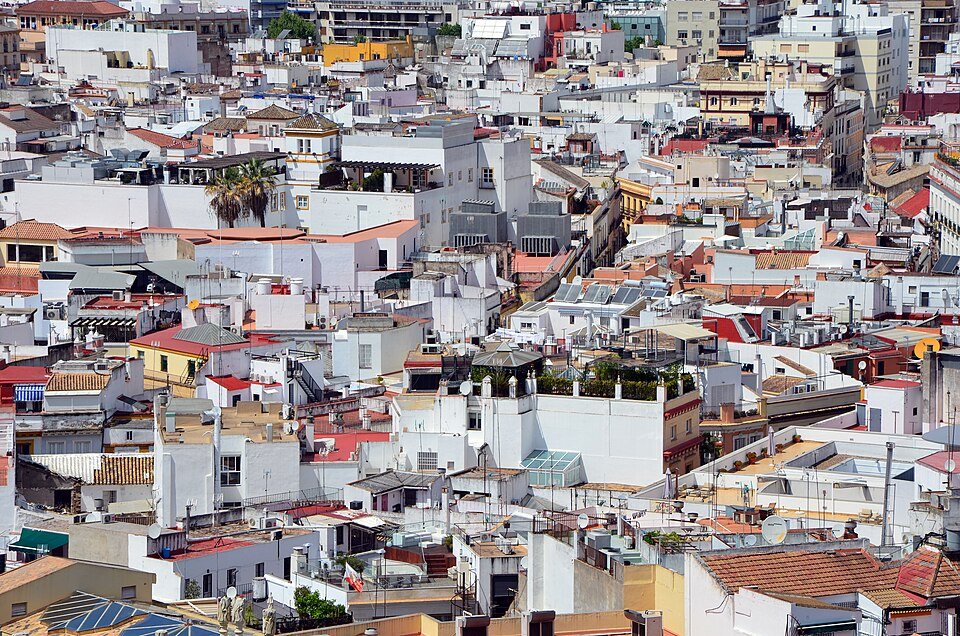
The old quarters around the cathedral and Santa Cruz were laid out centuries before anyone thought about bicycles, let alone cars, so the streets there are narrow, frequently stepped, and often pedestrian-only. You won't find bike lanes threading through Santa Cruz, and you shouldn't try to ride through it — the alleys are too tight, too crowded, and too popular with people walking slowly while looking up at balconies. Riding a bike through that neighborhood is a good way to clip someone's shoulder or get stuck behind a tour group with nowhere to go.
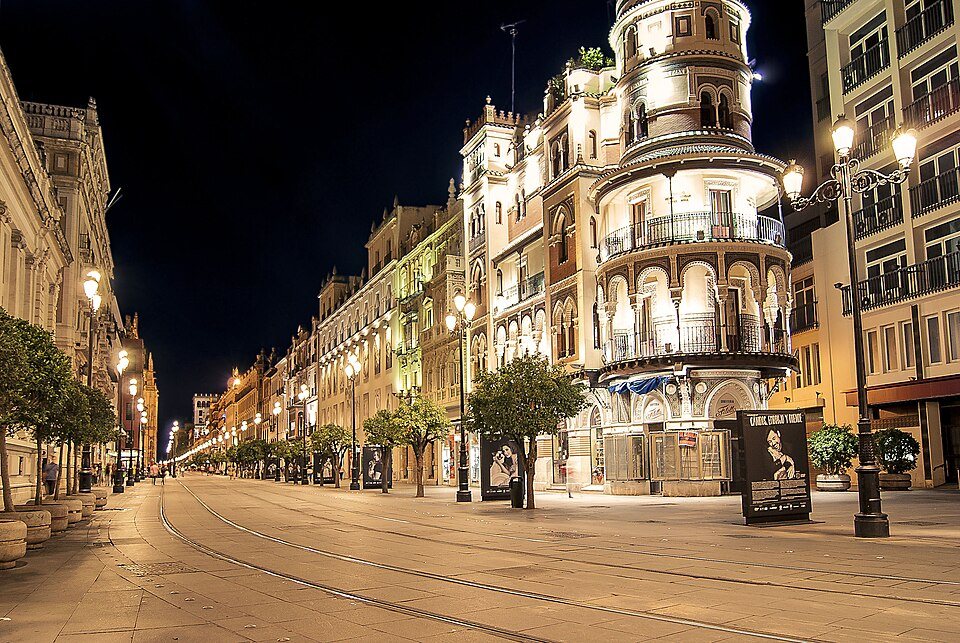
Where the bike network excels is in the newer, more open parts of the city and along the river: wide nineteenth- and twentieth-century boulevards, the ring roads around Parque de María Luisa, and above all the banks of the Guadalquivir. The riverside paths on both sides of the water, linked by several bridges including the Puente de Triana, form a genuinely pleasant spine that lets you cross from the Triana side to the city center and back without touching a main road. This is the easiest, most scenic stretch of cycling in Seville, and it's where most visitors end up doing the bulk of their riding, intentionally or not.
Getting a bike
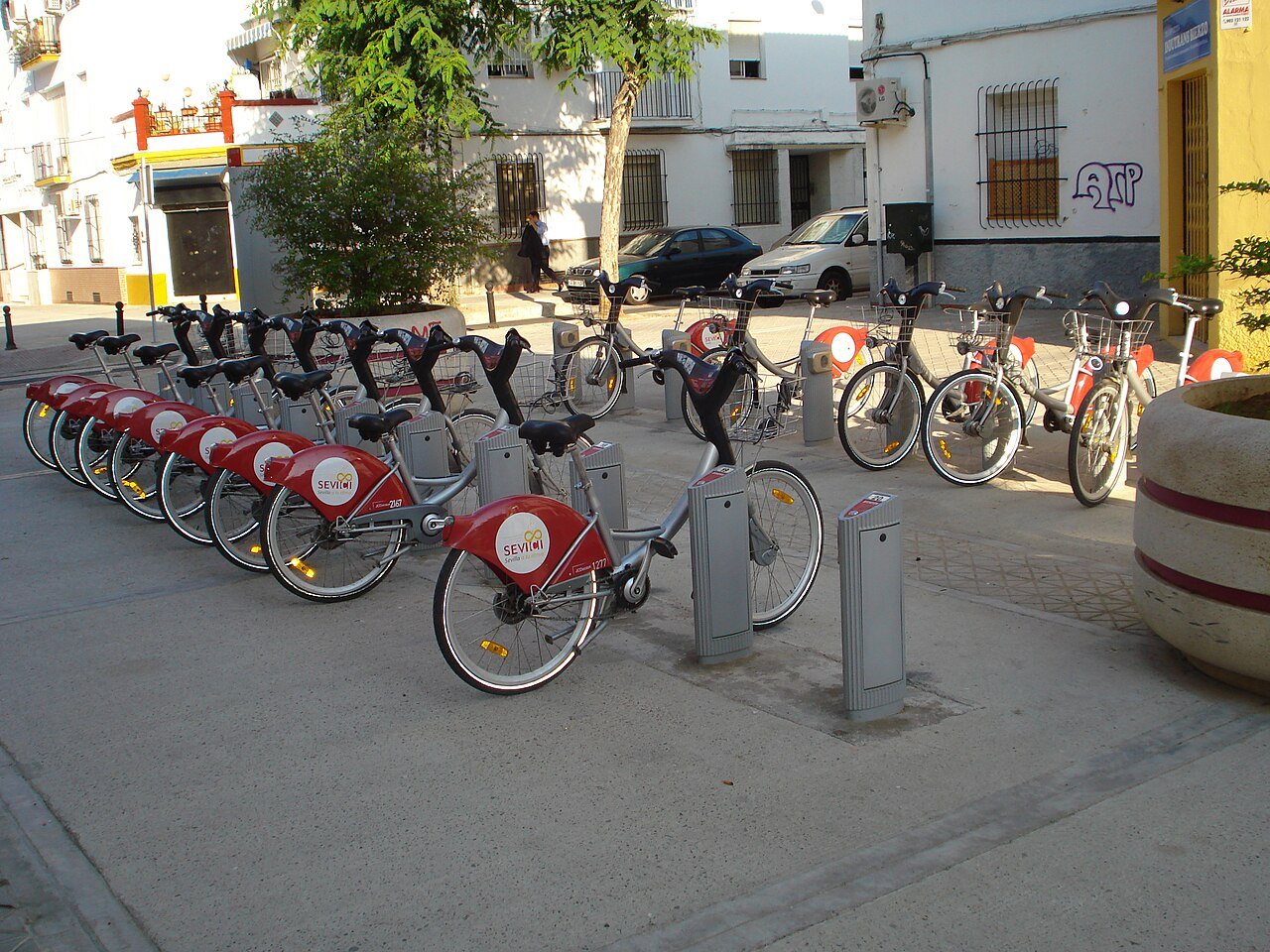
Seville runs a citywide docked bike-share system with stations spaced every few blocks across the center and into the surrounding neighborhoods. It's aimed primarily at residents with longer-term subscriptions, and the short-term tourist option, when available, tends to involve a different registration process than you might expect from bike-share schemes elsewhere — check the operator's own site before you arrive so you're not figuring out a kiosk screen in Spanish with a stack of cars behind you. ⚠️ Many riders assume they can just tap a card and go, the way they might in other cities; Seville's system is less forgiving of that assumption, and the penalty for getting it wrong is usually just wasted time rather than money, but it's wasted time you'd rather spend riding.
If the bike-share system doesn't suit your plans, independent rental shops are easy to find in Triana and around the center, and they're generally a simpler option for a single day out, since you deal directly with a person rather than a touchscreen. Some also rent electric bikes, which are unnecessary for the flat center but useful if you're planning to ride out toward Itálica or further along the river than the center.
⭐ If you're only going to ride once, make it the river. Rent near Triana, cross at the Puente de Triana, and follow the path along either bank — you'll pass the Torre del Oro, get open views across the water, and avoid almost all car traffic. It's the one stretch of cycling in Seville that requires no local knowledge to enjoy.
Where the lanes run out
The segregated network is excellent along major avenues and the river, but it fragments once you get into the grid of streets around Calle Sierpes and the shopping district, and it effectively vanishes inside the oldest quarters. Riders who try to shortcut through Santa Cruz or the streets around the Iglesia del Salvador often end up walking their bikes anyway, because the surfaces are cobbled, the turns are tight, and foot traffic fills the width of the street at most hours. This isn't a flaw in the system so much as an acknowledgment that some parts of a medieval city were never going to accommodate wheeled transport gracefully, bicycles included.
The practical approach most locals take is to ride the lanes to get near where they're going, then lock up and walk the last stretch. Bike parking is common near the edges of the old town — you'll see racks close to Plaza de España and around the park — and it's generally a better plan than hunting for a way to ride all the way to your destination's front door.
Heat, timing, and other practicalities
Seville's summers are genuinely hot, and riding in the middle of the day from roughly June through September is uncomfortable at best. Mornings and evenings are when the city actually cycles — you'll see far more bikes on the lanes before midday and after the sun drops than during the hours in between. If you're visiting in summer, plan rides around the edges of the day rather than the middle, and treat a bike ride as a good excuse to be out at the times you'd want to be outside anyway. For more on handling the heat generally, see shade.
Road surfaces are mostly fine, though tram tracks near the center can catch a front wheel if you cross them at a shallow angle, so aim to cross tracks as close to perpendicular as you can manage. Helmets are not commonly worn by local riders and are not required by law for adults, but rental shops usually have them if you want one.
Bike lanes share space with pedestrians more often than you'd expect, particularly near the river and in the park, so riding at a moderate pace and expecting people to step into the lane without looking is the safer habit, rather than assuming priority. The lanes are a genuine convenience, not a guarantee of an uninterrupted ride, and treating them that way is what makes cycling here pleasant rather than stressful.
For a sense of how a day on a bike might fit alongside the walking you'll inevitably also do, see itineraries, and for the rest of how to move around the city when you're not on two wheels, see getting around.
In pictures