Seville's summer heat isn't just a number on a phone screen. It's stone radiating warmth back at you from both sides of a street, humidity off the Guadalquivir sitting low over the old town, and a sun that in August sits almost directly overhead for hours at a stretch. People who plan their day around sights and distances, the way they would in a cooler city, end up miserable by mid-morning. People who plan around shade do fine. This is about the second approach.
Why the heat here feels different
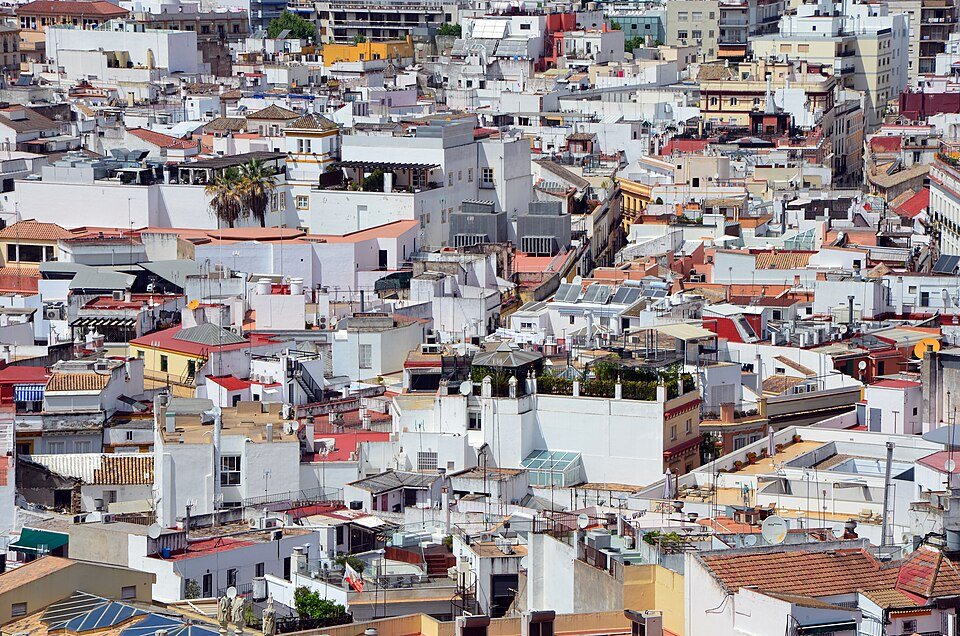
The historic center is built from pale stone and tight lanes that trap heat rather than ventilate it, a layout designed centuries ago for exactly this climate but easy to defeat if you don't use it properly. Walk down the center of a wide, sunlit avenue and you're fighting the city's own design. Walk along the base of a building, under an awning or an overhang, and you're using it. The difference in how your day feels is bigger than people expect.
Humidity off the river adds to it. Areas near the river and Triana can feel stickier than the same temperature reads a few blocks inland, especially in early evening when the air hasn't cleared yet.
The awning streets
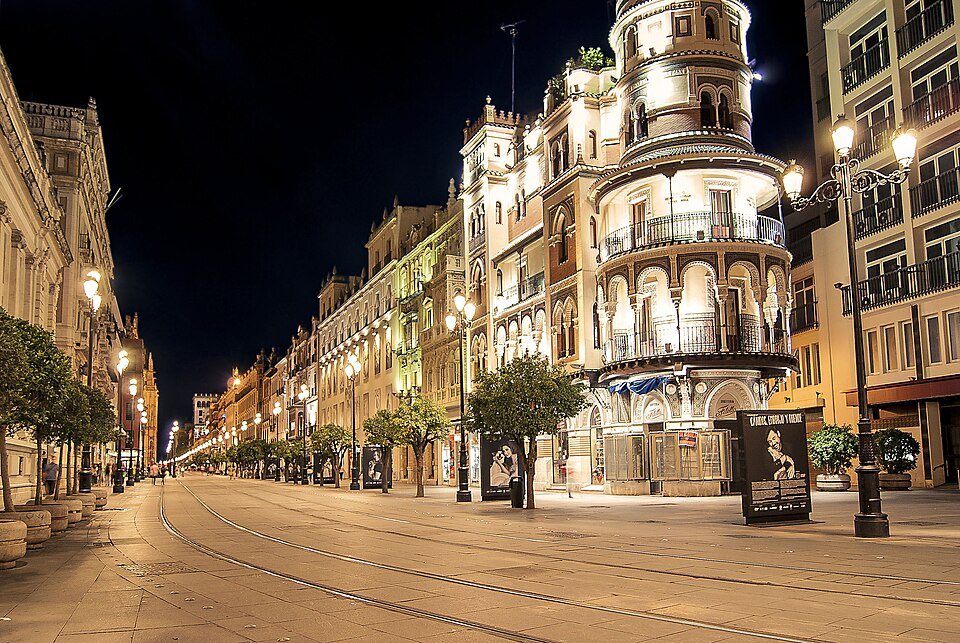
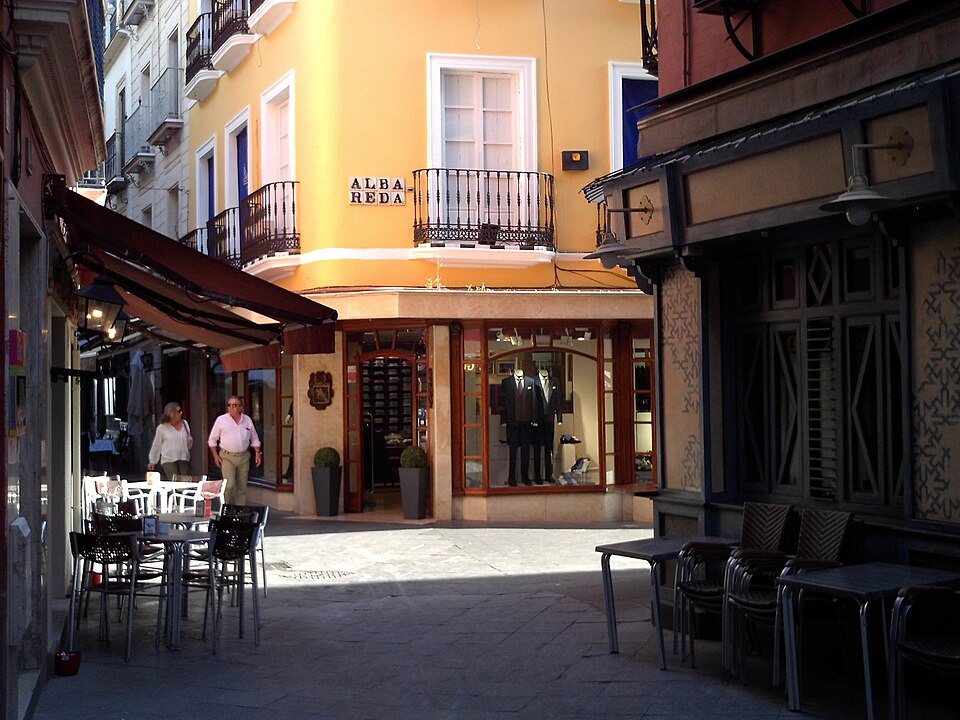
Calle Sierpes is the clearest example of Seville solving this problem on purpose. Canvas awnings are strung building-to-building above the street for the warm months, turning the whole pedestrian route into a long shaded corridor. Locals use it as a through-route for exactly this reason, not just for the shops. Several of the narrow lanes feeding off it and around Barrio Santa Cruz do the same job without the canvas — the buildings are close enough and tall enough that direct sun barely reaches the ground for most of the day.
⭐ If you're moving between two sights in the old town, check whether there's an awning-covered or narrow-lane route before taking the direct line on a map. It's often barely any longer and makes the walk genuinely different.
Where shade actually exists, and where it doesn't
The gardens inside the Alcázar are one of the best examples of shade built into a sightseeing stop rather than something you have to find elsewhere. Cypress hedges, orange trees, and high garden walls keep much of the grounds walkable even when the plazas outside are blinding. The same is true of the orange-tree courtyard at the cathedral, though it's smaller and fills up fast.
Parque de María Luisa is the closest thing the city has to a dedicated escape route — mature plane trees, tiled benches, and enough canopy that you can cross a large part of the park without stepping into full sun. It connects reasonably well with a visit to Plaza de España, as long as you treat the plaza itself as a quick stop rather than a lingering one.
⚠️ Plaza de España's central plaza is almost entirely exposed, and the tiled paving and water in the moat reflect heat back up rather than absorbing it. The curved porticoes around the edge are shaded and worth sticking to; the open middle, where most photos get taken, is not a place to stand around for long in August.
Across the river, the paved walkway along the Triana bank has intermittent tree cover and is noticeably better than the equivalent stretch on the cathedral side at certain times of day, depending on which way the buildings are throwing shadow.
Timing your day instead of fighting it
Seville's own rhythm in summer already accounts for this: the city is busiest early and again once the evening cools, with a long stretch in the middle of the day where shutters come down and streets empty out. Visitors who try to sightsee straight through that stretch are usually the ones who end up exhausted and sunburned; locals mostly aren't out in it at all. You don't need to know exact hours to use this pattern — just notice that if the streets around you are suddenly quiet, that's the signal to find shade, a cold drink, or an air-conditioned museum, not to push on.
Museums and indoor sights are a legitimate heat strategy, not just a backup plan. The Museo de Bellas Artes, the Archivo de Indias, and the covered portions of the Alcázar all give you a stretch of time indoors in the worst part of the day, which matters more in August than it would in April.
Carry water and refill it rather than buying a new bottle every hour — many bars will give you a glass of tap water on request, and there are public fountains scattered through the old town and the parks. Misting fans outside cafés in the more exposed plazas aren't just atmosphere; they're genuinely useful, and worth a five-minute stop even if you don't plan to order anything.
What to wear and carry, practically
Light-colored, loose clothing matters less for temperature than people think and more for how it feels against skin that's already sweating. A hat or cap makes a bigger difference than sunglasses alone, since so much of the exposure in the old town comes from above when you cross an open square rather than from the side. Closed shoes with some breathability beat sandals for long walking days — the stone paving holds heat and reflects it upward, and tired, swollen feet by early afternoon are a common complaint from people who didn't expect it.
None of this requires giving up a normal day of sightseeing. It mostly means choosing the shaded route over the direct one, treating the open plazas as quick stops rather than lingering spots, and building in an indoor or garden stretch during the hottest part of the day rather than scheduling against it. For more on stitching these pieces into an actual day plan, see itineraries and getting around.
In pictures