If you booked your Alcázar ticket late and the only slot left was mid-afternoon or later, you haven't ruined your day in Seville — you've just inherited a different one. The trick is to stop thinking of the Alcázar as the center of the itinerary and start treating it as the finish line. Everything before it should be timed around shade, crowds, and the fact that you'll want to be fed and rested before you spend two or three hours walking through a palace that rewards slow looking.
Start at the cathedral, not the queue for it
Go to the cathedral as close to opening as you can manage. This is the one booking you can still control, and doing it first means you dodge the worst of the midday line that forms once tour groups arrive. Inside, the building is genuinely disorienting in scale — it's often cited among the largest Gothic cathedrals anywhere, and whichever way you measure it, the point is made the moment you're standing under the crossing. Climb the Giralda while you have the legs for it; the ramp (not stairs, for most of the way) is manageable in the morning and miserable in the heat of the afternoon. Before you leave, walk through the Patio de los Naranjos, the old mosque's ablutions courtyard and still full of orange trees — it's shaded, it's quiet compared to the nave, and it's a good place to regroup and check the next move. ⭐ Buy the cathedral ticket online in advance through the official site if you can; it's the same door but a shorter wait.
Fill the midday with shade, not sights
This is the stretch of day that breaks people who try to cram in one more attraction. Don't. Seville at midday is hot for most of the year, and the sights that are genuinely worth a special trip — the Casa de Pilatos, the Museo de Bellas Artes — are better visited when you're not also racing a palace slot later. Instead, let Santa Cruz absorb you. It's built for exactly this: narrow lanes that trap shade, courtyards you can glimpse through wrought-iron gates, dead ends that aren't really dead ends. Have a long lunch here rather than a fast one. A sit-down meal with air-conditioning or a shaded terrace does more for your afternoon than any sight you could squeeze in instead. ⚠️ Don't schedule anything you can't bail on between roughly 2pm and 5pm in summer. The streets empty out for a reason. If you want a walk rather than a sit-down break, the riverside path by the Torre del Oro has some shade and a breeze off the water, and it puts you near Puente de Triana if you want to cross into Triana for a slower, less touristed lunch. See /shade/ for more on which streets actually stay cool and which only look like they should.
Early-mid afternoon: the grand set pieces
With a late Alcázar slot, you have a rare luxury: time to do Plaza de España properly. Most people rush it between other bookings; you can wander the full semicircle, cross the little bridges, and sit by the canal without checking a watch. The tiled alcoves representing Spain's provinces are worth reading in order if you like that sort of thing, and the building's scale photographs better from the far side of the plaza than from directly in front of it. Walk on into Parque María Luisa next door — it's shaded, mostly flat, and a good place to let kids or tired feet run loose before the evening's main event. If plazas and parks aren't pulling you, Las Setas in the old town offers a different kind of afternoon: a modern wooden structure with an elevated walkway and city views, a useful contrast after a day of churches and tile.
The Alcázar slot: arriving right
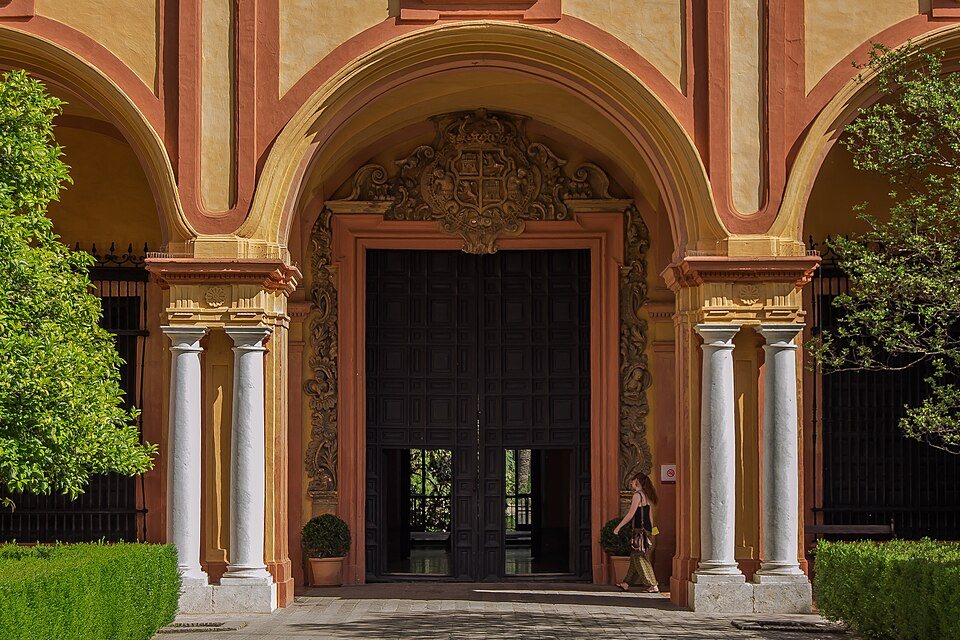
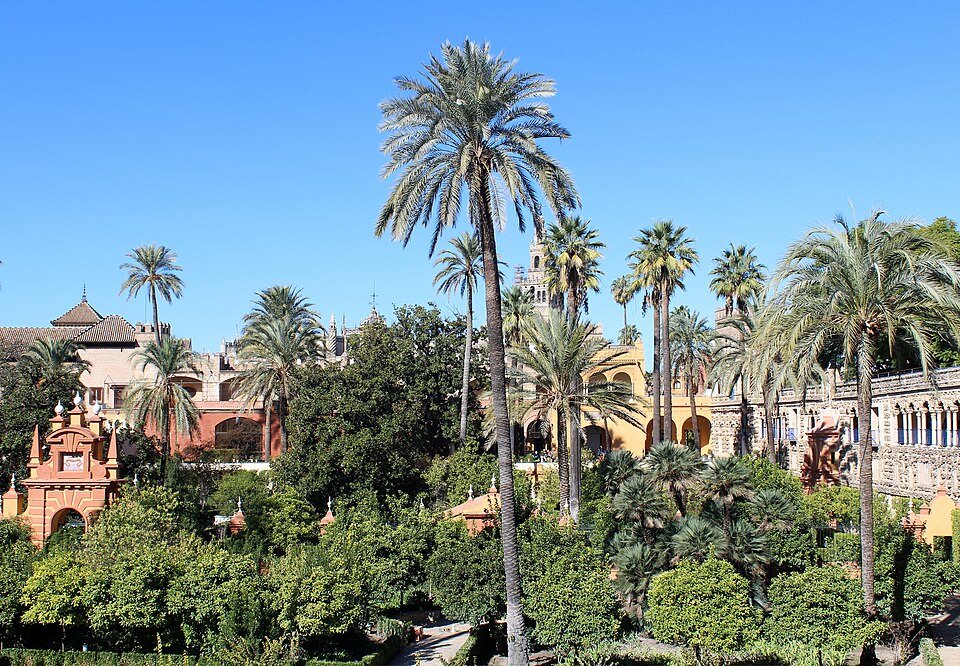
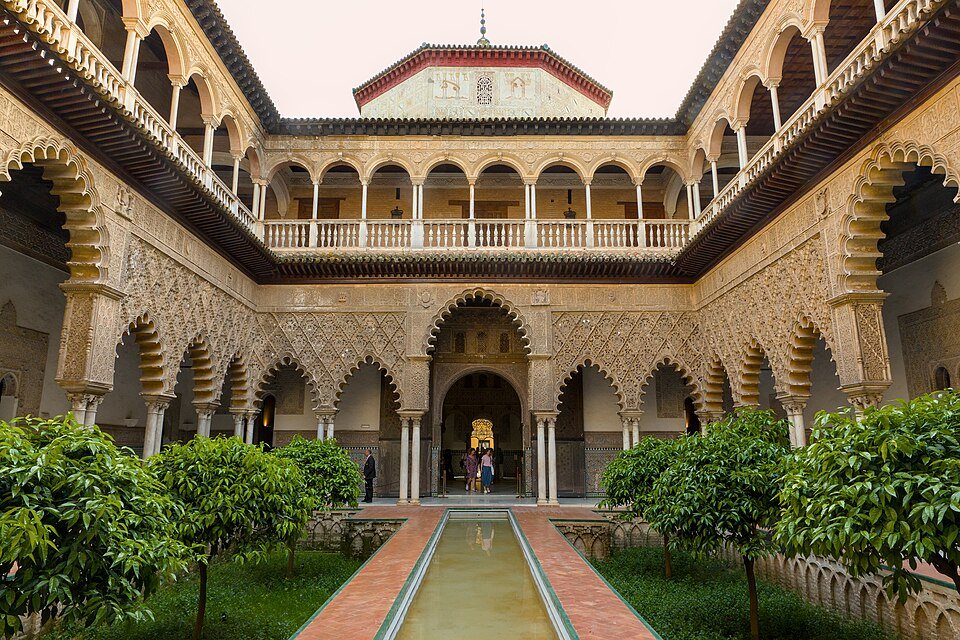
Head to the Alcázar with more buffer than you think you need. Entry is by timed slot and the gate does enforce it, but security and bag checks can still create a short line even once you're "on time," and there's no quicker way to feel the pressure of your own itinerary than watching the clock while stuck behind a tour group at the metal detector. ⭐ Arrive a little early and use the spare minutes to look at the exterior facade on Plaza del Triunfo rather than standing in the sun doing nothing. Once inside, a late-day slot has one real advantage: the light in the Patio de las Doncellas and the Patio de las Muñecas turns gold rather than flat white, and the crowds thin noticeably as the afternoon wears on. Give the gardens real time — they're large enough that most visitors only see the formal parterres near the palace and never make it to the quieter pools and pavilions further back. That's a mistake if you've got a late slot and nowhere else to be afterward; this is where you should spend your last unhurried hour of daylight.
Evening: let the day land somewhere easy
After the Alcázar, you'll likely come out as the city is shifting into its evening rhythm — shutters going back up on shops, terraces filling in. Don't plan anything that requires more walking than a stroll to dinner. /food-drink/ has guidance on finding a kitchen that's actually cooking at an hour that suits you rather than one still running on tourist-menu autopilot. If you have any energy left, the river at dusk, somewhere between the Torre del Oro and Triana, is a better use of it than a sixth church or a second museum. You've already had a full day built around one slot; let the evening be unplanned.
For other ways to structure a single day — including versions that don't depend on Alcázar timing at all — see /itineraries/. And for the practical business of getting between all these stops without wasting the time you've just worked to protect, /getting-around/ covers the walking distances and when it's actually worth a taxi.
In pictures